
Selling videos online gives you financial control and the freedom to grow your brand on your own terms. With 32% of Americans saying convenience and exclusive access would motivate them to try an online fitness program, it’s clear that there’s a strong opportunity to monetize your content.
Instead of relying on traditional revenue like ads, sponsorships, or YouTube monetization, you can monetize your content directly. This lets you deliver additional value to your audience while maintaining control over your earnings.
At Uscreen, we’ve got 8+ years of experience helping creators across niches sell their videos online.
In this guide, we’ll show you how to sell videos online, share best practices for monetization, and provide the tools to grow your brand while engaging your community.
1. Define and understand your audience
If you’re looking to sell videos online, you likely have an existing audience on another platform like YouTube or TikTok. That audience typically includes a few different types of viewers:
- Engaged fans: People who watch your content occasionally and may interact sporadically, such as liking a post on Instagram.
- Advocate fans: People who actively follow your content and your journey, and are likely to buy your products or services.
- True fans: People who want to engage and support you, no matter what the product or service is.
The goal is to build a premium video platform that appeals to your true fans, while also creating content that nurtures your engaged and advocate fans into becoming true fans.
What you’ll need to figure out is:
- Who are your true fans?
- Who are your engaged and advocate fans, and how can you boost their engagement?
- What content or guidance does each group need most?
GUE.tv cracked this on their membership platform for Scuba Divers. Knowing their true fans love the deeper side of diving, the team created a full course on tackling high-flow caves.
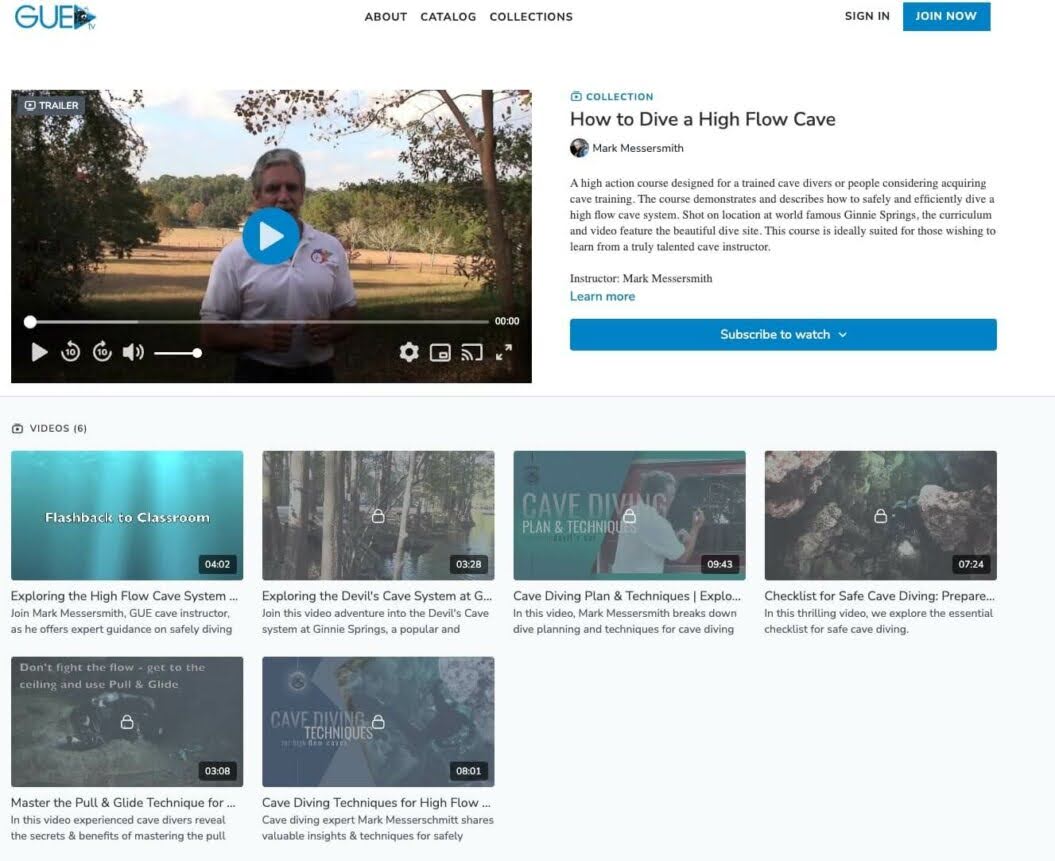
That might sound niche, but topics that speak to the heart of your target audience’s needs may not appeal to a wider audience. When creating content you plan to monetize, it’s important to focus on the preferences of those with the highest purchase intent. There are a few ways to do this.
Look at your platform’s analytics
Most major social media and video platforms come with an analytics suite for their creators. Some examples include YouTube Studio or Instagram Insights.
These dashboards include lots of information that helps you better understand who your primary audience is and what they might be looking for. Some key data points include:
- Demographics: Dive into the age, gender(s), and geographic location of your viewers. What are the common themes, and who is your video content appealing to most? Understanding this helps you tailor your streaming business to the right audience.
- Watch time and engagement: Look at which videos people spent the longest watching, or that got a high number of likes and shares. These metrics show a lot of intent and can be a good barometer of what content to put behind a video paywall.
- What your audience watches: This report shows what other videos and channels your viewers are watching, providing insights into their broader interests and potential collaboration opportunities.
Conduct surveys and polls
The most “active” way you can get insights into what your true fans want is by asking them! We always recommend doing some quantitative research like this on top of looking at your analytics data. Combining both types of data is useful for getting context around what your customers might want.
You can use tools like:
- YouTube community tab: Use polls and questions to engage with your audience directly on YouTube.
- Comments: There’s gold to be found in the comments section. What are people asking you for directly, and who is commenting regularly (and constructively)? These insights are incredibly valuable.
- Email surveys: If you have an email list, send out surveys asking what types of premium content or products they would be interested in.
- Social media: Utilize your social media platforms to ask questions and gather feedback from your followers.
- Polls: Quick polls are a simple way to gauge interest and get immediate feedback on specific ideas or topics.
The number of people who respond or participate gives you a strong indication of how many true fans you have in your audience.
Milou Pietersz has some great advice about how to define your ideal member and funnel them into memberships. She shares:

Once you’ve nailed down who your ideal member is, use social media for your audience research to find out what their pain points are. The comments section is a goldmine for this. How people react and respond to content is a big indicator of how it resonates with their pain points.
2. Analyze the market
Once you know what your audience wants, it’s important to compare your offerings with top competitors using a SWOT analysis. If you’re new, this helps you understand what your audience values and identify ways your content can improve or expand on what’s already available.
Some key questions to answer include:
- How are they approaching my niche?
- How much content do they have on their video website?
- How much are they charging for access?
- What type of video monetization strategy are they using?
- What video monetization platform are they using?
- How are they marketing and promoting their platform?
Let’s say you’re a yoga Creator with 10,000 subscribers on YouTube. You already know that it’s not enough to just be a “yogi,” so you’ve leaned into your martial arts background to niche down to create yoga videos for people into mixed martial arts.
You might start by looking at a similar creator, like Sebastian from Yoga For BJJ.
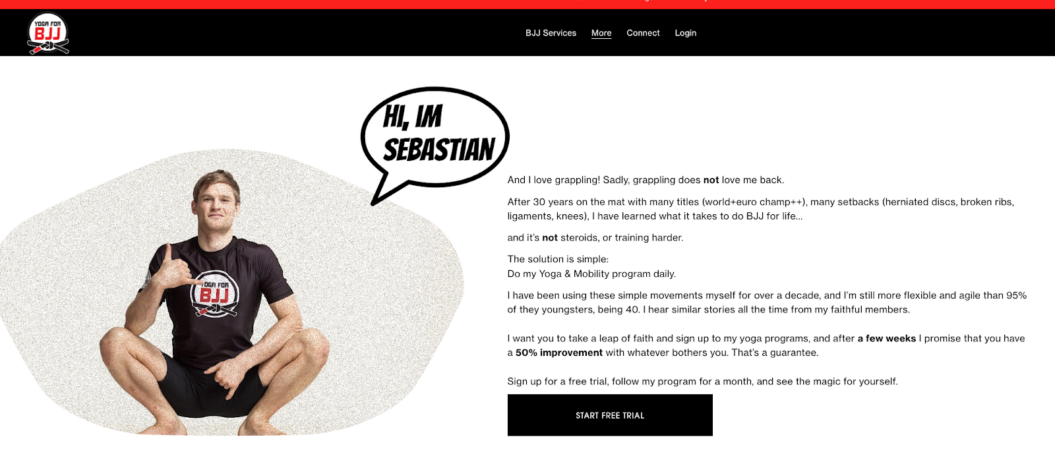
A look through his site would tell you a number of things you need to know to help you sell videos effectively in this space:
- He uses a subscription business model
- He’s built his own video website using Uscreen
- He offers a free trial
- He charges $19.99 per month or $179.99 annually
- His content is split out by experience level
- He’s built up a catalog of 200+ videos over time
- He offers mobile apps for both Apple and Android
This information gives you a solid understanding of what direction you need to head in with your business. Especially since he’s had a few successful years already in the space.
You’ll want to do this for a number of different creators in your space, though, to make informed business decisions. Examine three to five businesses similar to yours, offering different services, to see which approaches resonate most with you and your audience.
3. Choose your monetization model
Once you understand who you are selling to, it’s important to understand the four different types of video monetization strategies and determine which will work best for you, your content, and your audience.
Donation
Best for: new Creators selling video content for the first time
Earnings range: between $315 and $1575 per month
Donations are an easy way for fans to support creators. They can come in different forms, but are typically low-cost and run on third-party platforms.
You’d set up an account on a platform like Patreon or Buy Me A Coffee, and offer options for people to pay a low or recurring one-off fee. The premium content here is typically an extension of free content like YouTube videos.
Uscreen also now offers donations on the platform, which you can accept during live streams or through a button on your site.
| Pros | Cons |
|---|---|
| Easy to start earning, with affordable fees on most platforms | Low potential income that is unpredictable. Can feel like asking for a “handout” rather than earning. |
| Content can be easy to create and work as an “extension” of your existing free videos | Poor return on investment for the content you create. Can lose people easily if not constantly updated. |
| A familiar monetization option that’s well-accepted and understood | Platforms have limited marketing and analytics tools. |
| Easy to promote on your existing marketing channels | Hard for most Creators to scale to run a sustainable business. |
Example: Johnny Harris, a YouTube journalist, does this using three tiers on his Patreon page.
Transactional (sales & rental)
Best for: Creators with content focused on one specific outcome
Earnings range: between $1,000 and $10,000 per month
The next option is to sell either lifetime or time-restricted access to your video content (also known as TVOD). You’ve probably seen an example of this on platforms like Amazon Prime, Vimeo, or Apple, where you can either buy or rent access to a movie or TV show.
Creators will typically use this model for one-off pieces of informational content, like selling online courses.
If you opt for this method you could earn between $1000 and $10,000 per month. But, you’ll need a reliable flow of new customers to your video website to sustain it.
| Pros | Cons |
|---|---|
| Get paid the full value of your content immediately. | “Feast or famine” earning with payments coming around launch or promotion dates. |
| If your content is evergreen you can sell it for a long period of time with minimal updates. | Lots of competition for online courses with prices being driven down over time. |
| Can help to establish you as an authority in your niche. | High price of entry can reduce the number of people you convert. |
| Lots of free information on how to grow and launch transactional content and courses. | Requires a high amount of marketing budget and effort to generate income. Often need to work in “launch” cycles. |
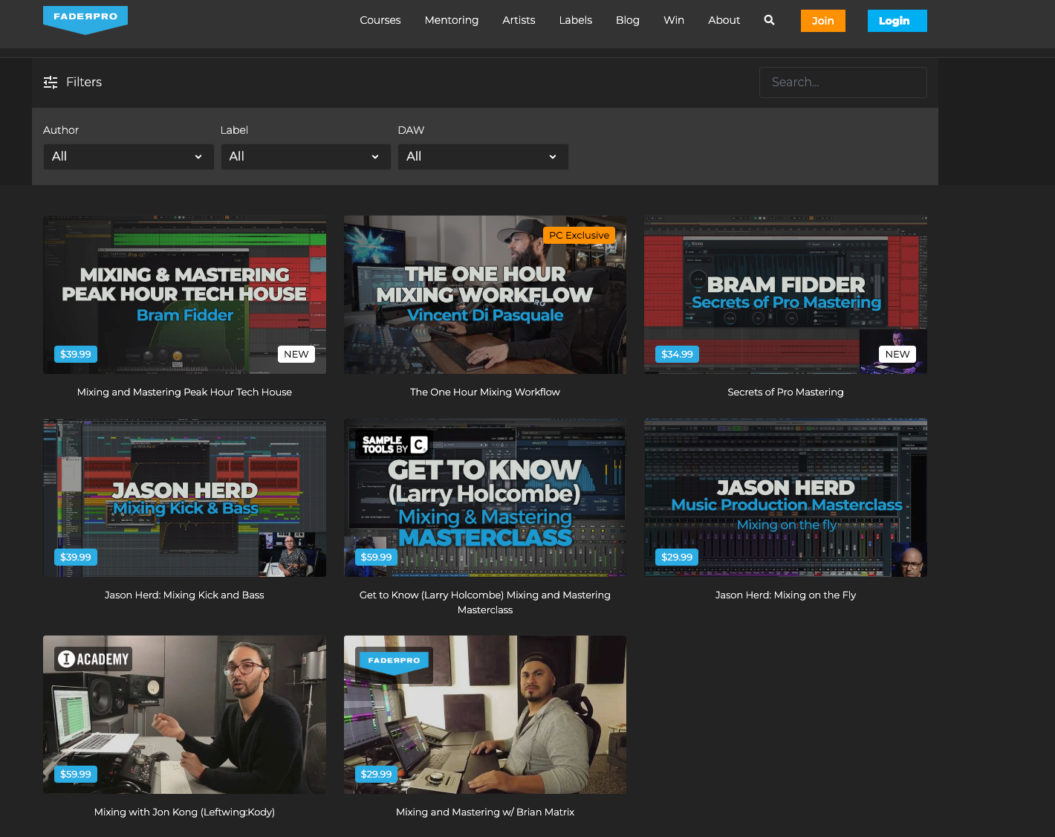
Example: FaderPro has a great example of this, where they sell lifetime access to individual courses around music production:
Subscription
Best for: Creators with a decent-sized and organized content library looking to build a sustainable income
Earnings range: $12,000 per month on average
Subscriptions are one of the most common types of video monetization in your everyday life, but often underused by creators. The subscription video on demand format is used by major companies like Netflix, Disney+, and for virtually any other way that you watch television nowadays.
Your customers sign up for a recurring or annual plan and get access to your video membership site for as long as they keep paying. It’s a reliable, accessible, and profitable video monetization strategy for exclusive content since it’s built on consistent recurring payments.
| Pros | Cons |
|---|---|
| Recurring income that’s predictable and reliable. | Can take a while for the compound effect of earnings to build up. |
| Lower entry price means you’re likely to convery more people. | Extra effort needs to be put in to focus on membership retention. |
| Works well in conjunction with other types of monetization, like transactional videos or sponsorhips/merchandise. | Requires a high level of focus to add new content and keep your platform feeling fresh. |
| Platforms like Uscreen offer marketing tools and analytics to help you grow and scale. | Requires a higher level of up-front investment in a platform than other monetization models. |
Example: Anabel Otero, the creator behind Plenamente TV, uses subscriptions as a way to monetize her free and premium content on her own membership site.
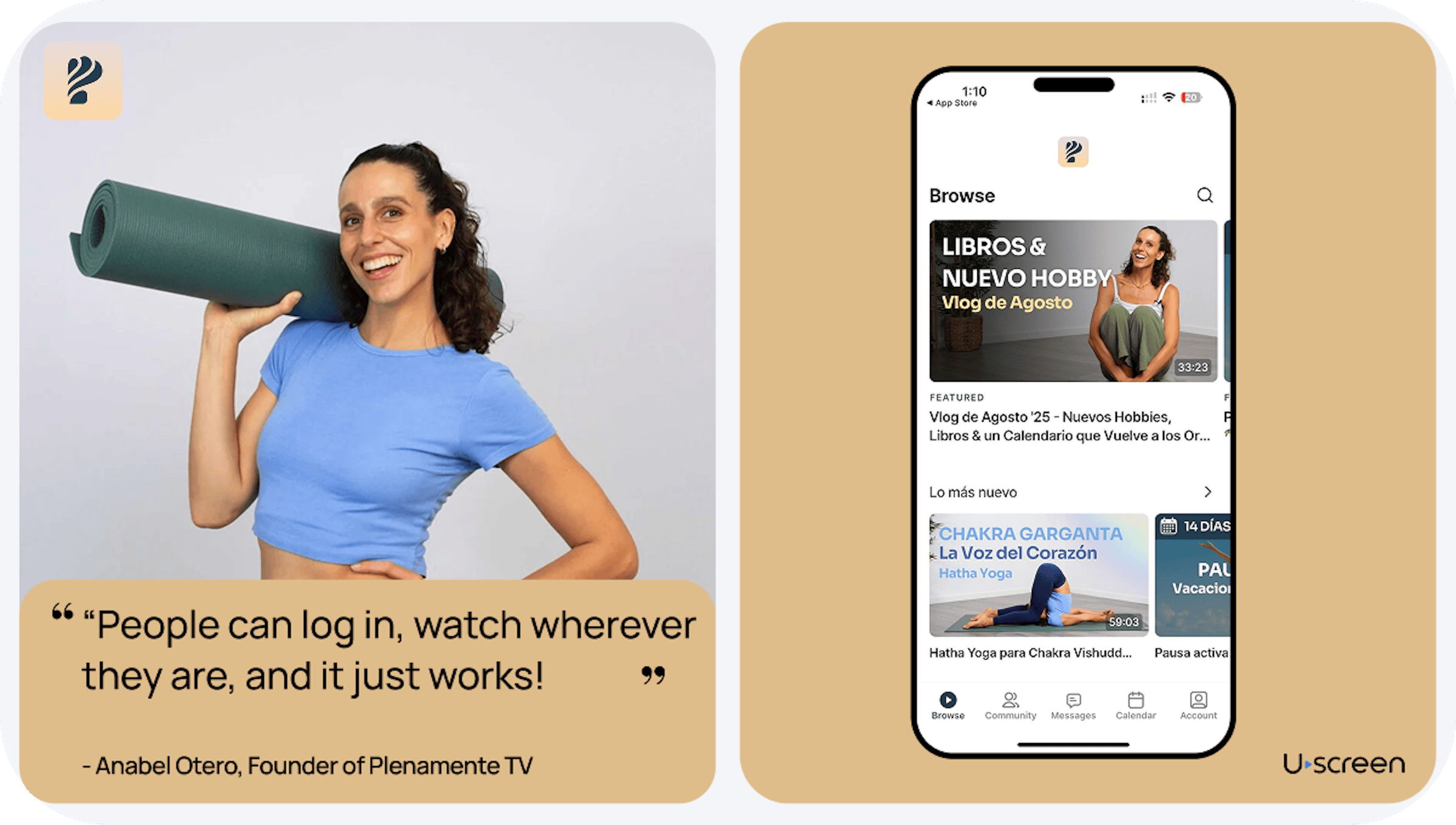
Her “true fans” can sign up for a recurring monthly or annual fee to access a Netflix-style library of hundreds of yoga videos. And, with new classes added every month, there’s an incredible amount of value for her subscribers.
Membership (subscription + community)
Best for: Creators with an engaged community and depth of content
Earnings range: $12,000+ per month on average
The final option to sell videos online is one of our favorites. Memberships combine the subscription model with a private online community, taking everything good about the subscription model and adding an active, thriving, and engaged community on top of it.
Platforms, like Uscreen, let you build a video website to host your online videos and provide community features where your audience can interact with each other in one central membership hub.
This is a great video monetization strategy because it accounts for retention. Your content may be why people sign up, but your community is why they’re going to stay.
| Pros | Cons |
|---|---|
| All of the pros of subscriptions. | All of the cons of subscriptions. |
| Easy content idea generation through direct feedback and conversations. | You’ll need to invest time (or money) into community management. |
| Your true fans will self-promote your community to make marketing easier. |
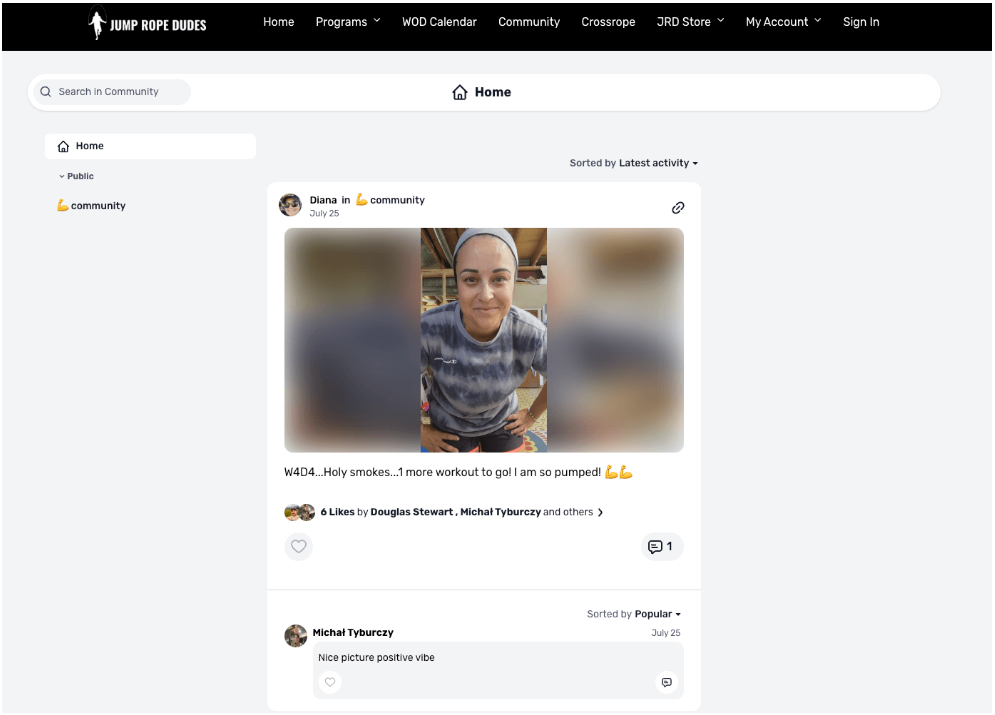
Example: Alongside all of their high-intensity workouts, Jump Rope Dudes have their members post and share their experiences — or even recordings of their own workouts!
Note when picking a monetization model
Starting with one monetization model is smart, but over time you can combine approaches, including additional revenue like sponsorships and merchandise to create a well-rounded creator business.
For example, FaderPro’s Producers Club lets customers access a full course library monthly for less than the cost of one course.:
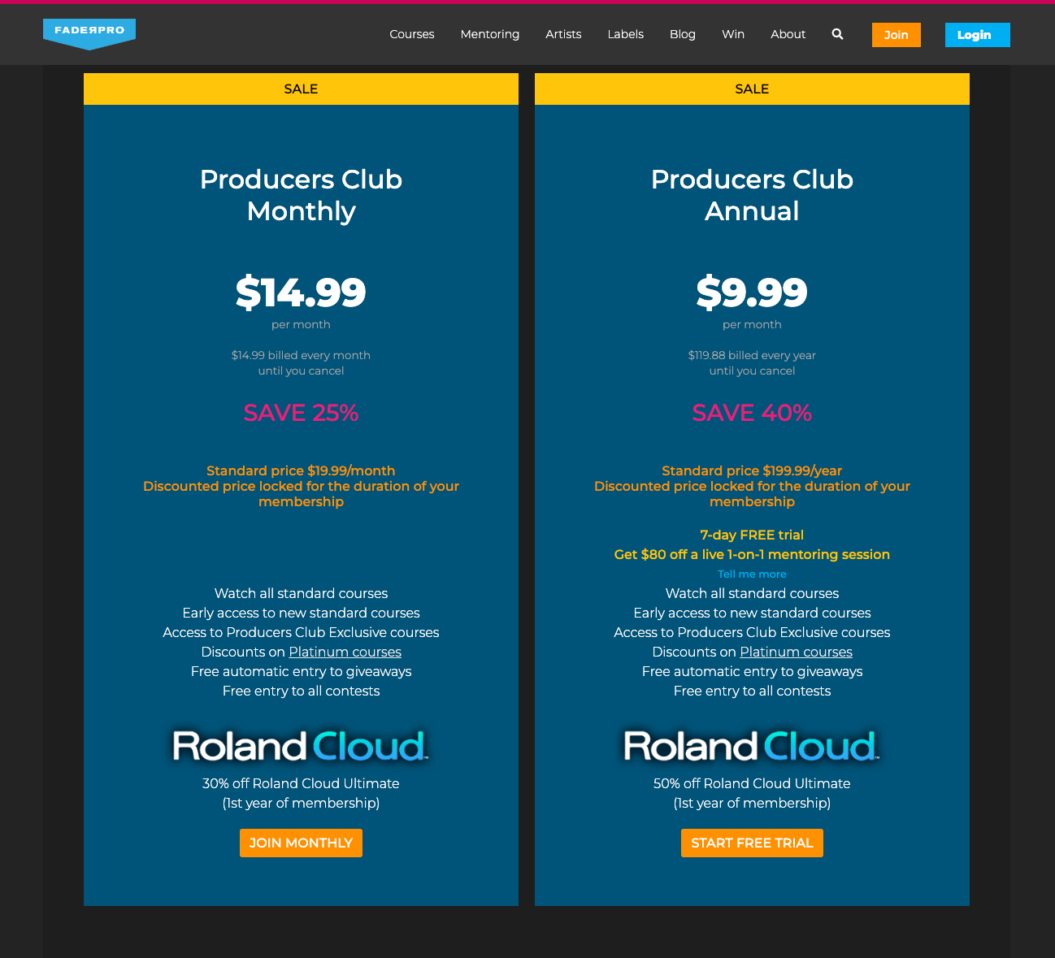
This allows them to cater to multiple audiences: the online course crowd, and the committed community members who want to access a full range of their content.
4. Choose your video platform
After you decide on your monetization strategy, the next step is to choose a video monetization platform that aligns with those goals.
To help get you started, we’ve put together a table with some of our platform comparison articles for you:
| Guide link | Content / Creator type | Monetization model(s) |
| Best Patreon alternatives | New Creator | Donations, subscriptions |
| Best membership site platforms | Established Creator with a library of content | Memberships |
| Best online course platforms | Instructional content Creators | Transactional, online courses |
| Best Yoga platforms | Yoga Creator on YouTube or Instagram | Subscriptions, transactional, memberships |
| Best online coaching platforms | Personal development coaches, instructional content Creators | Transactional, memberships |
| Best pay-per-view video platforms | Entertainment content | Transactional, subscriptions |
If you are interested in a platform that’s all-in-one, including comprehensive community features…
Uscreen
Uscreen is an all-in-one membership platform built for video creators. We help creators earn over $150 million each year!
With Uscreen, you can easily create a paid membership platform that includes on-demand video, a customizable library, live streaming, and a community space. All within your own branded membership site, as well as mobile and TV apps.
Our all-in-one membership platform helps you earn recurring revenue and build a community around your video content. We also offer industry-leading support to connect you with the solutions and tools you need to succeed.
Using Uscreen, you can strengthen your brand, foster a loyal community, and build a sustainable business.
All of the examples you’ve seen in this guide so far have been Uscreen customers, and you can read some of their stories (and see their results) here:
Or, test it yourself with our free trial!
Build, launch and manage your membership, all in one place.
5. Plan, upload, and organize your content
All the research you’ve done so far provides insights not only into the type of video business you should run, but also into the content you should create.
Some questions to ask when deciding on a content strategy include:
- What common themes do members of your audience share? (Think back to age groups, interests, lifestyles, etc.)
- What does this audience hope to get from watching your videos? (Think about whether it’s entertainment, education, increased fitness, etc.)
- What is your best performing “free” content? (Think about this beyond view counts, and instead about what had the biggest impact on people.)
- What can you bring to your niche that your audience wants — and that nobody else is providing? (Think of this as your unique selling point.)
These questions help you identify who to target with your content, and some early topic ideas. Having a good understanding of your audience and their needs is key to planning your videos.
Your niche will also have specific needs, including the length of your videos, how they should be organized, and the size of your content catalog.
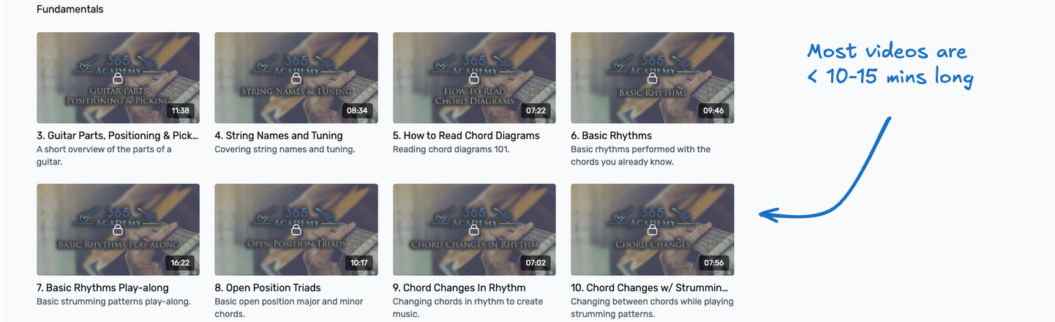
For example, people seeking educational content may have shorter attention spans and favor step-by-step video courses with short modules.
So, when creating an online course, keep your videos short, sweet, and direct. Like how Guitar Lessons 365 does:
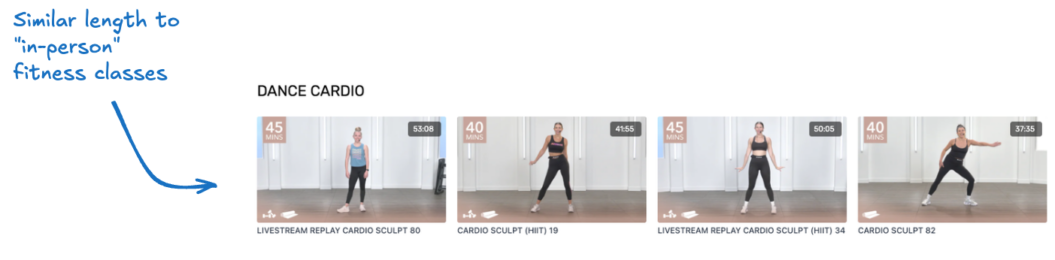
You can also think about this through the lens of “expectations.” If you run a fitness business, for example, people will expect different class lengths depending on the workout.
Jazzercise turns “in-person” classes into streaming videos. So, their workouts are a little longer to mimic the studio experience.
Using a content calendar helps you organize these insights and plan your videos effectively. It lets you schedule topics, ensure a consistent publishing rhythm, and balance different types of content to meet audience expectations.
There are no right and wrong answers here; just what works for your audience and the way you create content. When in doubt, stick to making content that is useful for your target audience.
Upload & organize your content
Once you have created enough videos to start selling, you’ll need to upload them to the video streaming platform of your choice.
If you’re using Uscreen, we’ve designed the uploading process to be as quick and easy as possible. All you have to do is drag and drop the videos into the “Content” area of your Uscreen dashboard, from any browser:
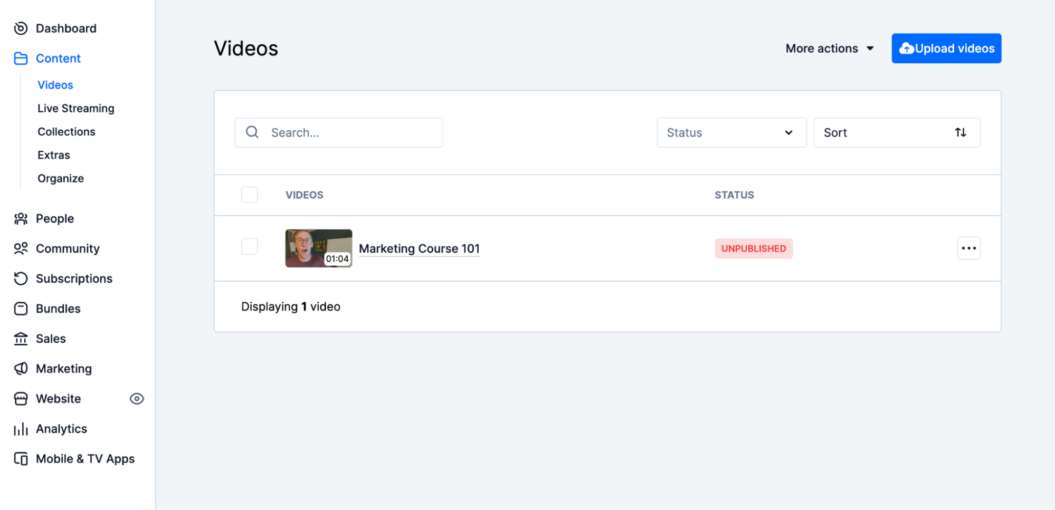
With your videos uploaded, it’s time to organize your content catalog. This means categorizing and displaying your videos in an optimal way that will boost sales and improve user experience.
A well-presented catalog showcases your content to potential customers, similar to window shopping.
And when videos are easy to find and watch, it can increase customer retention. After all, your videos are only as good as the customer’s ability to find them!
You can organize your content using 4 different components:
- Catalog: Your complete library of content, displayed by categories.
- Categories: The genres or topics of your videos and collections.
- Videos: Individual videos within a category.
- Collections: A curated group or series of videos meant to be watched together within a category.
This gives you plenty of flexibility to structure your videos effectively. Be sure to keep your niche in mind when organizing your content.
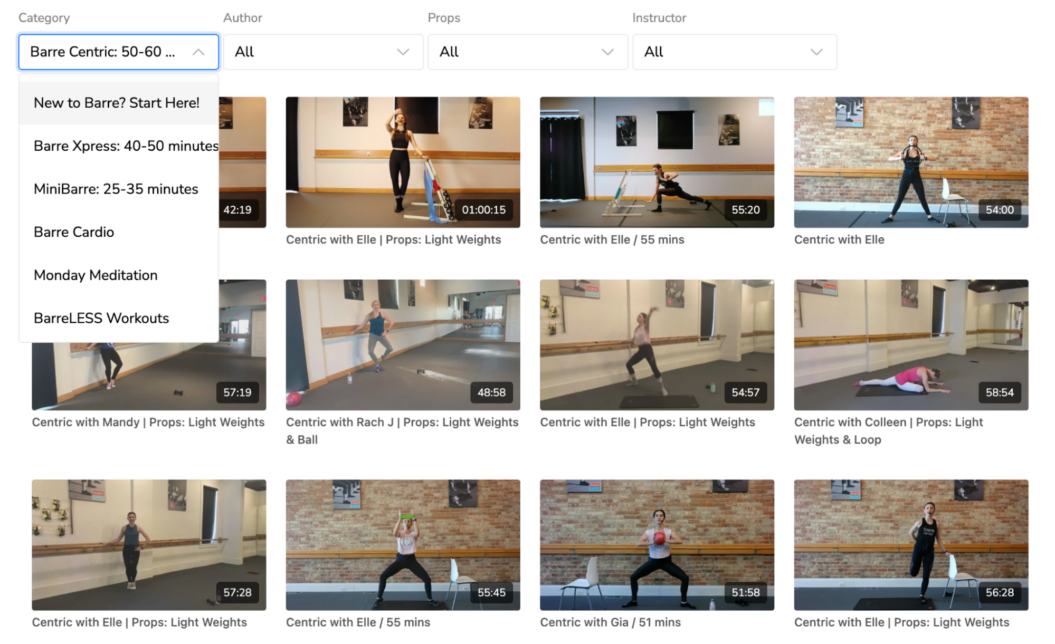
If you want to get even more specific, you can add custom filters to make relevant videos even easier to find.
For example, you can add a “workout duration” or “training type” tag to your fitness content so the user can quickly find the right video for their upcoming session, like Barre Centric does here.
Another useful tool is playlists, which help you guide viewers through related content in a structured sequence without creating a full collection. Playlists work best for step-by-step courses or series in which watching videos in order improves learning or engagement.
When uploading content, try to maintain a regular schedule. Consistent publishing keeps your audience engaged and can improve retention over time. A content calendar is useful here to plan your uploads and ensure your platform always has fresh content for your viewers.
6. Set a price that works for you and your audience
Once your research and preparation are complete, the next step is determining the right pricing strategy for your videos. Be sure to factor in key costs, including:
- Content creation costs: Time spent writing scripts, recording videos, creating graphics, and other content used in your course.
- Software and hosting costs: Any platform subscriptions or tools for content management and creation are also included.
- Marketing and advertising costs: These include any expenses related to promoting your course, like social media ads, email marketing software, SEO, and content marketing.
- Payment processing fees: Most payment platforms charge a fee per transaction.
- Taxes and business fees: Depending on your location and business structure, you may pay for taxes, licensing fees, and other business-related expenses.
Chris Sharpe, Co-Founder and COO of Find What Feels Good, shares his advice on how to approach your pricing:

There’s more to value than just undercutting competitors on price. It’s about striking that perfect balance between being affordable and delivering unbeatable value. That’s the sweet spot.
So, with all this in mind, what’s the easiest way to set your OTT pricing?
Start by setting up an income goal. Then, use our online pricing calculator below to determine the ideal price.
Use our free tool to pinpoint your ideal membership price in just 3 steps, leveraging a decade of data.
You just need to input the following information:
- Monetization model: Will you sell content under a membership or one-off?
- Revenue goal: What is your income goal for your content?
- Audience size: What will be your audience size at launch? Subscribers on YouTube, email lists, and social media can all be included in this number.
- Estimated conversion rate: What’s your average conversion rate? If you don’t have one yet, try between 1 and 3%.
- Development costs: How much did you spend to make your content?
- Payback period: How soon do you want to see a return on your investment?
- Average price of competitor platforms: How much do people spend on similar video platforms?
7. Customize your video website
Most video monetization platforms come with the ability to customize your video website.
How you want your site to look is up to you, but if you’re looking for some inspiration on high converting membership sites from other creators who’ve done it, key things to keep in mind include:
- Make your value crystal clear the moment visitors land.
- Showcase your content visually to build trust and reduce hesitation.
- Use social proof and transparency to boost conversions.
At Uscreen, we provide an editable template to help you quickly launch a beautiful video website. This template is designed to help you launch your membership site quickly by focusing on essential elements rather than overwhelming design choices.
You can customize key components like:
- Your top navigation
- Colors
- Images
- Important pages such as the About page and privacy policy
The real-time editing feature allows you to see changes instantly, making the customization experience seamless!
For even more control over the look and feel of your homepage, you can opt to create a custom landing page instead. Some platforms, including Uscreen, offer a drag-and-drop landing page builder to make this a simple and speedy process.
8. Launch and market your new platform
Once your site is up and running, it’s time to start promoting it.
To make things as simple as possible for you without compromising on the results, start by setting up the built-in marketing tools offered by your platform.
At Uscreen, these are the three marketing tools we recommend setting up during your launch:
- Email list: a tool (e.g. Mailchimp) that allows you to collect the email addresses of your potential customers.
- Membership upsell: a tool that allows you to offer point-of-purchase upsells of your subscriptions to customers.
- Abandoned cart tool: a tool that automatically contacts people who leave the sales process before completing their purchase.
These tools help you build a solid foundation to support the long-term marketing strategy of your business, as well as to recoup any potential “lost” income from on-the-fence customers.
If you’re a Uscreen customer, you can access a full suite of marketing tools that help you do all of the things in the list above, as well as:
- View in-depth analytics
- Create coupons
- Offer gift cards
- Reduce churn
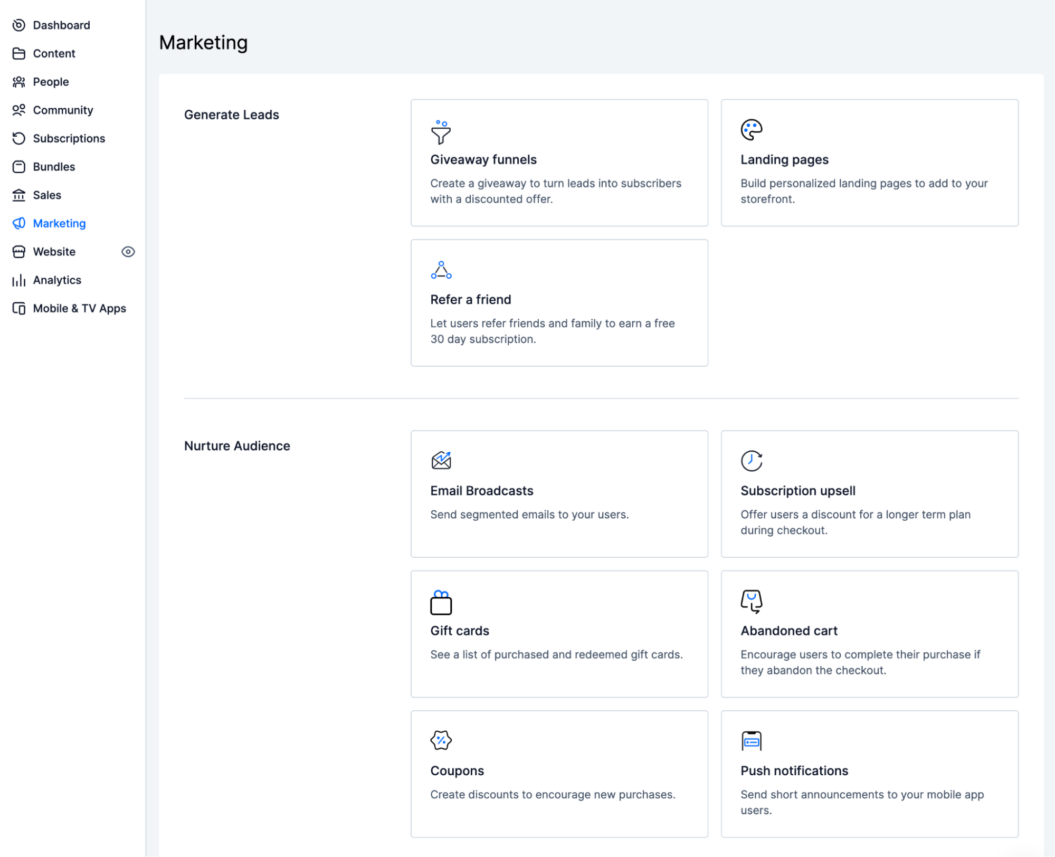
And if you have your own preferred tools, like email marketing software, you can use our integrations to mix and match to create a personalized workflow that works best for you. With your marketing tools in place, you can start spreading the word about your new platform.
The way you promote your video-on-demand website will vary based on the needs of your audience, as well as their demographics and preferences. For example:
- If you create short-form tutorials, you’ll probably need to be more active on social media platforms like TikTok.
- If you create long-form entertainment content, you’ll probably need to be on Instagram and look for advertising opportunities in popular publications.
But there will always be some core lead magnets for membership conversions. These include:
- Push notifications
- Membership scaling and retention
- Driving traffic to your site via social media
- Repurposing your paid content for social media
- Paid advertising
- Email marketing
9. Measure & scale your video membership
Once your membership is live, growth comes from consistent tracking, optimization, and scaling. The best video businesses rely on data to see what’s working, what isn’t, and where their audience is most engaged.
Start by measuring core metrics like:
- Conversions
- Retention
- Churn
- Watch time
- Revenue
These insights show how your membership is performing and highlight areas for improvement. Understanding member behavior helps you refine content, adjust marketing strategies, and double down on what resonates.
As your membership grows, look for strategic ways to scale. This could include expanding your content library, introducing new monetization models, enhancing community features, improving your website experience, or launching mobile and TV apps.
Small, consistent upgrades keep your platform fresh, improve the user experience, and boost user retention.
The most successful creators treat their membership like a living, evolving product — testing, listening, and improving continually. That’s how you build long-term growth and a loyal, engaged community around your content.
Methods for selling videos online
Selling videos online simply means charging people for access to your content instead of having them freely available on YouTube or social media. There are multiple ways you can do this, which fall under four different types of business models.
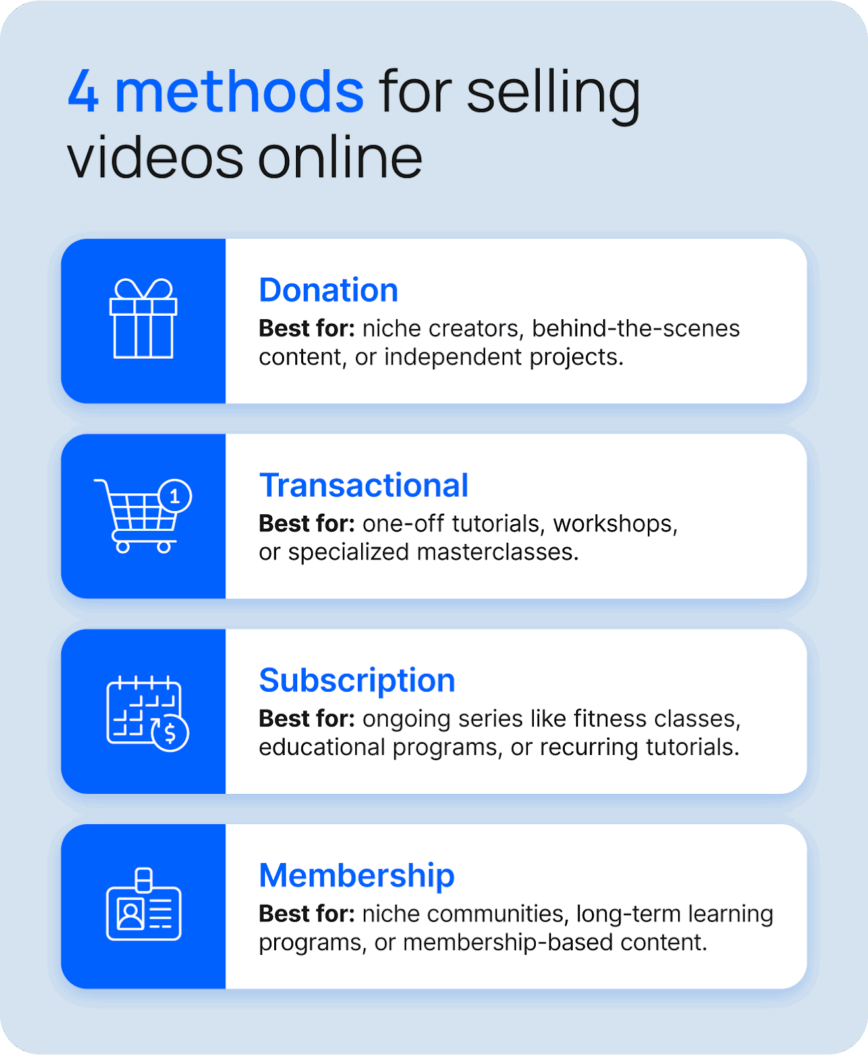
Donation
Viewers voluntarily pay to support your work. This works best for small, engaged audiences who want to contribute in exchange for perks or early access. Donations let your most dedicated fans feel involved in your success.
Tips:
- Offer exclusive perks like early access, behind-the-scenes content, or shout-outs.
- Make it easy to donate with clear buttons or links.
- Regularly thank supporters to reinforce loyalty and engagement.
Transactional
Customers pay for individual videos or courses. This model is ideal for one-off tutorials, masterclasses, or specialized content. It works well for content that provides immediate value or solves a specific problem.
Tips:
- Price content based on value and uniqueness; higher quality or niche content should cost more.
- Bundle related videos for a limited time to incentivize buyers.
- Highlight key takeaways or benefits to encourage purchases.
Subscription
Viewers pay a recurring fee for ongoing access to your content. This creates predictable revenue and encourages regular engagement.
Subscriptions are especially effective when you consistently deliver fresh, valuable content.
Tips:
- Deliver content consistently to keep subscribers engaged.
- Offer tiered pricing to attract different audience segments.
- Provide regular updates or sneak peeks to free channels like YouTube to maintain excitement and retention.
Membership (subscription + community):
Members pay for both content access and a community experience, like forums or live sessions. This model fosters loyalty and long-term engagement beyond just the videos.
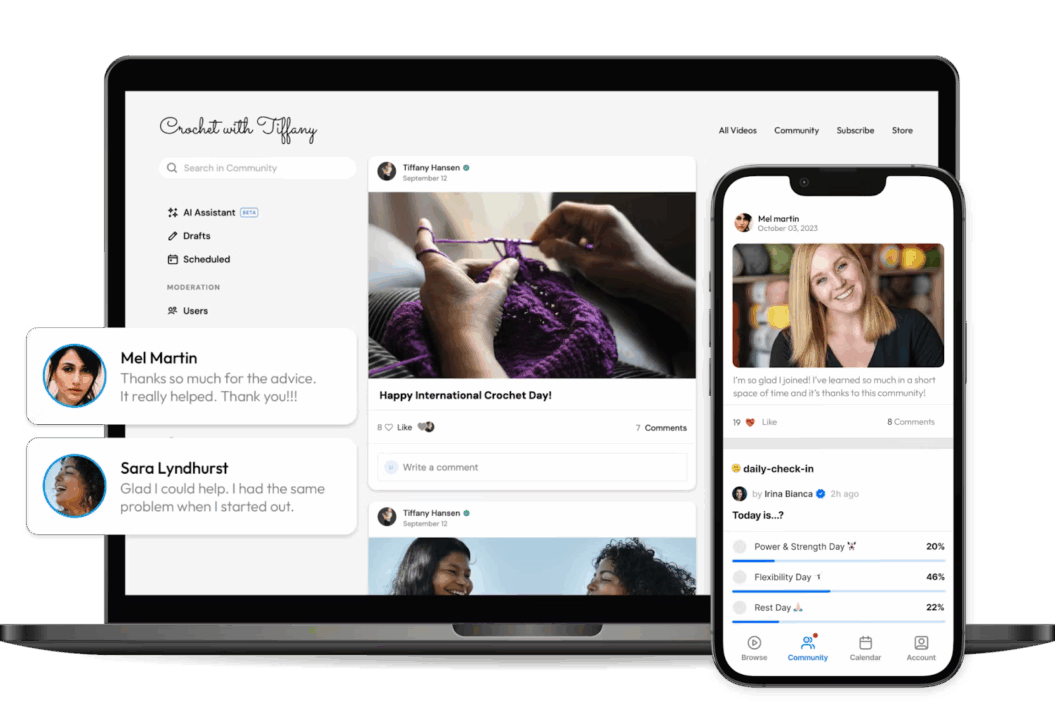
Your community features should enhance the subscriber experience by making them feel more involved and connected.
Tips:
- Encourage interaction through discussion boards, live Q&As, or member challenges.
- Offer members-only content or events to make the community feel exclusive.
- Reward active participation to strengthen bonds and reduce churn.
Case study: Pilates by Leah
Leah Maselli switched from Playbook to Uscreen, leveraging community features like discussion boards, live Q&As, and in-app posts to boost engagement. These tools contributed to an 85% increase in membership and a 62% increase in watch time. She posts nearly every day and plans to expand with instructor mentorship and other community-driven offers to support long-term growth.

The fact that people ask each other questions like ‘What cert did you do?’ makes me so happy. They’re not just DMing me anymore — it’s peer-to-peer. That’s how a real community forms.
Sell video courses online with Uscreen
If you’re ready to turn your expertise into a sustainable business, Uscreen makes it simple to sell videos online and grow your brand. Our all-in-one platform helps creators monetize videos, build engaged communities, and deliver a professional, engaging experience to their audience.
With Uscreen, you can also explore scalable business ideas, like memberships, courses, and bundles that help you consistently grow revenue.

How to sell videos online FAQ
Which website is the best place to sell videos online?
The best websites offer all-in-one features for monetization, content management, and community building. Platforms like Uscreen make this setup fast and easy. Look for a platform that also includes useful features like analytics, marketing integrations, and dedicated customer support.
How do you sell videos for money?
You can sell videos through multiple monetization options depending on your content and audience:
- Transactional (one-off purchases): Perfect for tutorials, masterclasses, or specialized content.
- Subscription: Ongoing series like fitness classes or educational programs.
- Membership: Combines content access with community features for loyal audiences.
- Donations: Let your fans support you voluntarily, often in exchange for perks or early access.
How much should I charge for a 1-hour video?
Pricing depends on your niche, audience size, and perceived value. Many creators charge $10–$50 per hour of high-value content, or include it as part of a subscription or bundle.
Pricing doesn’t have to be static, so make sure to adjust your prices based on sales and engagement metrics.
How do I turn my video-selling business into recurring revenue?
Offer subscriptions or memberships that combine access to your content with community features, like live sessions or ongoing series. This gives your audience a reason to return regularly.
If you offer free content, consider adding perks like early access, exclusive content, or Q&A sessions to increase engagement and reduce churn.