If your platform takes a high cut of every sale, caps your earning potential, or limits the monetization options available to you, it may be time to make a change.
The right video monetization platform should grow with you, whether you’re earning through ads, selling premium content, or building a digital content monetization strategy with real recurring revenue.
We consulted real creators and industry experts, including Kylie Julien, senior video production specialist at Uscreen, to cut through the noise and match you with the right platform for your goals.
Best video monetization platform overview
Here are the best video monetization platforms for every stage, from beginners to established creators looking to level up their business. We’ll cover how to maximize earnings through recurring subscriptions, on-demand content, pay-per-view, and revenue share.
Not sure which video monetization model is right for you yet? We have you covered for that too.
| Platform | G2/Capterra Rating | Best for | Pricing |
|---|---|---|---|
| Uscreen | 4.7/5 | Video memberships | From $49 per month + $1.99 per subscriber |
| YouTube | 4.7/5 | Video monetization newbies | Free |
| Patreon | 4.1/5 | Fan funding | 10% of revenue |
| Kajabi | 4.1/5 | Online courses | From $143 per month |
| Vimeo OTT | 4.3/5 | Transactional video on demand | From $1 per subscriber + 10% of transactions |
Uscreen
Best for: Video memberships
G2 Rating: 4.7/5
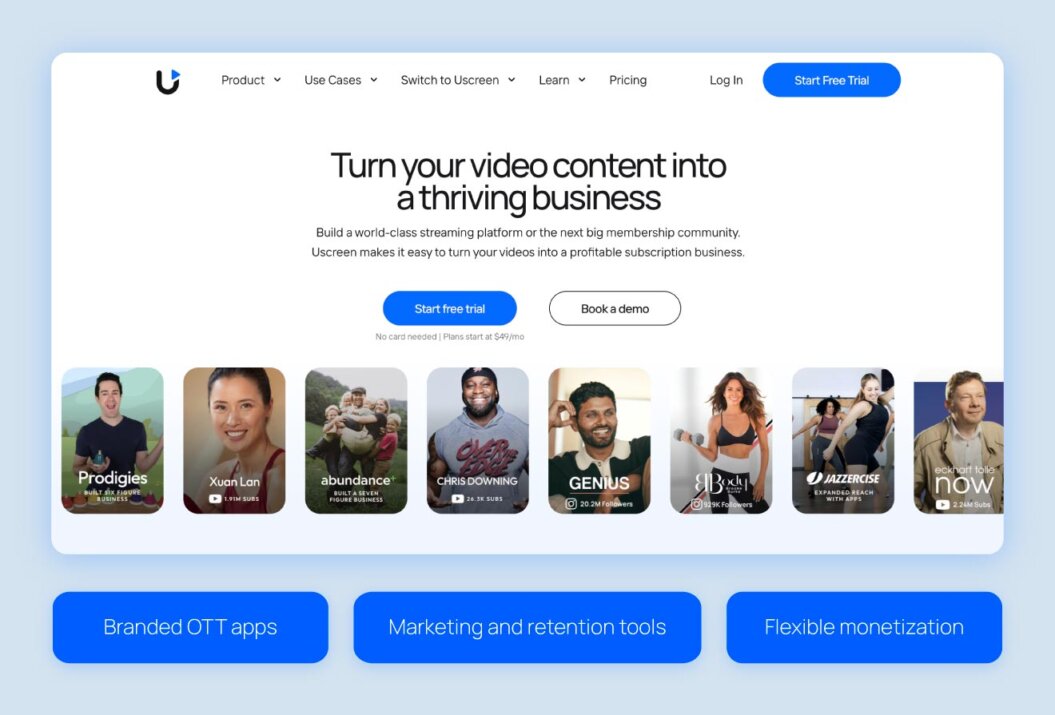
Uscreen is an all-in-one video membership platform built for creators looking to turn their content into a recurring revenue business. Purpose-built for memberships, you get a branded, Netflix-style experience, built-in community, live streaming, and native mobile and TV apps, all in one place.
Built-in marketing tools and automations handle the busywork (like abandoned cart reminders and member win-backs), so you spend less time managing your platform and more time creating.
As Uscreen CTO Nick Savrov puts it:

Patreon and YouTube memberships are actually positive indicators for us – they’re creating a pipeline of professionalizing creators. When creators outgrow the donation mentality and want to build real businesses, that’s where Uscreen shines. We’re not competing with these platforms; we’re the next step in a creator’s evolution.
| Pros | Cons |
|---|---|
|
|
Key features
- Branded OTT apps: Your members can access your content across multiple devices, no coding required.
- Flexible monetization: Combine subscriptions, pay-per-view, rentals, and one-time purchases in one place.
- Community and live streaming: Keep members engaged with a community space and live events integrated with your video library.
- Marketing and retention tools: Automated funnels, abandoned cart reminders, gift cards, and upsells, all built in.
Reviews
What I love most about Uscreen is how intuitive the platform is and the complete transparency it provides in analytics. Having clear, reliable data allows me to confidently make business decisions without any guesswork.
Leah P., verified G2 review
Creator snapshot: Uscreen
Jessica and Kevin ran ClayShare, an online pottery school, across three separate platforms for videos, community, and resources. After years on Vimeo OTT, their members had no way to connect, share their work, or engage without jumping between tools.
When they migrated to Uscreen in early 2024, everything came together in one place. Live streaming with real-time chat made lessons feel like shared moments. Branded apps let members create together from anywhere, and community groups helped thousands of potters find their people.
Watch our quick platform demo to see how Uscreen can help you monetize your videos and grow your audience.
Pricing
- Starter: $49/month (up to 100 subscribers)
- Growth: $149/month + $1.99/subscriber
- App Essentials: $449/month + $0.99/subscriber
- Custom: Custom pricing
YouTube
Best for: Beginner monetization
Capterra Rating: 4.7/5
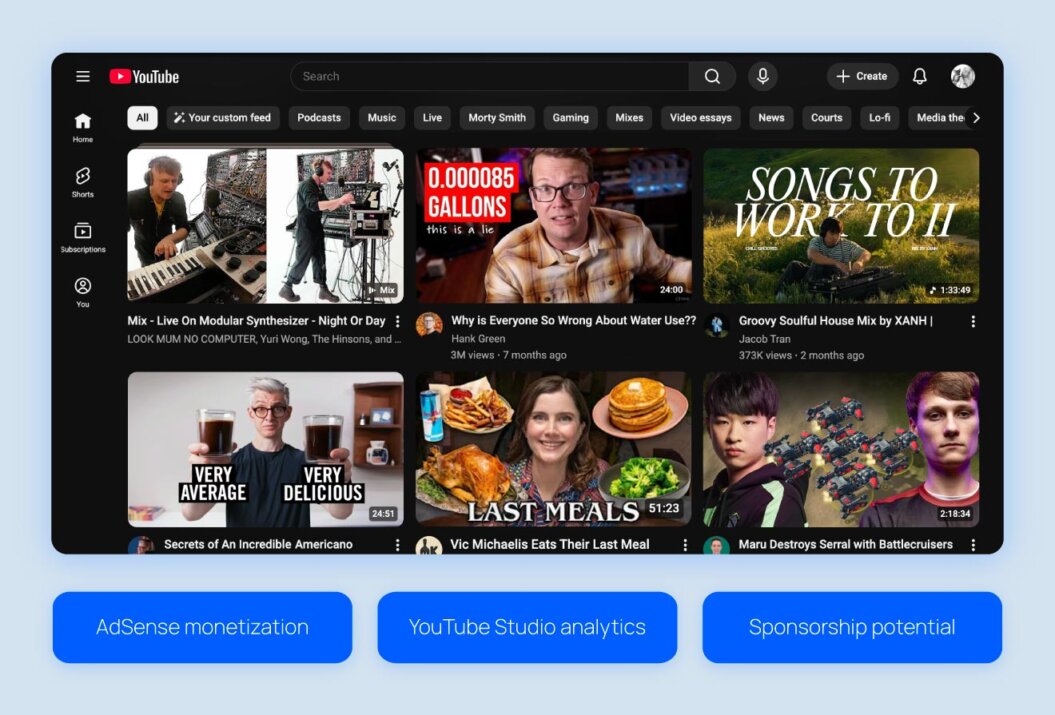
YouTube is where most creators start, and for good reason. With over 2 billion monthly viewers, it gives you immediate access to the world’s largest video audience at no upfront cost. You can experiment, grow, and start earning through ads, sponsorships, and memberships without risking a dollar.
The tradeoff is control. YouTube takes 45% of ad revenue, algorithm changes can cut your reach overnight, and demonetization is always a risk. It’s the best platform for building an audience from scratch, but for established creators ready to build a sustainable, recurring revenue business, you’ll need more support.
Want to know what your channel could earn? Use our CPM calculator to estimate your YouTube revenue.
| Pros | Cons |
|
|
Key features
- AdSense monetization: Earn passive income from ads on your videos with no upfront investment required.
- YouTube memberships: Offer paying subscribers exclusive perks and content directly on the platform.
- YouTube Studio analytics: Track performance, audience behavior, and revenue across your channel.
- Sponsorship potential: A large subscriber base opens doors to brand deals that often outpay AdSense.
Reviews
YouTube has by far been our most lucrative social media platform. Not only does AdSense pay more on long-form videos than other social platforms do for video content, but brands pay a higher dollar for sponsoring long-form videos largely due to their reach and evergreen lifespan.
Chris and Sara, Verified YouTube User
The amount of money I earn from my YouTube channel is only partly down to me. Whilst I can optimize my videos the best I possibly can, there is a huge amount that is not within my control, which means that my income can often be very inconsistent.
Jade Beason, Verified YouTube User
Creator Snapshot: YouTube
Jade Beason is a creator and entrepreneur who built a 250,000-subscriber educational channel on YouTube, earning $49,000 in AdSense revenue in 2024 alone. But AdSense is just one of her revenue streams. Jade is also a Uscreen creator, using YouTube to grow her audience and her membership platform to monetize it.
Her story is a blueprint many successful creators follow. YouTube’s 2 billion monthly viewers make it unmatched for discovery and growth. But its unpredictable algorithm and 45% revenue cut make it a difficult foundation for a stable business.
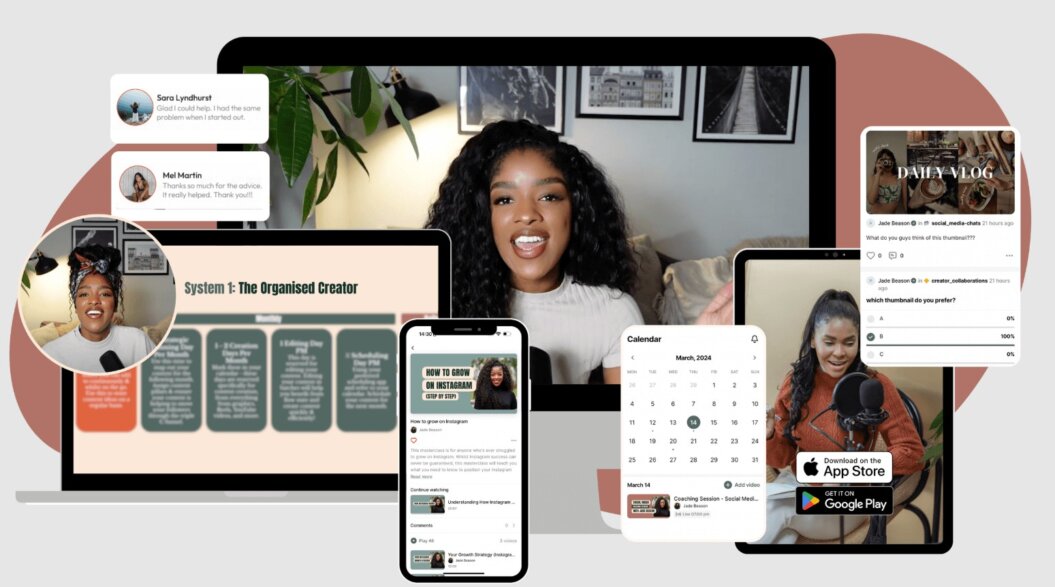
The creators who thrive long-term use YouTube to fill the top of their funnel, then convert that audience into paying members on a platform they own.
While YouTube works at every experience level, once you’ve built an audience, adding an alternative monetization platform or additional revenue streams on top of AdSense is the clearest path to stable, recurring income.
Pricing
Free to join and upload, but YouTube keeps 45% of AdSense revenue.m a beginner creator, which is why AdSense is just one of her many revenue streams.
Patreon
Best for: Fan funding
G2 Rating: 4.1/5

Patreon is the go-to platform for creators who want to earn directly from their biggest fans. It’s quick to set up, free to start, and its brand recognition means audiences already understand how it works before they even land on your page. For creators who want a low-maintenance way to offer exclusive content to a loyal fanbase, it delivers.
The ceiling, though, is real. Patreon is built around fan donations rather than a true subscription business model, which makes it hard to scale. It has no native video hosting, limited content organization, and no migration path for subscriber payment details if you decide to move.
More experienced creators who tend to earn more through their video content monetization may want to seek out alternatives to Patreon that offer more features and scalability for a better price.
| Pros | Cons |
|
|
Key features
- Tiered memberships: Offer different levels of access and perks based on monthly contribution amount.
- Exclusive content posts: Share videos, audio, text, and images behind a paywall for paying patrons only.
- Patron management: Track and communicate with your supporters directly through the platform.
- Integrations: Connect with YouTube, Vimeo, and Discord to deliver content and community.
Reviews
Patreon treats its content creators very well I feel and the creators get to ask for donations to help them with creating more content and maintaining their channels on Patreon. I feel like Patreon puts content creators in the drivers seat when it comes to controlling what they choose to produce compared to other platforms which are not as friendly to content creators of which I won’t mention.
Lindsay H., Verified Patreon User (Source)
The app’s organization is terrible for users who are trying to access posts that are anything other than the most recent. The only option is to scroll and scroll every time you want to see an older post (or listen to an older podcast episode), and I find that incredibly annoying.
Avery C., Verified Patreon User (Source)
Creator Snapshot: Patreon
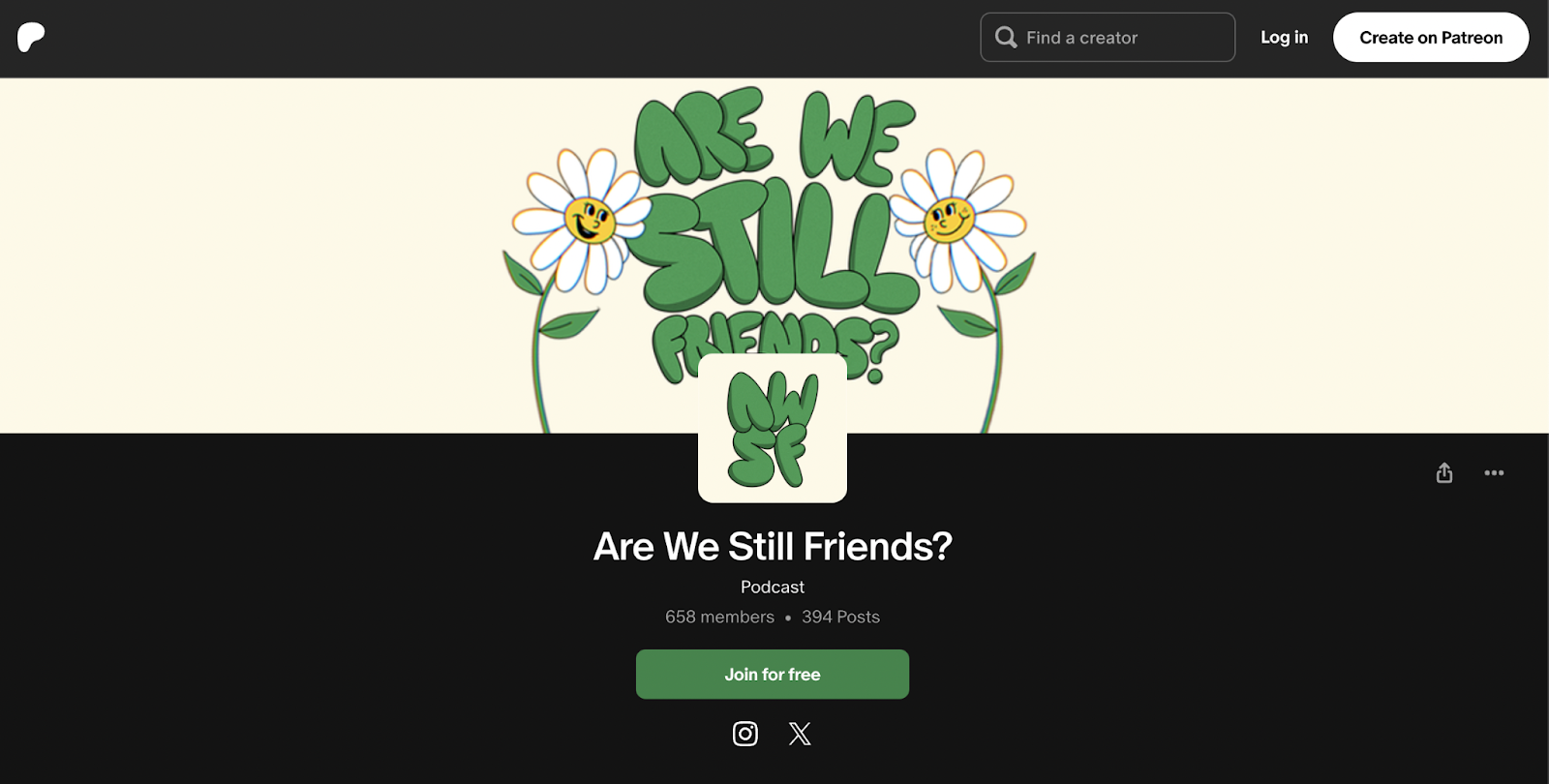
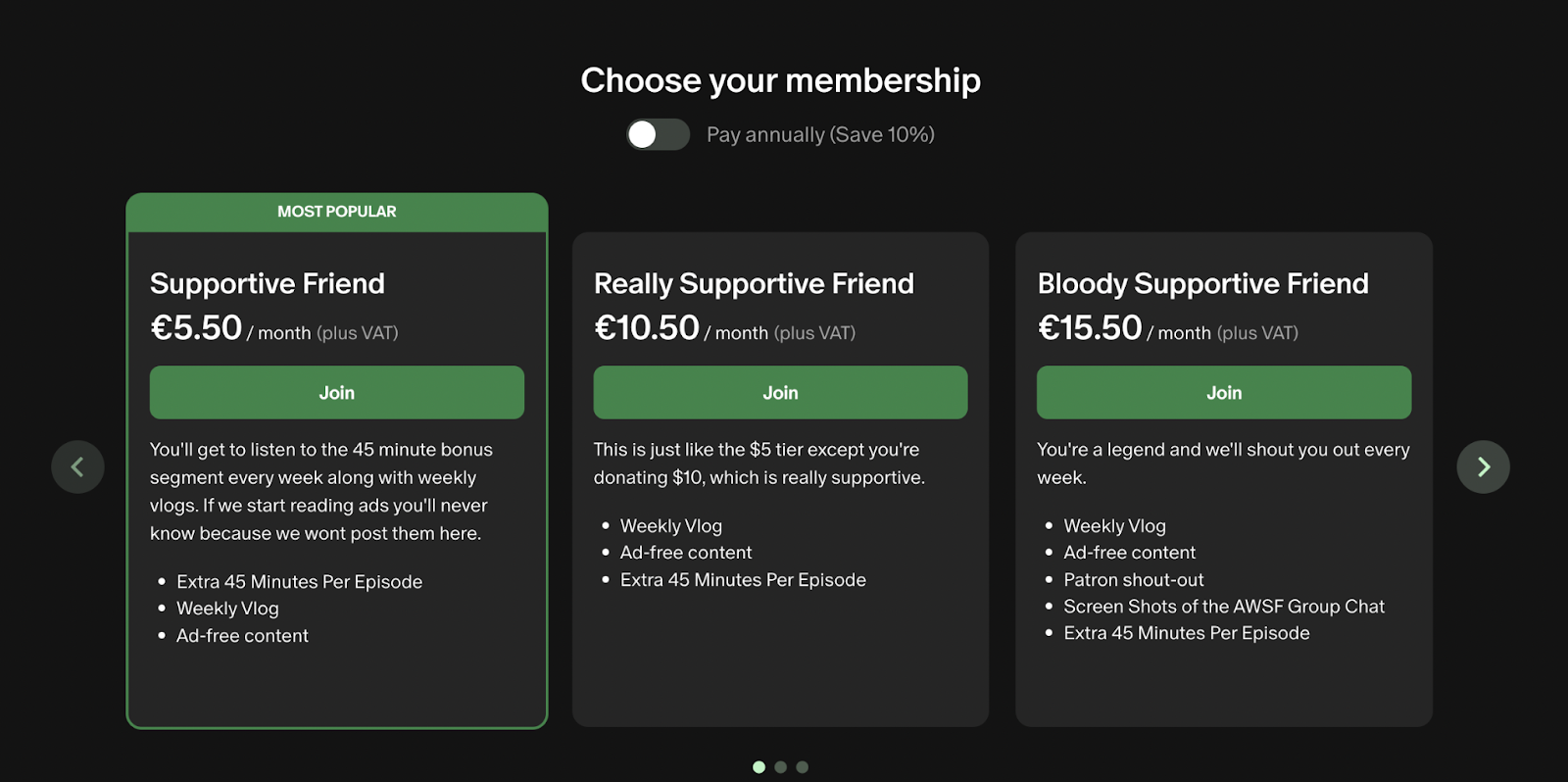
Are We Still Friends? is a video podcast that established an audience on YouTube and graduated to monetizing content through Patreon. With 27,000 subscribers on YouTube and 650+ patrons on Patreon, the AWSF podcast represents many small-to-medium-sized creators who find Patreon to be worth it, thanks to its ease of setup, low upfront cost, and low-maintenance nature.
More experienced creators who tend to earn more through their content monetization may want to seek out alternatives to Patreon that offer more features and scalability for a better price.
Patreon’s tiered support options mean fans of AWSF can get weekly ad-free podcast episodes, bonus segments, and shoutouts on the podcast, depending on their monthly payment tier.
Want to see how Uscreen compares to Patreon? We break it down on our Uscreen vs. Patreon page.
Pricing
- Free to start
- 10% of monthly earnings (standard plan for new creators)
- Legacy plans may apply for creators who joined before August 4, 2025
Kajabi
Best for: Online video courses
G2 Rating: 4.1/5
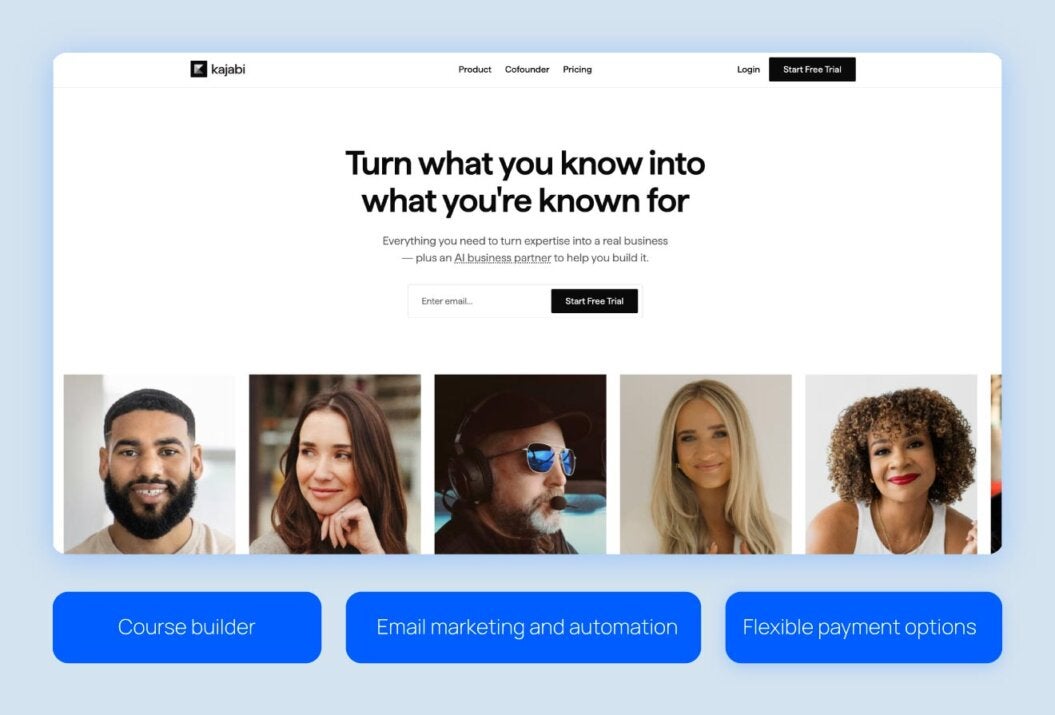
Kajabi is a premium all-in-one platform built for educators, coaches, and entrepreneurs who want to turn their expertise into structured online courses. You get a polished website builder, built-in email marketing, sales funnels, and payment processing, all without needing to stitch together third-party tools.
For course creators who want to launch fast and look professional while doing it, Kajabi is hard to beat.
Where it falls short is for creators building a video-first membership business. Community tools are limited, automation can be unreliable, and pricing jumps quickly as your needs grow. If recurring revenue from a loyal subscriber base is the goal, you may find yourself wondering whether Kajabi is worth it before long.
| Pros | Cons |
|---|---|
|
|
Key features
- Course builder: Create structured, multi-module courses with video, downloads, and coaching calls in one place.
- Website and landing pages: Build polished, high-converting sales pages with no technical skills required.
- Email marketing and automation: Nurture leads and sell courses with built-in funnels and automated sequences.
- Flexible payment options: Offer one-time purchases, payment plans, and subscriptions from a single platform.
Reviews
Kajabi is phenomenal as a LMS (learning management system) for my courses. It’s simple to set up, there is minimal technical responsibility on our end (don’t have to worry about updates, plugin conflicts, server maintenance, etc), and the user experience is easy, intuitive, and effortless. The primary reason we adopted Kajabi was for the end user experience it created. After using WordPress based LMS for years, it freed up a lot of time and worry having all the backend tech handled.
Ashlie P., Verified Kajabi User (Source)
Automation on Kajabi often failed—20% of the time. I got unhelpful replies like ‘Sorry, sometimes automations fail.’ It was frustrating because in their marketing campaigns, “powerful automations” seemed like a huge selling point, but on the backend, I could see not enough money was being spent towards improving the product’s functionality.
Liz Kohler Brown, Founder of The Studio Membership (Source)
Creator Snapshot: Kajabi
Liz Kohler Brown built The Studio Membership on Kajabi and hit its ceiling fast. Her content library outgrew the backend, community tools frustrated members, automations failed 20% of the time, and limited analytics made it nearly impossible to understand what members actually wanted.
She migrated to Uscreen in 2023 with 500+ videos and real concerns about churn. The Uscreen team handled the heavy lifting. Within months, Liz had branded apps, reliable automation, and the analytics she needed to grow with confidence.
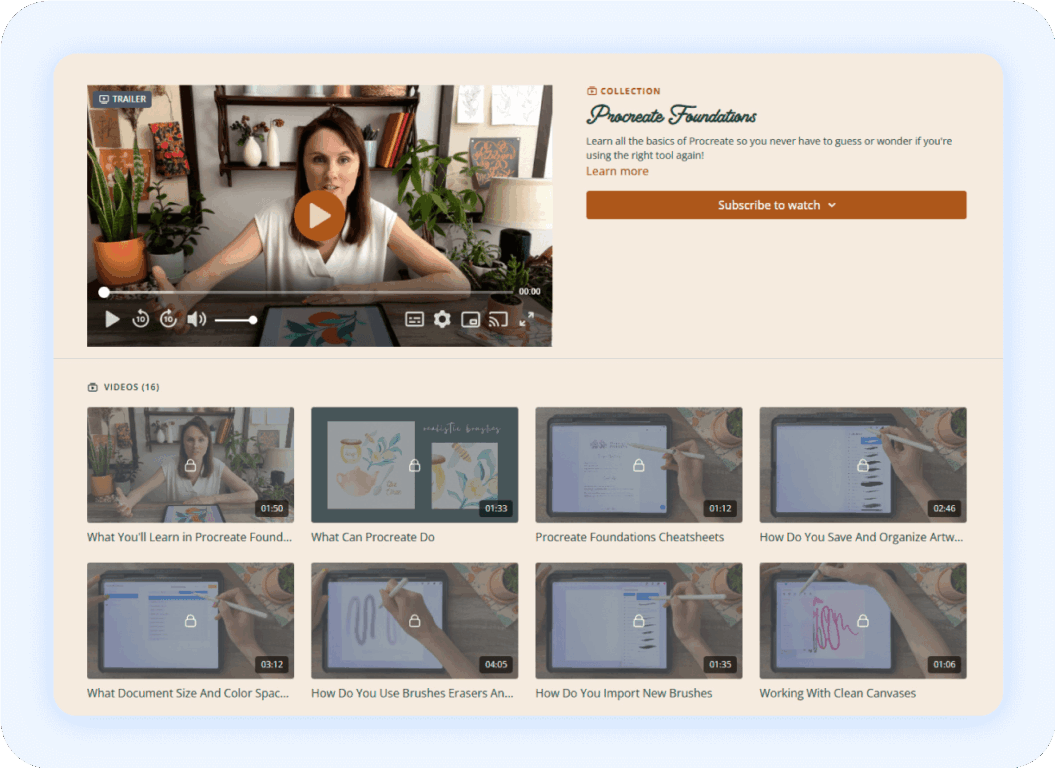
Today, The Studio Membership has 1,800+ active members and generates $75,000 in monthly revenue.
Want to see how the platforms compare? We break it down on our Uscreen vs. Kajabi page.
Pricing
- 14-day free trial available on all plans.
- Basic: $143/month billed annually
- Growth: $199/month billed annually
- Pro: $399/month billed annually
Vimeo OTT (now Vimeo Streaming)
Best for: TVOD
G2 Rating: 4.3/5
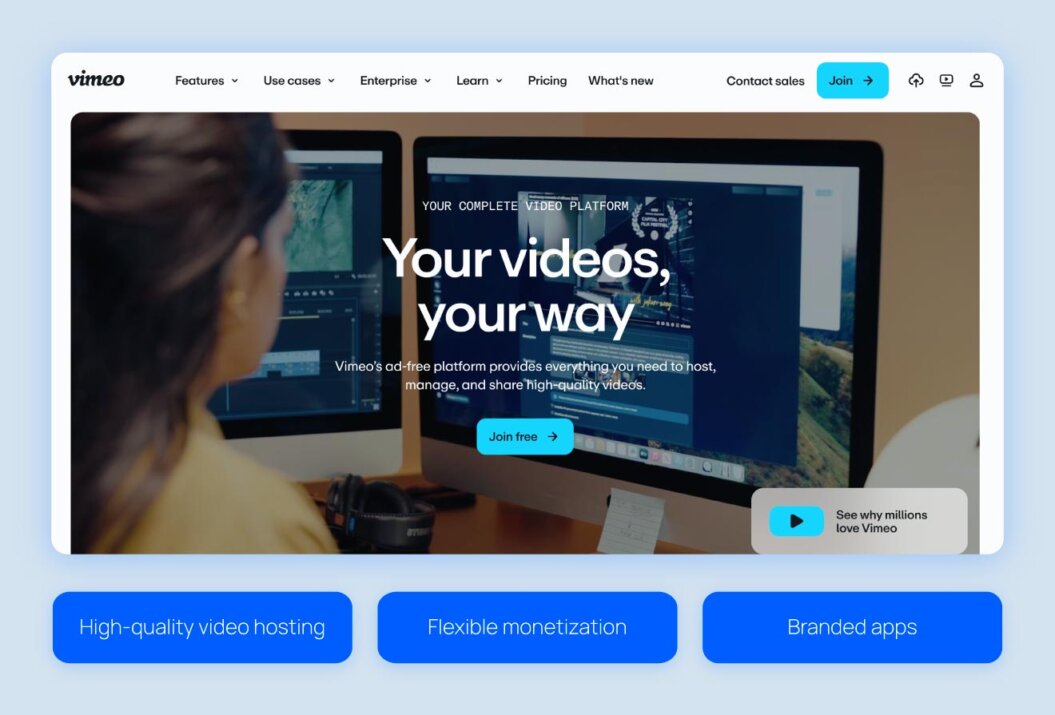
Vimeo OTT is a sleek, high-quality OTT platform built for media companies, filmmakers, and professionals who want to sell video content through pay-per-view or rental models. The video playback quality is excellent, the branded apps look polished, and the platform gives you flexible monetization options, including subscriptions and one-time purchases.
Where it falls short is everything around the video. There are no built-in community tools, no content discovery, and limited engagement features. Members are on their own to find what to watch, and there’s no way to connect with each other or with you.
For creators whose business depends on retention and recurring revenue, Vimeo OTT alternatives become a better fit.
| Pros | Cons |
|---|---|
|
|
Key features
- High-quality video hosting: Deliver professional-grade, ad-free video across web, mobile, and TV apps.
- Flexible monetization: Offer subscriptions, pay-per-view, and rentals from a single branded platform.
- Branded apps: Launch your own TV and mobile apps under your brand without building from scratch.
- Content migration: Move your existing customers and video library to another platform if needed.
Reviews
Vimeo OTT has a very user friendly interface on web as well as mobile app. It helps in seamlessly manage the video content across platforms and channels thus enabling a better control and achieve a wider reach.
Verified Vimeo OTT User
There was no way, with Vimeo, for there to be a community and for customers to engage—not only with me but with each other… My workouts were just a free-for-all. You opened the app and took a stab at one of the workouts, and if it worked for you, great, but there was no real guidance.
Macy Pruett, Founder of Fittest Core
Creator Snapshot: Vimeo
Macy and Chase Pruett built Fittest Core on Vimeo OTT and quickly hit its limits. With 600+ videos and a growing community of moms, the platform’s poor content navigation, high costs, and lack of community tools made it impossible to deliver the experience their members needed.
They migrated to Uscreen at the end of 2023. Members could suddenly navigate content with ease, ask questions directly, and connect with other moms around the world. Chase finally had clean data and automated marketing tools that worked. Macy was on the app every day.
Since migrating, Fittest Core has grown 15% in monthly revenue, reached 826 active members, and achieved 58% monthly community engagement.
Pricing
- Pricing is based on a per-subscriber fee plus a percentage of transactions
- Contact Vimeo directly for a current quote
Video monetization platforms: Quick summary
If you’re still not entirely sure which video monetization platform is for you, here’s some guidance that will help you in your journey:
| Platform | Choose it if … |
|---|---|
| YouTube | You want to build an audience and earn through ads and sponsorships with no upfront cost |
| Patreon | You want direct fan support and a simple way to offer exclusive content to your most loyal followers |
| Kajabi | Your focus is on structured online courses with built-in marketing and sales tools |
| Vimeo OTT | You want high-quality pay-per-view or subscription-based video sales without community features |
| Uscreen | You’re serious about building a video membership business with branded apps and recurring revenue |
How to pick the best video platform monetization
Choosing the right video monetization platform comes down to understanding your business. Choosing any of the top video monetization platforms can be a good choice, but that doesn’t mean all of them will be the right fit for you.
As Kylie Julien, Senior Video Production Specialist at Uscreen, puts it:

To earn stable revenue from your video content, you need one of two things: a constant flow of new customers, or a set of customers who pay you consistently. The latter is a lot easier, which is why so many creators are building recurring businesses. Whether they call it a club, a mastermind group, a subscription, etc. — they know that focusing on retention is a better route to sustainability.
Here are five questions to help you find the best fit:
1. How do you want to monetize?
If you like the idea of your greatest fans paying you for exclusive content, for example, Patreon is a good choice. If, on the other hand, you want to charge for individual courses, Kajabi might be a better fit.
Learn more about video monetization2. How experienced are you in video creation?
As a beginner, YouTube is hard to beat because it lets you practice your creation and marketing skills for free. If you’re ready to get serious, though, Uscreen has lots of features that support video monetization on a higher level.
Learn more about video experience3. Is your audience willing to pay for your content?
Ad-supported platforms like YouTube are good for video creators whose audiences aren’t ready to pay to access video content, but if you’re looking for video platforms that pay, more established OTT platforms like Vimeo will let you charge for access to your content.
Learn more about community features4. How much time can you commit to your video monetization business?
If you need something fast, YouTube and Vimeo will get you started immediately, while more robust services like Kajabi and Uscreen require more time, but offer a lot more functionality.
5. What resources do you have to invest?
Video creators just getting started may be drawn to YouTube or Patreon, which don’t cost anything until you start earning. If you have some cash to invest, though, Kajabi or Uscreen will let you create a much higher-quality product to sell.
How we chose these video monetization platforms
We’re a video monetization platform ourselves, so it’s fair to wonder about the objectivity of our recommendations. Our mission is to help creators and their fans prosper through meaningful connection, and that doesn’t begin and end with our service.
That’s why we’ve taken a methodical, evidence-based approach, drawing from expert reviews, direct creator interviews, survey data, and our decade-plus of industry experience.
We don’t believe in generic “best to worst” rankings because each platform excels at something specific. Sometimes Uscreen will be the right fit, and sometimes it won’t be — we’ll be direct about that. Because proper user-product matches create thriving creators, and that’s what ultimately matters.
Drive predictable revenue with Uscreen
Choosing the right video monetization platform is the difference between chasing revenue and building it predictably. Ad income fluctuates, algorithms change, and platforms that weren’t built for memberships will eventually hold you back.
Uscreen is built for creators who want to balance recurring revenue with member engagement. With a branded video library, native apps, built-in community features, and marketing automation, you have everything you need to launch and grow a successful content membership.
Video monetization platform FAQ
If your goal is recurring revenue for a video-focused membership business, Uscreen is the best option. Newer creators focused on building an audience through ad revenue can use YouTube. Patreon works well for fan-funded support.
These are all different ways of selling video content. AVOD is where you monetize through advertising, so you make money through advertisers, and your audience watches your content for free. SVOD is the subscription model, where users pay a monthly or yearly fee for ongoing access to your video library. TVOD is offering one video or collection for sale as a one-off fee.
YouTube and Patreon are ideal platforms for beginners. You can get set up and build an audience without an upfront cost. Kajabi and Uscreen are both good choices for educators; Kajabi has built-in course features, while Uscreen offers a user-friendly Netflix-style library and built-in community. Patreon is well-suited to musicians as a space for their fans to support their work, and both Uscreen and Vimeo offer high-quality live streaming.
No, only Uscreen, Kajabi, and Vimeo Streaming offer analytics, paywall options, and integrated payment processors. Patreon offers paywall options and in-platform payments. With YouTube, you can launch a paid membership if you’re eligible and keep track of analytics through YouTube Studio.
Focus on retention as much as acquisition. The most effective levers are consistent content, an engaged community, and smart automation.
Platforms like Uscreen have built-in tools like member win-backs, abandoned cart recovery, and upsell prompts. They work in the background to grow and retain your membership without extra effort on your part.
No, a small, engaged audience will outperform a large, passive one every time. Creators on Uscreen regularly hit $1,000+ in monthly recurring revenue with under 100 subscribers by pricing their membership correctly and delivering consistent value. What matters most is that your audience trusts you and sees the value in paying for access.