Digital content monetization is one of the most effective ways for creators to scale their business. With global creator revenue projected to reach $500 billion by 2027, there’s more opportunity than ever to grow your recurring revenue and maximize the value of your content.
Popular monetization options include subscriptions, memberships, digital products, and pay-per-view (PPV). These models give creators greater control and flexibility to grow their businesses.
This guide will walk you through the leading monetization models in 2026 and help you choose the content monetization strategies that best align with your goals, audience, and the type of content you create to maximize earning potential.
What is digital content monetization?
Digital content monetization is the process of earning revenue directly from the content you create and share online, through one-time purchases or recurring formats.
While creators have traditionally relied on ad revenue, today there are far more ways to monetize your content, including:
- Online courses
- Memberships
- Subscriptions (SVOD)
- Pay-per-view
- Digital products
- Merchandise
- Donations
Choosing the right monetization models lets you earn income directly based on the value you provide to your audience, rather than indirectly through the whims of algorithms or ad rates on platforms like YouTube or TikTok.
The digital content lifecycle looks like this:
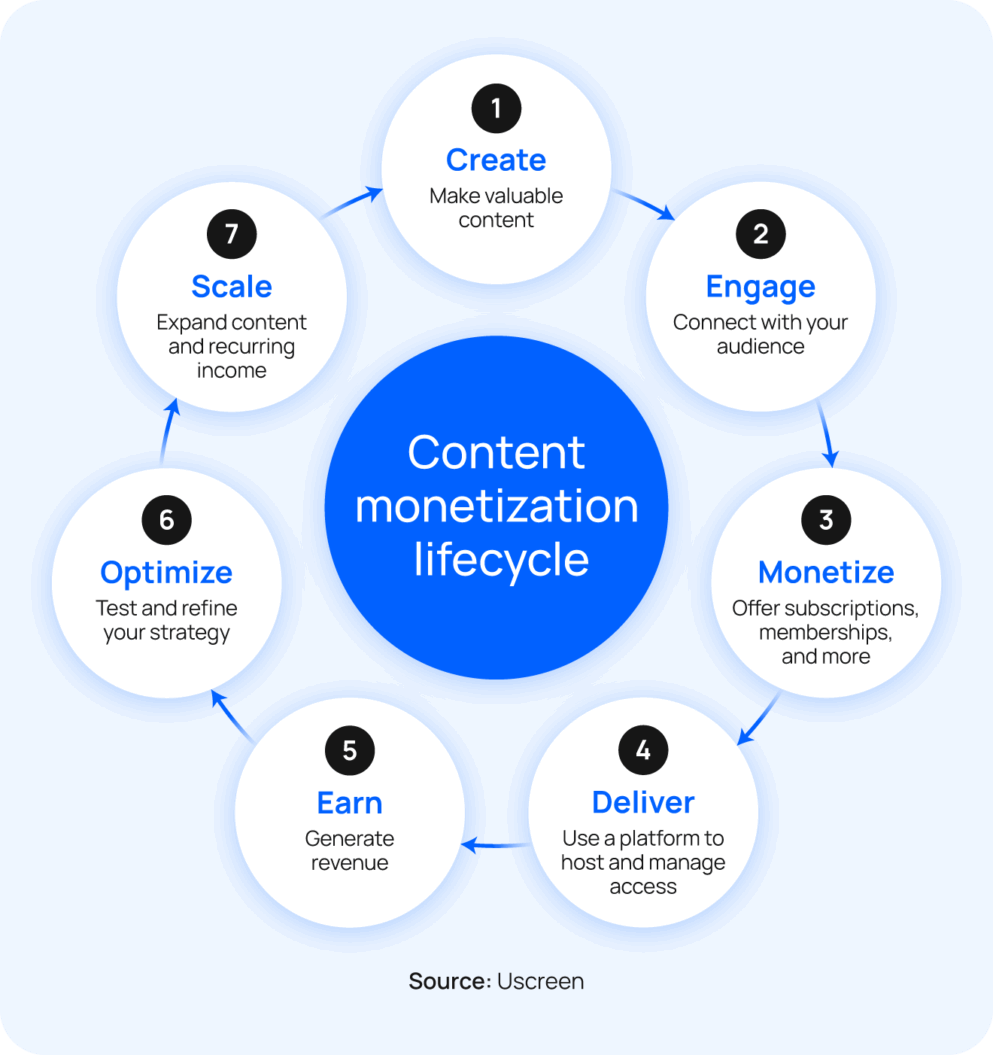
Creating valuable content helps you build a loyal audience you can own and monetize through consistent, recurring revenue.
Modern platforms like Uscreen make this process far easier by handling the infrastructure, including:
- Content delivery
- Secure payments
- Community engagement
- Data analytics
As you test different offerings and refine your content, you’ll discover what resonates most with your audience, making your monetization strategy more effective. It all starts with deciding which types of monetization work best for your brand.
Types of digital content monetization
Most creators use a mix of monetization methods to maximize their earning potential. Diversifying revenue streams might mean combining memberships with one-time live stream purchases or digital products. This approach creates more stable and predictable income, even if one source fluctuates.
Content monetization is generally divided into direct and indirect methods, with platforms like YouTube or TikTok functioning very differently from creator-owned platforms that give you complete control over revenue and audience management.
Direct digital content monetization
Direct monetization models are audience-paid, meaning your income comes straight from those who engage and value your content. Common options include:
- Subscriptions
- Memberships
- Pay-per-view
- Digital products (like well-priced online courses or guides)
These models provide predictable revenue and help you build stronger, long-term relationships with your audience, since your earnings aren’t dependent on external factors like platform algorithms or ad rates.
Platforms like Uscreen make it easy to implement these models, offering tools to manage everything in one place. Over time, you can refine pricing and experiment with content offerings to optimize your monetization strategy to increase audience engagement and revenue.
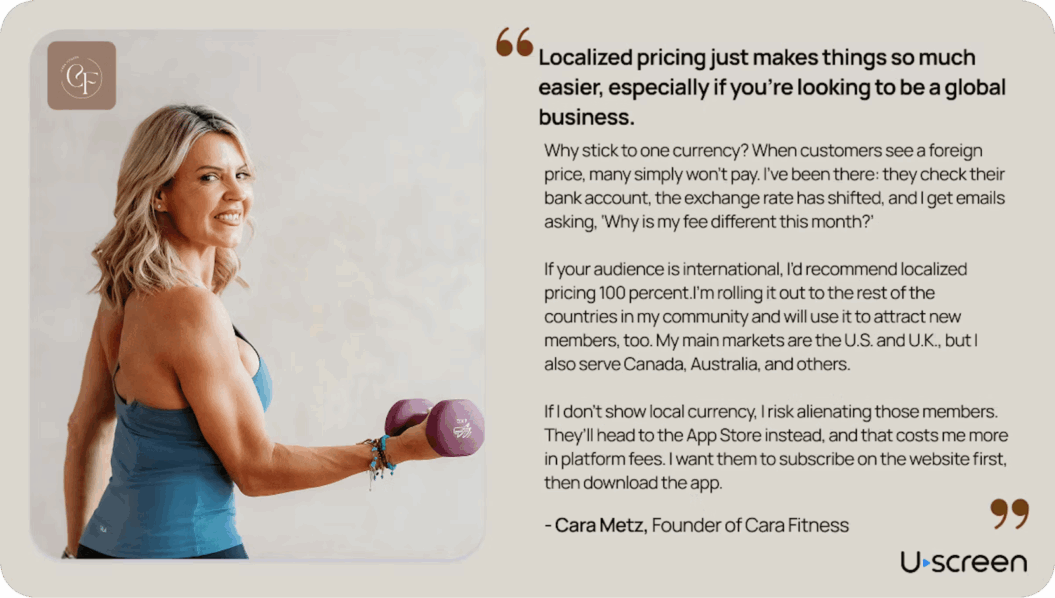
For example, Cara Fitness used Uscreen’s Localized Pricing feature to make purchases easier for international customers. By enabling checkout in U.S. dollars instead of British pounds, Cara saw fewer abandoned checkouts and fewer support emails about pricing confusion. Uscreen customers have reported a 7%–10% lift in monthly recurring revenue (MRR) using this feature.
Indirect digital content monetization
Indirect monetization models rely on third parties to generate income, such as advertising, affiliate marketing, or sponsorships.
While these can be lucrative at scale, they often come with tradeoffs, including:
- Less control over revenue
- Dependence on platform algorithms
- The need to maintain high audience numbers to earn a meaningful income
Indirect models can complement direct monetization, but relying on them alone is unpredictable given changes in ad rates, partnerships, or platform policies. As Jade Beason, a content creator and social media consultant, explains:
The amount of money I earn from my YouTube channel is only partly in my control. Yes, I can create valuable content and share it on a regular basis, but the other side is down to YouTube’s algorithm. And while I can optimize my videos the best I possibly can, there is a huge amount that is not within my control there, which means that my income can often be very inconsistent.
Jade Beason, Content Creator and Social Media Consultant
Platform-based monetization vs owned platforms
Third-party platforms like YouTube and Twitch are ideal for new creators, allowing you to reach a large audience quickly and generate revenue through indirect monetization. They’re also easier to use, with most tools and features, including discovery algorithms, analytics dashboards, and native monetization options, ready to go.
For creators with an engaged audience, moving to a creator-owned platform or combining both approaches can provide more control over your content and revenue. Using a membership website builder like Uscreen allows you to have a deeper connection with your audience, which gives them more of a reason to stick around.
Best practices for digital content monetization
Successful monetization is built around strategy, experimentation, and optimization. Following video creator trends provides valuable context, helping creators identify emerging strategies and understand what’s currently working in their industry.
Some best practices to keep in mind when developing your strategy include:
- Diversify revenue by combining methods like memberships, subscriptions, digital products, and one-time purchases for stability.
- Research competitors and benchmark pricing in your niche to ensure your content is competitively valued.
- Review content performance by tracking engagement, conversions, and revenue to see what works and what doesn’t.
- Adjust pricing and offers based on audience feedback and performance data to keep them engaged.
- Test and iterate different formats, pricing, and offerings to find what resonates with your audience.
- Promote new and existing offerings across platforms to maximize reach.
These practices can be seen through real-world examples, such as Felicity Wood Yoga, who switched from Vimeo to Uscreen in 2023 and saw a 43% increase in MRR. She implemented a two-tiered pricing structure and created short-form bundles, including beginner courses, on dedicated landing pages.
This approach gave her viewers a more flexible experience and provided beginners with a clear introduction to her content before committing to a membership.
Being able to create specific landing pages for my beginners’ course and short-term bundles has opened up a new revenue stream. Those smaller courses act as a gentle introduction. People try them, love the experience, and then upgrade to the full membership.
Felicity Wood, Founder, Felicity Wood Yoga
What are digital content monetization platforms?
Digital content monetization platforms are tools that combine content hosting and delivery, content access, video paywalls, and audience management in one place. They make it easier for creators to offer diverse monetization options while handling the technical infrastructure.
Unlike social platforms, which provide access to large audiences but offer limited control over revenue and rely on algorithms, creator-owned platforms give you full control over your content and audience relationships. These platforms work best for creators with an established following, since they typically don’t include built-in audience discovery tools.
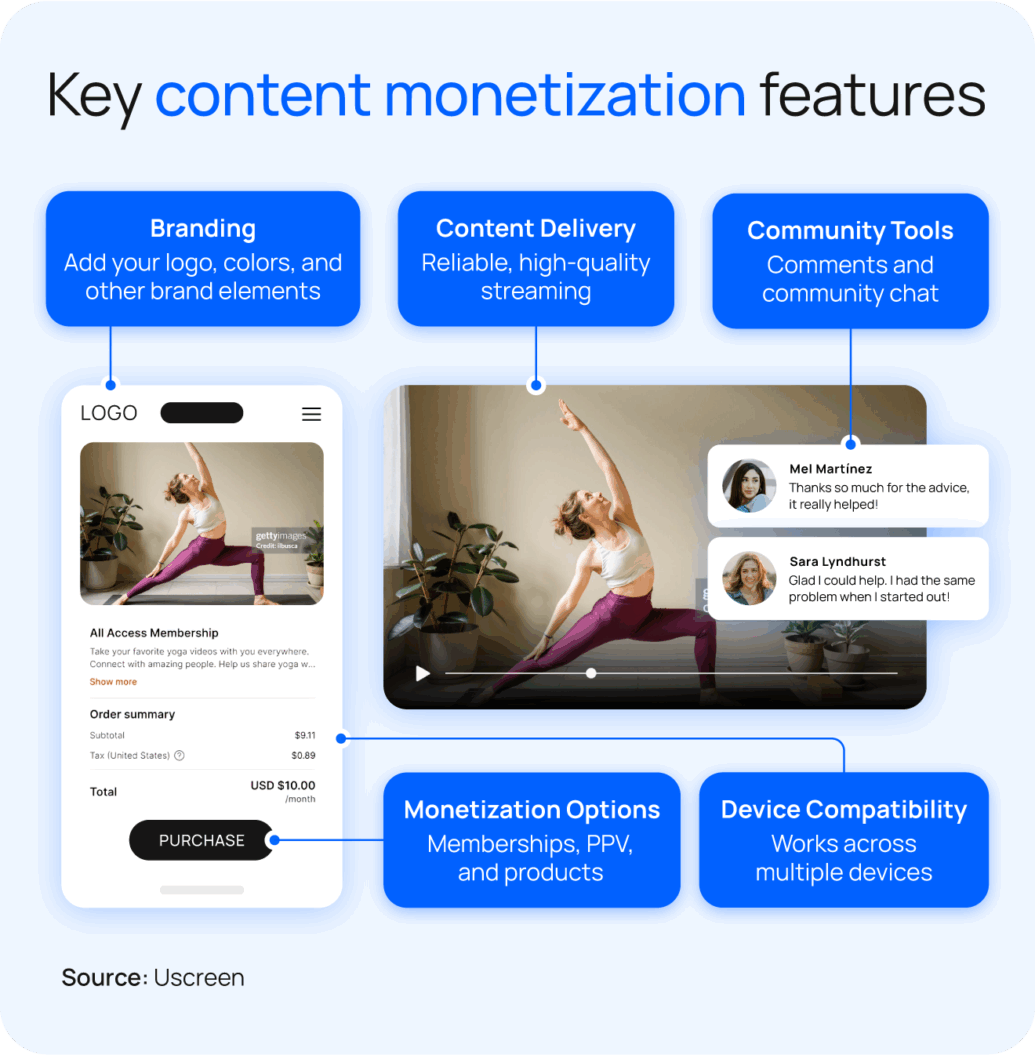
Key features for effective content monetization
When evaluating a platform, consider features that support audience growth and revenue generation. The features you prioritize depend on your audience size and current strategy, but they should help you scale effectively and sustain long-term revenue.
Content delivery
Smooth streaming is crucial for keeping your audience engaged. Platforms with reliable delivery provide a seamless viewing experience for your videos, courses, or live streams.
Learn more about video experienceCommunity tools
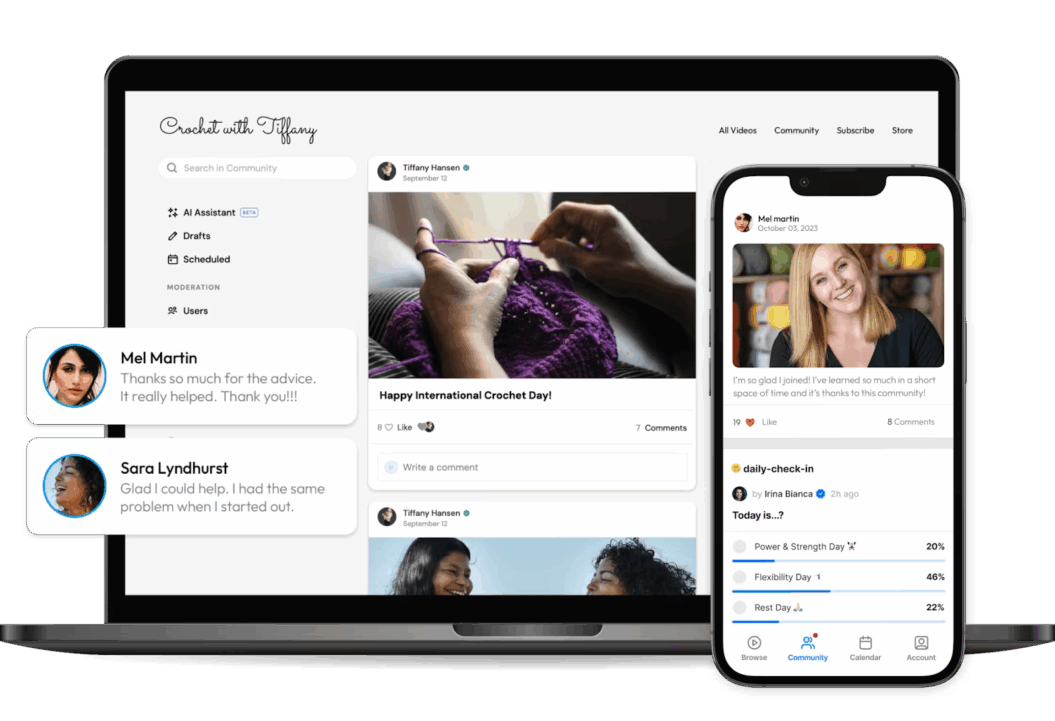
Features like forums, comments, and chat help you build interaction and loyalty. Engaging your audience fosters stronger relationships and encourages them to return.
Monetization options
Look for platforms that support the monetization options you plan to use, such as memberships, pay-per-view opportunities, and digital products. The platform should make it easier for you to scale your offerings over time.
Learn more about video monetizationBranding
Your content should reflect your unique style and brand identity. White label platforms make this easier for your audience by letting you apply your logo, brand colors, and other visual elements to create a consistent experience.
Device compatibility
Your content should play smoothly on all devices and OTT apps. Platforms with strong compatibility enable viewers to access videos, courses, and live streams from anywhere, at any time.
Learn more about mobile appsHow to choose the best digital content monetization platform
Start by defining your goals, whether you want to increase recurring revenue, expand your subscriber base, diversify your content formats, or enhance audience engagement. These goals make it easier to identify which features matter most to you.
As you compare options, look for platforms that help you scale over time and offer the features you need. The best membership platform should support your strategy rather than forcing you into a one-size-fits-all model.
For example, a fitness creator with 30,000 followers earning around $6,000 per month from classes and programs might aim to scale to $12,000 by adding a VOD library, weekly live classes, and higher-value digital products. They may also prioritize community features for accountability and progress tracking.
Effectively monetize digital content with Uscreen
Digital content monetization is most effective when combined with the right strategy and tools. As revenue diversification continues to shape the creator economy, owning your platform gives you the control you need to reach your goals.
Uscreen is a powerful partner in that process, offering everything you need to expand your monetization options and strengthen audience engagement. Uscreen provides the flexibility, tools, and scalability to support long-term growth.

FAQs
Why is digital content monetization important for creators?
Digital content monetization is important because it helps creators of all sizes earn a consistent income from their work while maintaining full control over their revenue instead of sharing it with platforms. This financial stability allows creators to reinvest in their brand, improve content quality, and strengthen authentic, long-term relationships with their audiences.
What is the best digital content monetization model?
The best digital content monetization model depends on your goals and audience. Direct models like subscriptions, memberships, and digital products are often the most effective because they provide consistent income and greater creative and financial control.
Which platform is best for monetizing video content?
Uscreen is a top platform for creators monetizing content. It supports live streaming, VOD, and offers multiple monetization options. Memberships are especially valuable for building predictable, recurring revenue.