If you’ve ever wondered which social media platform pays the most, you’re not alone. Creators today have more ways to earn than ever — from direct ad revenue and platform bonuses to brand deals, sponsorships, and affiliate programs. But not all platforms pay the same, and what works best depends on your goals, content type, and audience.
The key is integrating these insights into a thoughtful social media plan that aligns with both growth and monetization.
In this post, we’ll rank the top platforms starting with #1 as the highest paying. We’ll break down estimated earnings, explain why each platform pays what it does, and highlight who they’re best for.
Keep in mind, payouts vary based on whether you’re earning directly from the platform (like ads or creator funds) or from off-platform income streams such as sponsorships and product partnerships.
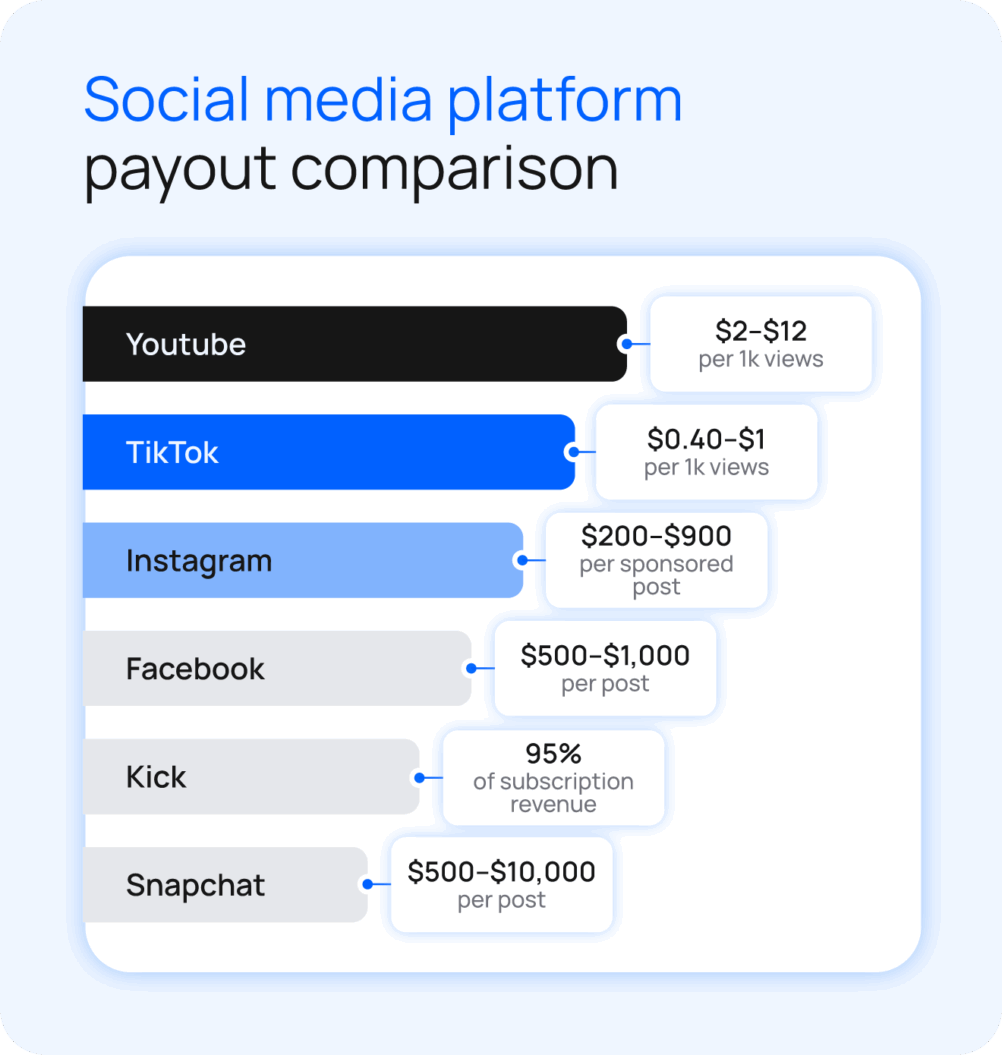
| Platform | Payout metric | Estimated pay | How creators are paid | Why it pays more |
| YouTube | Per view | $2 to $12 per 1K views | Ad revenue, memberships, Super Thanks, Premium | Mature ad ecosystem enables higher creator payouts |
| TikTok | Per view | $0.40 to $1.00 per 1K views | Creator Fund, live gifts, TikTok Shop, brand deals | Reward programs prioritize engagement and watch time |
| Per follower | $200 to $800 per sponsored post (based on 10,000 to 50,000 followers) | Sponsored posts, affiliate links, Reels bonuses, product collabs | Highly engaged audience attracts premium brand deals | |
| Per engagement | $500 to $1,000 per post | In-stream ads, Stars, subscriptions, Reels bonuses | Long-form video and multiple monetization options reward engagement | |
| Kick | Per subscriber | $4.75–$5 per subscriber (95% revenue) | Subscription revenue, direct fan support | Low platform cut rewards loyal audiences and engagement |
| Snapchat | Per post | $500–$10,000 per post (50,000 follower minimum) | Ad revenue from Spotlight and Stories | Revenue grows with reach, engagement, and eligibility thresholds |
1. YouTube
Estimated pay: $2 to $12 per 1,000 views
Why it pays more: YouTube pays more because of its mature ad ecosystem, long-form content opportunities, and multiple monetization paths, like:
- Ads
- Memberships
- Premium revenue sharing
Advertisers compete for placements on videos, especially in niches with high commercial value.
Best for: Creators who enjoy producing longer content, growing online courses, entertaining deeply, and building an evergreen library of material that earns over time.
YouTube is a go-to platform for creators who want steady passive income that compounds over time. Unlike short-form platforms that rely heavily on trends, YouTube rewards videos that continue to attract viewers months or years after posting, especially if those viewers are in higher-value markets like the U.S., Canada, and Europe.
- Focus on niche topics with strong advertiser demand.
- Create videos longer than eight minutes to enable mid-roll ad opportunities.
- Engage your audience early to boost earnings per view and improve overall watch time and ad performance.
For creators who have dealt with things like demonetization or fluctuating revenue, it’s also smart to explore how to protect and diversify your income outside of YouTube — whether through memberships, courses, or your own subscription app.
2. TikTok
Estimated pay: $0.40 to $1.00 per 1,000 views
Why it pays more: TikTok pays more on reward programs when videos are longer, original, and have high engagement because the platform wants to keep viewers watching. Higher watch time and quality engagement signal value to advertisers and the algorithm.
Best for: Creators who thrive on short-form storytelling, trends, rapid audience growth, and live interactions.
TikTok stands out for its fast discovery and viral potential. Because content can blow up overnight on the “For You” page, creators can grow large followings quickly and unlock brand deals or sponsored content even before monetization programs kick in.
But how much TikTok pays directly from platform programs is only part of the story — many creators expand earnings through live gift tipping, TikTok Shop commissions, and brand partnerships.
- Focus on videos over one minute to qualify for higher Reward Program rates.
- Engage viewers early to boost watch time and retention.
- Don’t rely solely on platform pay—combine it with sponsorships, affiliate links, and products to increase total income.
TikTok is powerful for fast growth and supplemental earnings, but creators aiming for long-term, stable income often pair TikTok reach with audience ownership strategies off the platform.
3. Instagram
Estimated pay: $200 to $800 per sponsored post (based on 10,000 to 50,000 followers)
Why it pays more: Instagram often pays more in brand partnerships because its audience skews toward buyers, and brands trust Instagram’s lifestyle storytelling. Creators with specific niches — like beauty, fitness, or travel — can command higher rates because they offer advertisers direct access to engaged buyers.
Best for: Creators focused on visual storytelling, brand partnerships, and niche audiences with strong purchase intent.
Learning how to monetize Instagram beyond basic follower counts starts with building a recognizable personal brand and a community that trusts your recommendations.
Instagram integrates shopping features, affiliate tools, native badges, and Reels bonus incentives. This means creators can layer multiple income streams — from sponsored posts and product collaborations to affiliate links and digital products.
- Focus on carousel posts and Reels to boost reach and engagement.
- Use Stories with link stickers to drive traffic to products, courses, or your own membership site.
- Capture brand attention early with consistent aesthetics, clear value, and an engaged audience.
- Treat Instagram as a conversion engine, not just a broadcast platform.
For many creators, Instagram excels when paired with direct audience monetization — like a newsletter, membership, or subscription app — where you control access and distribution.
4. Facebook
Estimated pay: $500 to $1,000 per post
Why it pays more: Facebook pays more when viewers are in high-value ad markets and stay engaged with longer videos that run pre-, mid-, and post-roll ads. The platform also blends several monetization programs into one, making it easier to earn from more content types.
Best for: Creators who focus on long-form video, community engagement, and live interaction, especially those who want to make money with Facebook Live and subscription-style offers.
Facebook’s monetization ecosystem is broad. Beyond video ads, creators earn through Stars on Live streams, which are real-time gifts fans send during broadcasts, and fan subscriptions that pay monthly revenue for exclusive content. This mix lets you combine ad income with recurring support from your most loyal fans.
- Stream regularly and build a consistent audience to boost Stars and live engagement.
- Publish longer videos (3+ minutes) to enable multiple ad placements and increase earnings.
- Activate fan subscriptions to generate predictable monthly income from dedicated followers.
- Mix in Reels and posts that qualify for bonuses when available.
While Facebook may not pay as consistently per view as YouTube, the combination of live gifts, subscriptions, and ads rewards deep engagement and community building, especially for creators who connect authentically with their audience.
5. Kick
Estimated pay: $4.75 per $5 subscription (95% of the subscription revenue)
Why it pays more: Kick pays more on a per-subscriber basis because it takes a much smaller cut than most streaming platforms. The model rewards creators with loyal audiences rather than raw view counts, which can lead to higher take-home income with fewer fans.
Best for: Live streamers with strong community engagement, especially creators who can motivate viewers to subscribe and support them directly.
Kick rewards relationship-driven content more than reach. Streams that prioritize real-time interaction, subscriber perks, and community culture tend to perform best. Unlike ad-based platforms, income on Kick depends less on views and more on how connected your audience feels to your content.
- Offer clear subscriber-only perks, such as exclusive chat access or private streams.
- Maintain a consistent streaming schedule to encourage ongoing subscriptions.
- Actively engage with viewers during streams to build loyalty and retention.
- Use platforms like TikTok, YouTube, or Instagram for discovery, then funnel followers to Kick.
- Treat Kick as a retention and video monetization channel, not a primary growth engine.
6. Snapchat
Estimated pay: $500 – $10,000 per post (50,000 follower minimum)
Why it pays more: Snapchat’s approach to monetization is evolving. The platform recently rolled out a unified creator monetization program that lets qualifying creators earn from ads in both Stories and longer Spotlight videos, expanding opportunities for revenue share.
Best for: Creators who produce frequent, short-form vertical video and personal storytelling, especially if they already have a big, engaged following.
Snapchat monetization works differently from platforms like YouTube or TikTok. Rather than broad, automatic ad payouts, creators must meet eligibility thresholds — such as hundreds of thousands or millions of views and consistent posting — before they’re invited into the program and start earning. Once invited, creators share in ad revenue from both public Stories and Spotlight posts.
- Aim for frequent posting to both Spotlight and public Stories to hit eligibility thresholds.
- Create content that hooks viewers early and keeps them watching longer, since watch time can influence ad placements.
- Use Snapchat as part of a broader discovery strategy, funneling fans from other platforms into repeat interactions.
- Once you qualify, take advantage of both Stories and Spotlight formats to maximize revenue potential.
Snapchat does not offer fixed per-view payouts. Earnings depend on reach, engagement, and eligibility, making income less predictable but still valuable for creators with large, active audiences.
What the rankings don’t show
These rankings compare earning potential. They do not guarantee income. Two creators can use the same platform and earn very different amounts.
- Audience quality matters more than follower count. Brands and platforms care about who watches, not how many people follow you. A smaller, engaged audience that watches full videos and takes action often earns more than a large, passive following.
- Your niche directly impacts CPMs. CPMs vary by topic. Finance, education, business, and software usually pay more than entertainment or lifestyle content. That means the same number of views can generate very different payouts depending on what you create.
- Creator income is never one-size-fits-all. Experience level, posting consistency, content format, and audience location all affect earnings. That is why two creators on the same platform can see wildly different results.
This is also why the easiest social media platform to make money is not always the highest-paying one. The easiest platform is often the one that best matches your niche, content style, and ability to build trust with your audience.
Which platform should you choose?
The best platform depends on how you want to earn and how predictable you want that income to be. Here is a quick breakdown of the platforms that pay content creators best based on common goals and video creator trends:
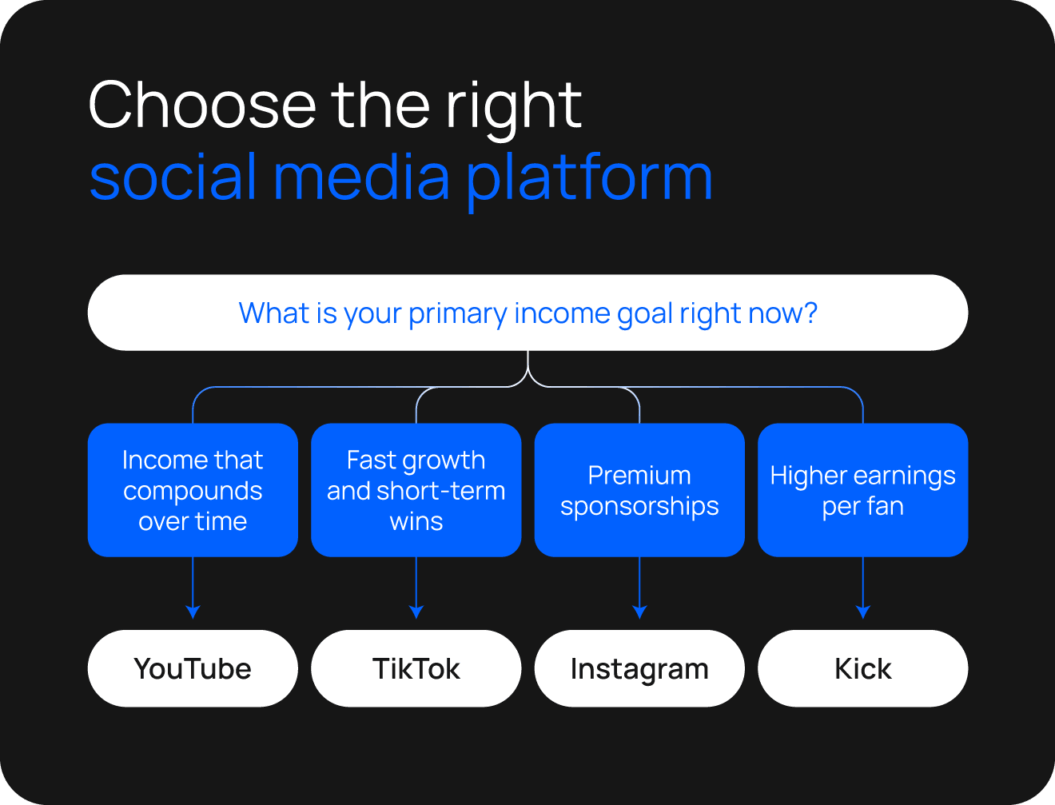
For steady, passive income: YouTube
Long-form videos can keep earning for years. Content you published three years ago can still generate ad revenue today.
For fast cash and virality: TikTok
TikTok offers rapid growth and discovery. The upside is speed. The risk is volatility, since earnings often depend on trends and bonuses.
For high-end brand deals: Instagram
Instagram remains one of the strongest platforms for premium sponsorships, especially for niche creators with engaged audiences.
For maximum earnings per subscriber: Kick
Kick’s creator-friendly revenue split makes it appealing for streamers with loyal communities willing to pay directly.
Each of these platforms can help you grow and earn, but none of them are built for long-term ownership. That is why many creators use social platforms for discovery, then move their audience into a paid community or subscription they control before focusing on how to monetize at scale.
How to get the most out of your earnings
Platform payouts can help you get started, but they should not be your end goal. Algorithms change, bonus programs disappear, and income can drop overnight. To build long-term, predictable earnings, creators need to think beyond views and lean into ownership.
This shift matters more than ever. According to data from Uscreen in 2024, the average person increased their number of subscriptions from 2.4 to 3 and monthly streaming spend jumped 30%, showing strong demand for premium content.
But with more choices than ever, audiences are also quicker to cancel if the experience falls short. The creators who win long-term are the ones who pair great content with frictionless access and consistent engagement.
Don’t rely on the same income stream
Relying on a single platform is risky. One update can cut your reach or remove a monetization feature entirely. Many creators experience this firsthand when creator funds shrink or ad rates fluctuate.
The most successful creators diversify early. They use social platforms for discovery, then guide their audience toward paid products, subscriptions, or communities they own.
Data shows this approach works: subscribers who can access content across both web and apps stay subscribed up to 43% longer than those who only use one channel. When content fits naturally into daily routines, people stick around.
Turn followers into owned audiences
Followers are rented. Email lists, memberships, and apps are owned.
When creators move audiences off social platforms and into owned spaces, engagement changes. App users log in 63% more often and spend 78% more time on platforms compared to web-only viewers. Community participation also jumps; creators see over 3x higher engagement when members use both web and apps.
That level of connection is hard to achieve on social feeds alone. Owned platforms let creators control access, communication, and monetization without relying on algorithms to stay visible.
Monetize beyond the platform
The highest-earning creators do not rely on platform pay alone. They monetize through:
- Membership communities
- Courses
- Exclusive video libraries
- Communities
Apps play a critical role here. Subscriptions that offer apps retain 23% more users after 12 months and see 121% more annual plan purchases than those without. Viewers are also consuming nearly 2x more content on apps than on the web, especially on mobile and TV, where live streams and longer watch sessions thrive.
With Uscreen, creators turn social traffic into paid subscriptions through branded apps and websites. This model works because it prioritizes access, habit, and community — not just reach. Even a small, loyal audience can generate meaningful income when monetized directly.
The highest-paying social media platform is the one you own
So, which platform pays the most? The answer depends on your goals, but the most profitable platform for content creators is often the one you control.
Platform payouts can boost income, but long-term growth comes from owning your audience and monetizing directly through subscriptions and community.
If you’re ready to move beyond platform pay, Uscreen helps you turn followers into paying members with branded apps and recurring subscriptions. Start building income you control by building a community today.
FAQ
YouTube is often the best platform for earning money because it offers consistent ad revenue, multiple monetization tools, and long-term earnings from evergreen content. That said, the best platform depends on your niche and audience engagement.
Instagram typically pays more through brand deals, while TikTok offers higher short-term earning potential through bonuses and viral reach. TikTok can pay faster, but Instagram often leads to higher-value sponsorships over time.
YouTube generally pays more per view than TikTok. Its ad revenue model delivers higher and more predictable payouts, especially for creators producing long-form or educational content.
YouTube pays creators through ad revenue sharing, channel memberships, Super Thanks, and YouTube Premium revenue. Earnings depend on factors like:
Views
Watch time
CPMs
Audience location
Platform pay comes from ads, bonuses, or revenue sharing, while brand deals pay creators directly to promote products. Brand deals often pay more but require strong audience trust and niche alignment.
YouTube pays the most for views on average due to higher CPMs and a mature ad ecosystem. Other platforms may offer bonuses, but YouTube provides the most consistent per-view earnings.