
The average content creator income in 2026 is $61,980 per year, with creators in high-earning industries like education, fitness, finance, and entertainment often earning significantly more.
Many creators struggle to turn their content into a reliable, full-time income. Earnings can range from hobby-level to six figures, depending on factors like platform choice, audience size, engagement, and the number of revenue streams they have.
At Uscreen, we’ve helped over 4,000 creators to collectively achieve $210M+ in annual income. We’ve supported many creators to launch and grow a sustainable video membership business, so we know a thing or two about setting yourself up for success.
Instead of relying on a single platform, most creators build income from multiple sources to create more stability. In fact, Uscreen’s 2025 Video Membership Report (opens in new tab) found that subscribers who are active on both web and apps stay subscribed up to 43% longer, highlighting the value of diversified platforms and direct audience relationships.
This guide explains the factors that influence content creator income and how creators can grow their earnings in 2026. It covers smarter monetization, better platform choices, and scalable, diversified revenue models.
Content creator platform earnings
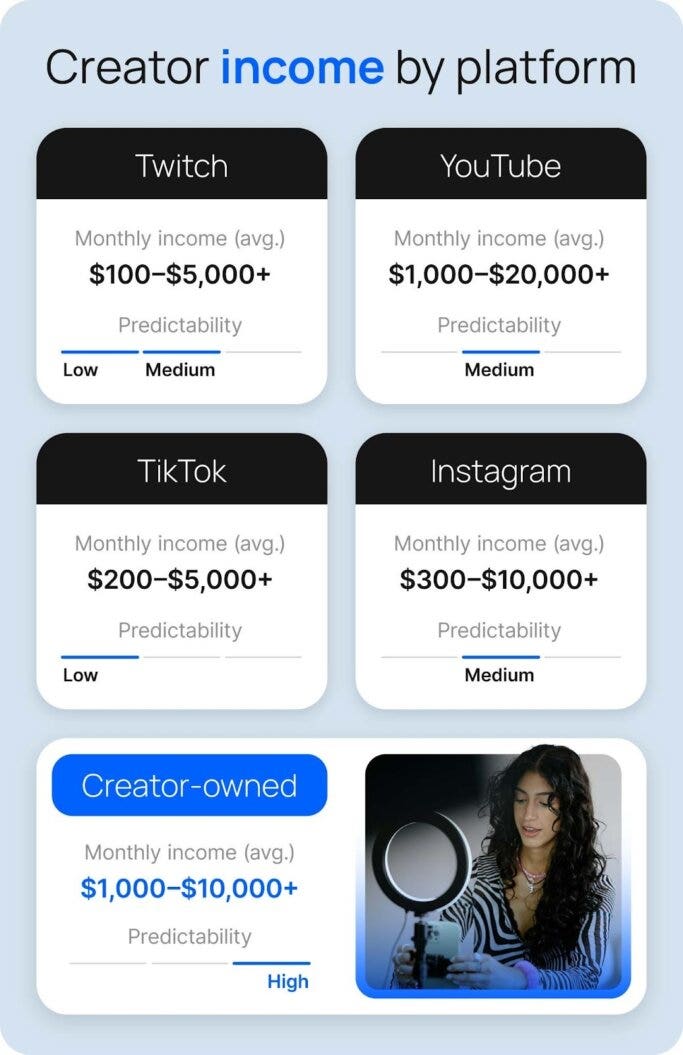
Creator income varies by platform, with each one using different payout models and revenue opportunities. Understanding these differences helps to set realistic expectations and choose the right monetization strategy.
Twitch
Income range: $1,000 to $5,000
Twitch content creators primarily generate earnings through subscriptions, ads, and donations, with income varying widely by audience size and engagement. Ad clicks per minute (CPMs) on Twitch typically range from $4–$10 (opens in new tab) , depending on region and seasonality.
Affiliates typically earn a standard 50/50 revenue split, while Partners may unlock higher visibility and 70/30 subscription splits in some cases.
While many smaller streamers earn a few hundred dollars per month, mid-tier creators typically generate $1,000 to $5,000 monthly. Top performers can earn tens of thousands per month through subscriptions, ads, and sponsorships.
For example, Kai Cenant has made $4.8 million a week (opens in new tab) from streaming subs.
YouTube
Income range: $1,000 to $15,000
In the past few years, YouTube has paid over $70 billion to creators (opens in new tab) , largely via AdSense. Most creators earn income based on revenue per thousand views, which is around $3+ (opens in new tab) , depending on niche, audience location, and content type.
A channel with around 100,000 subscribers may earn $1,000 to $3,000 per month, while channels with 500,000 subscribers often generate $5,000 to $15,000 monthly. Channels with more than 1 million subscribers can exceed $20,000 per month, before sponsorships or product sales.
However, top creators can significantly increase earnings by layering brand deals, memberships, and merchandise on top of ad revenue. Creators like Markiplier have earned $30 million (opens in new tab) from their 37 million+ YouTube followers.
TikTok
Income range: $150 to $10K
TikTok’s platform payouts have historically been low, with the original Creator Fund offering modest earnings per view. The newer Creativity Program has improved payouts for longer-form content, but most TikTok creators still rely on sponsorships and external monetization for meaningful income.
Micro-influencers with 10K to 50K followers may earn $150 to $500 per post (opens in new tab) , while a macro-influencer with 500K to 1 million followers can earn between $5K to $10K. TikTokers like Khaby Lame have had sponsored posts that have made up to $400,000 (opens in new tab) .
While smaller creators may earn a few hundred dollars per month, successful TikTokers often turn the platform into a traffic source that drives income on other channels.
Income range: $34 to $52
Instagram creators earn primarily through sponsorships, affiliate marketing, and branded content partnerships. For instance, a fitness content creator with 10K followers can earn between $34 and $52 per 1,000 likes (opens in new tab) on a post.
Also, with the discontinuation of Reels bonuses, most income now comes from brand deals and product-driven partnerships. Content creator salary per month can range from a few hundred dollars for smaller creators to $10,000+ per month for established influencers with strong engagement and niche authority. For example, Instagram creators like Charlie D’Amelio (opens in new tab) can make between $160K to $200K per post with her 42.1 million followers.
Creator-owned platforms
Income range: $1,000 to $10,000+
Creator-owned platforms offer a different income model, one built around ownership and recurring revenue. For example, Uscreen lets creators keep more revenue per subscriber and scale earnings more predictably.
In practice, many creators earn $1,000–$10,000+ per month through subscriptions, pay-per-view, and product sales, while top creators generate six- or seven-figure annual revenue by centralizing their business.
The Bloom Method (opens in new tab) , for example, scaled a niche fitness membership into $1M+ in annual recurring revenue by focusing on long-term subscriptions and high member engagement.
Creators can scale by building direct audience relationships and choosing to sell videos online (opens in new tab) instead of relying solely on algorithms.
Build your video membership (opens in new tab)
Factors that impact content creator income
Scroll through YouTube and you will find creators like Ty Myers (opens in new tab) sharing “how much I made this month” breakdowns. Many compare ad revenue, sponsorships, memberships, and product sales.
What these reports show is clear: Creator income follows patterns rather than luck. Understanding these patterns can help creators make smarter decisions about digital content monetization (opens in new tab) .
Income rises or falls based on a handful of controllable business decisions, not just views.
Key factors that influence earnings include:
- Platform choice: Different platforms pay differently and offer varying levels of control over revenue.
- Niche and content type: Some topics attract higher CPMs or stronger sponsor demand than others.
- Audience size and engagement: More active audiences drive higher retention and recurring revenue.
- Access model: Creators who offer both web and app access often see stronger community engagement.
- Revenue mix: Diversifying across ads, sponsorships, memberships, and products leads to more consistent income.
Creators who diversify income across ads, sponsorships, memberships, and platforms tend to earn more consistently than those relying on a single stream.
In practice, Big Picture Skiing (opens in new tab) used memberships and mobile apps to smooth out seasonal demand and grow predictable, year-round revenue. And ClayShare (opens in new tab) improved retention by centralizing live classes and community on one platform.
Creator income strategies
Creators earn money through a mix of platform-based and audience-owned monetization strategies. The most reliable income typically comes from combining short-term revenue, such as ads or sponsorships, with long-term streams that build recurring revenue and deeper audience relationships.
Below are some common content creator income streams:
Ad revenue
Ad revenue pays creators based on views or impressions, usually measured as CPM (cost per thousand views). On YouTube, this is often discussed as YouTube CPM (opens in new tab) , which can vary widely depending on your niche, audience location, season, and advertiser demand.
Earnings vary widely and tend to be unpredictable since they depend heavily on algorithms and traffic volume.
Sponsorships
Sponsorships pay creators to promote a brand, product, or service to their audience, typically through dedicated videos, posts, or integrations. Rates scale with audience size, engagement, and niche, ranging from a few hundred dollars for micro-creators to five-figure deals for larger, highly trusted creators.
A strong content creator media kit (opens in new tab) helps creators clearly communicate their value and attract higher-paying brand partnerships.

Brand partnerships are suited to creators who have a large audience, or a very targeted/ specific audience, have credibility in a certain niche, and have a very engaged audience. The hardest part about this kind of monetization is building a big enough audience and being able to demonstrate clear marketing value to brands.
Fan support
Fan support is about connection and appreciation. It happens when people choose to financially support a creator simply because they value their work and want to help them keep creating.
This support often comes through platforms like Patreon, Twitch subscriptions, or one-off donations via Buy Me a Coffee. Supporters aren’t paying for a structured product—they are contributing because they care about the creator and their content.
Many creators also choose to create a membership website (opens in new tab) to monetize their most engaged fans. Unlike one-off fan contributions, a membership website offers recurring access to exclusive courses, live classes, curated content, or community features. While fans may enjoy the creator’s personality, members typically subscribe because they value the ongoing benefits or outcomes the membership provides.
The key difference is intent:
- Fan support is contribution-based and driven by loyalty.
- Memberships are value-based and designed as recurring, structured offerings.
Both models can generate recurring income, but a membership website typically provides more stability and scalability because it is built around a consistent, deliverable experience.
Merchandise and digital products
Merchandise and digital products let creators sell directly to their audience, including physical items, eBooks, courses, coaching, or premium content.
For example, productivity creator Ali Abdaal (opens in new tab) sells cohort-based courses and digital programs that teach skills like YouTube growth and productivity systems. Instead of relying solely on ad revenue, he uses digital products as his primary income stream, built on his expertise and audience trust.
These products often have higher profit margins than ads and give creators full control over pricing and branding. Many creators use them as core income drivers as their audience grows.
Long-term benefits of switching to creator-owned platforms
Imagine waking up and knowing exactly how much revenue your content generated overnight. No guessing. No algorithm swings. No sudden reach drops.
That is the power of a creator-owned platform.
When you own your platform, you own the relationship. You control how you distribute your content, how your brand appears, and how your audience engages with you. Instead of renting space on social media, you build a digital home that grows in value over time.
Social platforms still play an important role, but they become discovery engines rather than your primary income source. You attract viewers on platforms like YouTube and TikTok, then guide your most engaged fans to a space you control. That shift changes everything.
With a creator-owned platform, you can:
- Generate predictable, recurring revenue through subscriptions.
- Launch pay-per-view content, courses, and live events.
- Sell merchandise directly to your audience.
- Build a branded app experience that strengthens loyalty.
- Collect first-party data and communicate without algorithm barriers.
Ownership creates momentum. When your business is built on recurring subscriptions instead of fluctuating ad revenue, you can forecast growth, reinvest confidently, and plan long term.
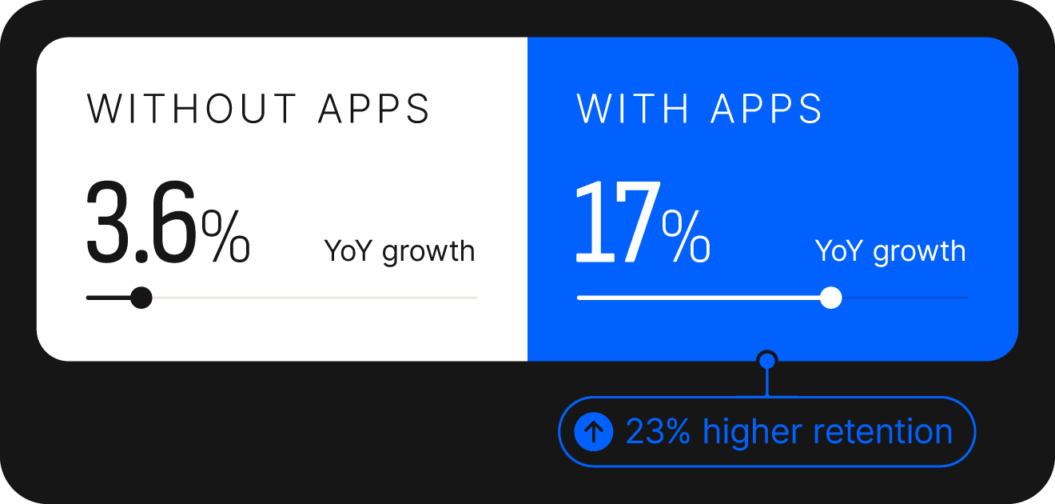
The data supports this. Uscreen’s data shows that subscriptions offering apps retain 23% more users after 12 months and grew 17% year over year, compared to just 3.6% growth for subscriptions without apps.
You can see this in action with Means TV (opens in new tab) . By building their own streaming platform and branded apps, they reduced friction between content and membership. Instead of depending on algorithm-driven distribution, they converted casual viewers into paying members and scaled to over $40,000 in monthly recurring revenue.
Maximize your income as a creator with Uscreen
Content creator income can range from side-project earnings to six-figure, full-time revenue, depending on your platform choices and how you monetize your audience. Diversifying revenue streams and building a loyal community can help you grow and stabilize your content creator income in 2026 and beyond.
Platforms like Uscreen (opens in new tab) make it easier to turn engaged viewers into recurring revenue while keeping full control over pricing, branding, and customer relationships.
If you’re ready to take the next step, explore Uscreen’s creator monetization platform (opens in new tab) or start building your own membership site to begin generating predictable, scalable income today.

Content creator income FAQ
How much do content creators make?
How do content creators generate income?
Who is the highest-paid YouTuber?
His income reflects an outlier case built on a massive scale and diversified revenue streams, not typical creator earnings.