On average, over 20 million videos are uploaded to YouTube every day, making it easy for even the best content to get buried. That’s why creators like you need a clear video distribution strategy to help your content reach the right audience and generate predictable revenue.
An effective strategy places the focus on your owned channels, leaving earned and paid channels to funnel traffic. This increases stability and gives you a growth path that’s independent of changing algorithms.
In this guide, we’ll show you how to optimize your channels, promote videos effectively, and put a proven strategy in place to expand your audience and increase monetization opportunities.
What is a video distribution strategy?
It might sound intimidating, but a video distribution strategy is really just how and where you plan to share your videos and what you want to achieve from them.
A good video distribution strategy gets your videos in front of the right audience and guides them toward a clear destination. This could be a membership site platform or product where you control the experience and can create a tailored, engaging journey for your audience.
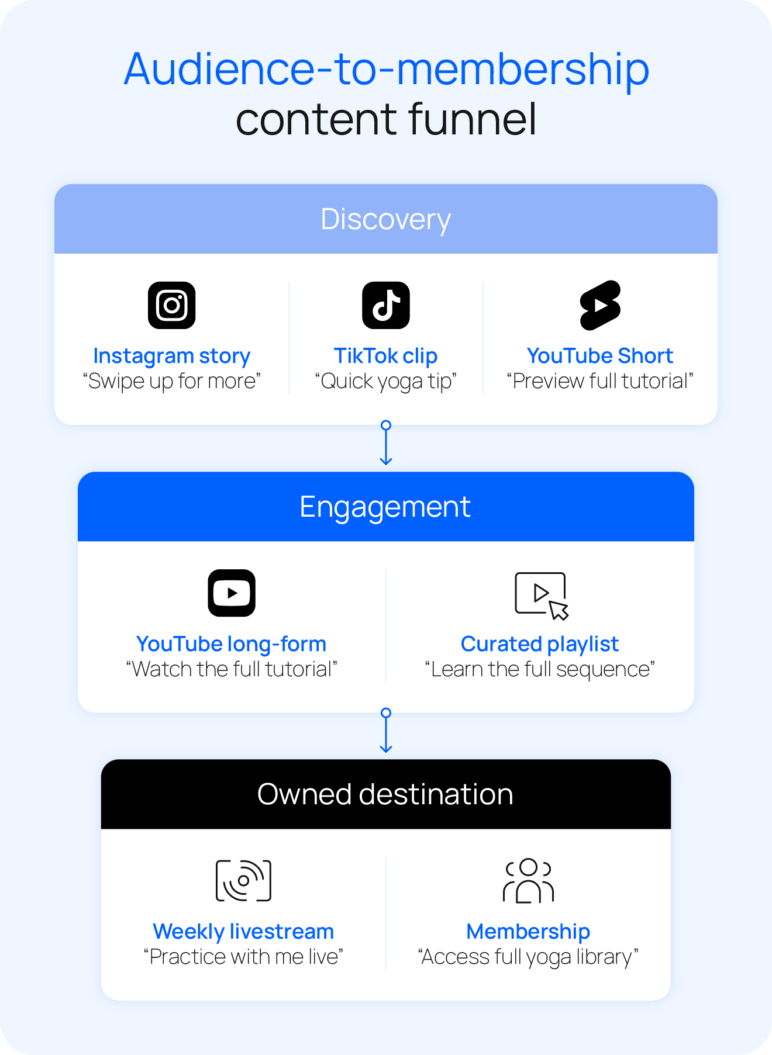
For example, when you set this up for your yoga lessons, a user may encounter multiple touchpoints across their social media networks that guide them to you, including:
- YouTube video explaining the pose in detail
- Short TikTok clip highlighting a quick tip
- Instagram story or post linking to your playlist
These touchpoints can then funnel viewers to your owned platforms through long-form content like weekly livestreams, curated playlists, or a monthly membership, helping you develop new relationships or strengthen existing ones.
Types of distribution channels
A strong video marketing strategy relies on a combination of owned, earned, and paid channels.
- Owned channels: Your proprietary platforms that you control and manage, like a membership site, website, or email list.
- Earned channels: Third-party mentions, shares, reviews, or word-of-mouth that help promote your content organically.
- Paid channels: Advertising or sponsored placements that amplify your content to new audiences.
Focus your main effort on owned platforms, where you control the experience and can turn followers into community members.
Use earned and paid channels to bring viewers to your owned destinations, helping you grow engagement, loyalty, and predictable revenue over time.
Owned
Owned channels give you direct access to your audience, creating long-term value by providing deeper control over the platform experience and your relationship with viewers.
Use consistent messaging and branding to retain your audience, engaging them with tactics like:
- Publishing recurring content to keep audiences coming back.
- Covering topics in depth to provide lasting value.
- Creating interactive experiences, like polls, messaging boards, or Q&A sessions.

I’m a big believer in making the next “yes” as easy as possible. A lot of creators will ask their audience to leave the social platform and sign up for the membership all at once. Breaking that ask into smaller pieces makes it easier for your audience to say yes. Get them off the social platform with a freebie lead magnet, then use email nurture to nudge them towards membership.
Earned
Earned channels give your content organic reach beyond your control. This includes shares, mentions, reviews, influencer shoutouts, and other forms of social proof. While you post videos on your own platforms, earned channels capture how others amplify your content and introduce it to new audiences.
Short clips or highlights can help answer questions, showcase expertise, or provide quick tips that encourage shares and engagement. Working with other creators or communities can also expand your reach to relevant viewers and bring them into your funnel.
To make the most of earned channels:
- Repurpose existing content to address common questions or highlight quick tips.
- Encourage shares, comments, and engagement to tap into new networks.
- Collaborate with other creators or communities to reach relevant audiences.
When used strategically, earned channels turn initial interest into deeper engagement, guiding viewers to your owned platforms and creating loyal community members.
Paid
Use paid channels to accelerate audience growth and reach viewers who fit your profile but might not find you organically. Social media ads, boosted posts, and sponsored campaigns expand your reach and give your funnel a steady flow of new, interested viewers.
To make the most of paid channels:
- Run targeted ads that bring viewers to your owned platforms.
- Boost high-performing posts to reach new, relevant audiences.
- Partner with sponsors or other brands that introduce your content to aligned networks.
How to pick the right video distribution strategy
When you’re mapping out a video content distribution strategy, think about who you want to reach and what you want them to do. Ask yourself:
- Where does your audience spend their time?
- What kind of content do they enjoy?
- Where do you want them to end up?
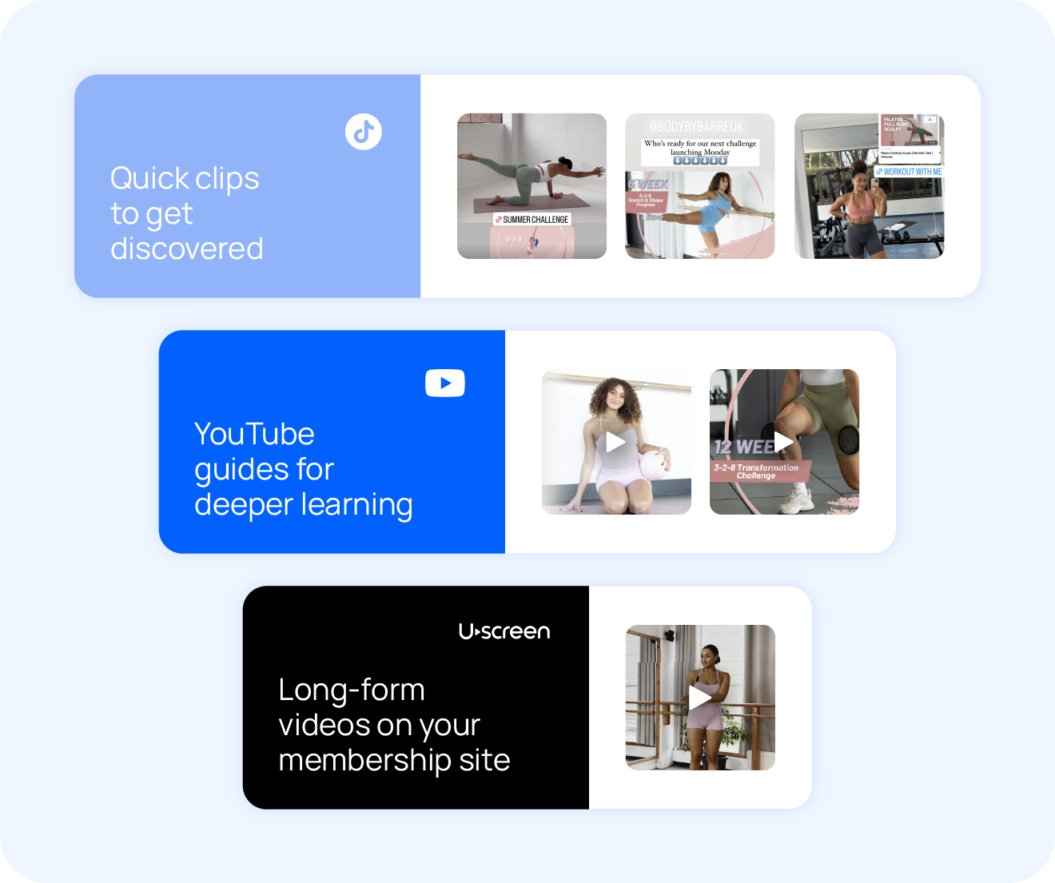
Share content where your audience spends their time. Short-form clips are great for quick wins and discovery, while long-form videos drive deeper engagement and connection with your content. Use the clips to spark interest, then guide people to your owned channels, tailoring the content to each platform.
For example, Body By Barre posts quick TikTok and Instagram clips to get discovered, uploads quick beginner workouts on YouTube, and funnels viewers to long-form tutorials on her membership site for the full experience.
Best practices to optimize video distribution
As you build your distribution strategy, these best practices will help you adapt content for each platform, find new ways to reuse existing videos, and track what’s working so you can keep improving.
Optimize video content for each platform
Once you’ve identified where your audience spends time, you can adapt your content to fit those platforms. Common adjustments include:
- Video length
- Structure/format
- Captions, titles, and thumbnails
- Visual style
- Aspect ratio (horizontal vs. vertical)
Planning for repurposing during production makes this easier, since you can create variations alongside your primary long-form video. Existing content can also be updated or reformatted to fit new platforms.
If you’re using an OTT platform, some of this optimization may already be part of your workflow. Especially if you’re designing content for both mobile and web viewing from the start.
Learn more about mobile appsRepurpose content to increase reach and conversions
Older long-form content can still work for you if you help revive it. Update intros and outros to add a new spin, make sure the information is still accurate, and cut or reformat clips for any additional platforms you want to include them on.
Cut them into short clips for social media to feed your funnel, and republish them with fresh calls to action and links so nothing points to outdated pages.
A little refresh goes a long way, extending the life of your content and keeping viewers engaged across multiple touchpoints.
Track metrics and adjust distribution strategy
Track metrics like watch time, engagement, and conversions to understand what’s resonating with your audience.
Views are the metric that everyone looks at first, but a more valuable insight into how connected your audience feels to you is in the number of comments. A lot of quality comments (not just a fire emoji) is a sign that your audience is willing to take action, like clicking to your site or a lead magnet.
If certain platforms are driving better results, you can focus more resources there, or replicate what’s working across other channels to boost overall performance.
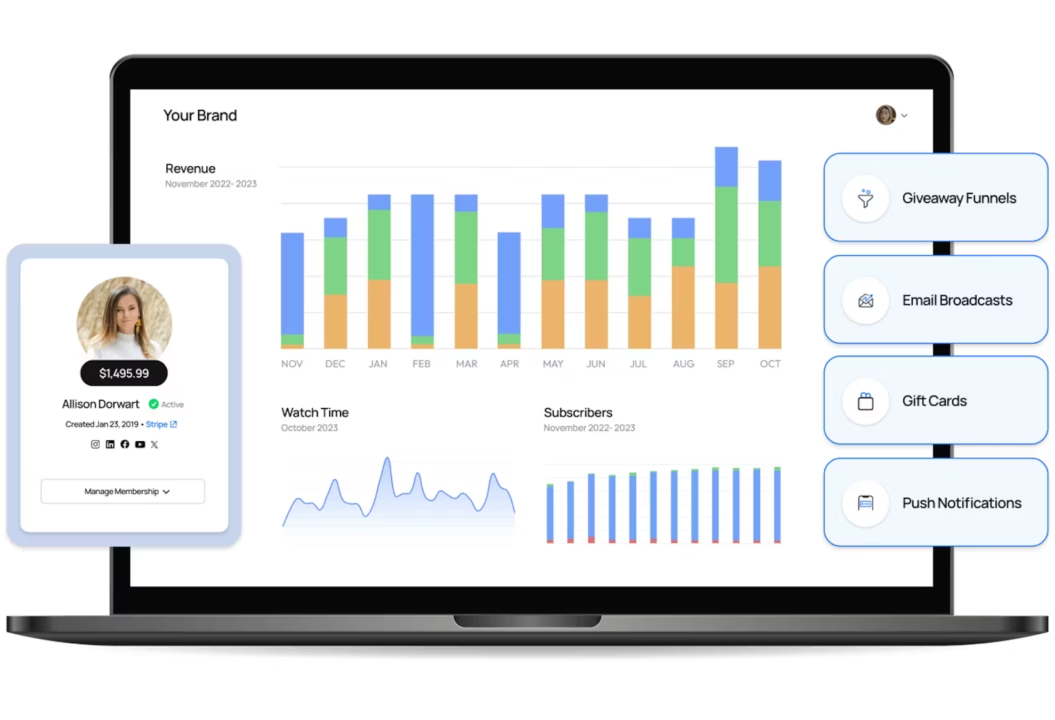
Uscreen’s built-in analytics make it easy to monitor your content and fine-tune your strategy based on real data. And when viewers convert, community tools like messaging boards or live chats help keep them engaged, turning one-time viewers into loyal members.
Refine your distribution strategy with Uscreen
A well-planned video distribution strategy helps you reach the right audience and turn them into engaged members. Creating strategic funnels ensures your content delivers maximum value while giving you more opportunities to connect with potential viewers.
Uscreen makes this easier with a full suite of tools for digital content monetization. Our data shows creators who embrace Uscreen marketing tools can see up to a 2.5x increase in monthly earnings. Set up automations to streamline your workflow, and use detailed, secure analytics to track performance and optimize your strategy at every stage.
FAQs
What are common video distribution methods?
Your typical video distribution system sends content through owned channels like your website, membership site, or email list, while earned channels (social shares, collaborations) and paid channels (ads or boosted posts) amplify your reach and bring new viewers into your funnel. The key is using these strategically to guide your audience to owned channels.
What are the four types of distribution strategies?
The four main strategies are owned (your platforms), earned (organic reach like shares or collaborations), paid (ads and promoted posts), and repurposed content (short clips from long-form videos to attract new viewers and funnel them to your owned channels).
Which platforms are best for content creator video distribution?
There’s no single “best” platform; it depends on where your audience hangs out. YouTube excels at long-form, searchable content, while TikTok and Instagram Reels are best for short-form discovery. Your owned channels are where you convert viewers, since you control the experience.
How often should content creators distribute videos?
Consistency is more important than volume. Stick to a manageable schedule like weekly long-form videos with supporting short clips, so your audience knows when to expect new content. Adjust the cadence based on engagement to find the one that works best for your viewers.