
There’s no single “best” Dacast alternative, because Dacast itself serves very different buyers. It’s built primarily for streaming-first buyers: broadcasters, institutions, and live event operators. Membership businesses, such as coaches, fitness instructors, and media brands, also use it to sell access to a video library, though it wasn’t designed with them in mind.
This guide sorts alternatives by use case rather than ranking them in a single flat list, and includes current pricing plus the specific, documented complaint pattern you should know about before choosing the platform you’ll build your business on.
What is Dacast and why do people look elsewhere?
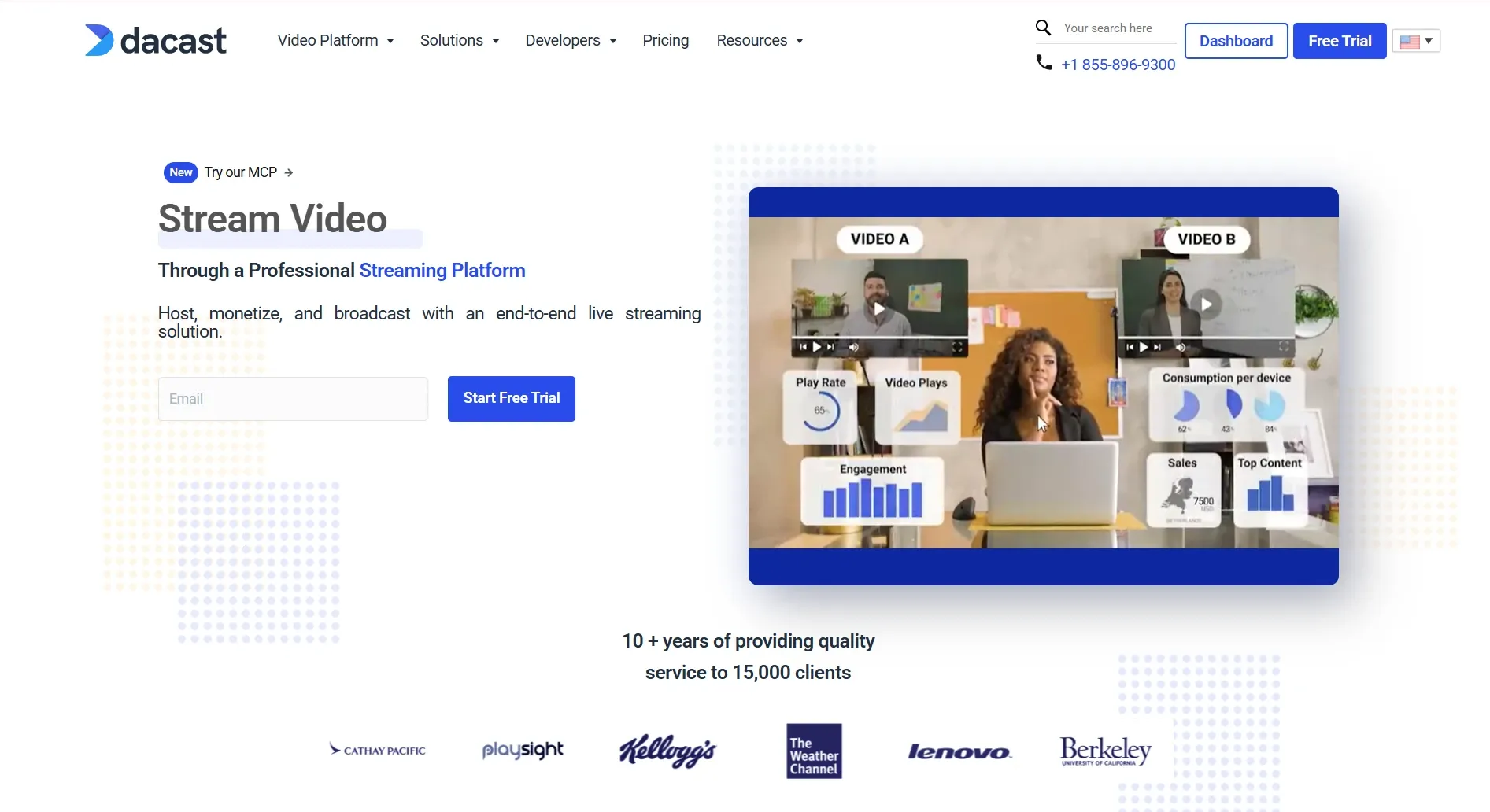
Dacast (opens in new tab) is a B2B live-streaming and over-the-top (OTT) video-on-demand hosting platform founded in 2008. It’s used across broadcast media, churches, schools, government agencies, sports organizations, and monetization-focused video businesses.
Two friction points come up repeatedly:
- No built-in community or native branded apps: Dacast gives you a customizable, all-device video player. That’s it. If you plan to build an owned audience around memberships, the absence of a community layer and branded apps is a real gap. If your audience wants to watch your content on a TV via Roku or Apple TV, that option isn’t available with Dacast.
- A documented billing complaint pattern: Across Capterra (opens in new tab) , Trustpilot (opens in new tab) , and Software Advice (opens in new tab) , customers report being charged for a renewal after believing they’d canceled. This isn’t one bad review; it’s a consistent pattern.
For broadcast-grade live streaming and simple paywalled video-on-demand (VOD), it’s still a credible, affordable pick. The alternatives below address the gaps Dacast doesn’t cover.
Dacast pricing at a glance (2026)
Dacast’s plans (opens in new tab) are billed annually by default. Month-to-month billing is available only on the Scale plan. If you go over your plan’s limits, you’ll pay overage fees: $0.30/GB for bandwidth and $0.15/GB per month for storage.
Across Capterra (opens in new tab) , Trustpilot (opens in new tab) , and Software Advice (opens in new tab) , customers report being charged for a renewal after believing they’d canceled. This isn’t one bad review; it’s a consistent pattern.
| Plan | Monthly price (billed annually) | Bandwidth | Storage | Notes |
|---|---|---|---|---|
| Starter | $39/month ($468/yr) | 2.4 TB/year | 500 GB | No monthly option |
| Event | $63/month ($750/yr) | 6 TB/year | 250 GB | No monthly option; advanced live features |
| Scale | $165/month ($1,980/yr), or $250/month month-to-month | 24 TB/year | 2,000 GB | Unlimited channels and team members |
| Custom | Contact sales | Custom | Custom | Migrations, SLAs, added support |
How we tested Dacast alternatives
We evaluated each platform against the same criteria: verified pricing against live pages, cross-referenced marketing claims with reviews on G2, Capterra, and Trustpilot, and assessed each tool against a specific type of buyer rather than ranking them in a single flat list.
The criteria I held every tool to:
- Monetization depth: Does it support subscriptions, rentals, and one-time purchases natively, or does it require third-party tools to fill the gaps?
- App availability: Are branded mobile and TV apps included in the plan, or buried in a custom-priced tier?
- Pricing transparency: Can you actually predict your bill at 500 or 1,000 subscribers, or does the cost depend on bandwidth, storage, and per-app fees that don’t show up until month two?
- Community and retention tools: Is there anything built in to keep subscribers around, or does that layer have to come from somewhere else?
- Migration and support: What does switching actually involve, and is there a team that handles it?
Tools like StreamYard, Restream, and Vidyard came up in searches but belong in a different category: they’re live production tools that work alongside streaming platforms (including Uscreen, via RTMP), not alternatives to them.
The eight tools that made the list each fit a distinct use case well enough to recommend to a specific kind of buyer.
Best Dacast alternatives in 2026
| Platform | Best for | Starting price |
|---|---|---|
| Uscreen (opens in new tab) | Recurring membership business | $49/month |
| Vimeo OTT (opens in new tab) | Subscription-first launch, less setup | $1/subscriber, no platform fee |
| Muvi (opens in new tab) | All-in-one OTT across devices | $399/month |
| Wowza (opens in new tab) | Engineering-led live delivery | ~$195/month (self-hosted) |
| Brightcove (opens in new tab) | Large enterprise media operations | Custom (typically $20K+/yr) |
| Kaltura (opens in new tab) | Deep customization at scale | Custom |
| JW Player (opens in new tab) | Ad monetization plus subscriptions | Custom |
| Castr (opens in new tab) | Simple multistreaming plus paywall | $19.99/month |
Uscreen: best for building a recurring membership business
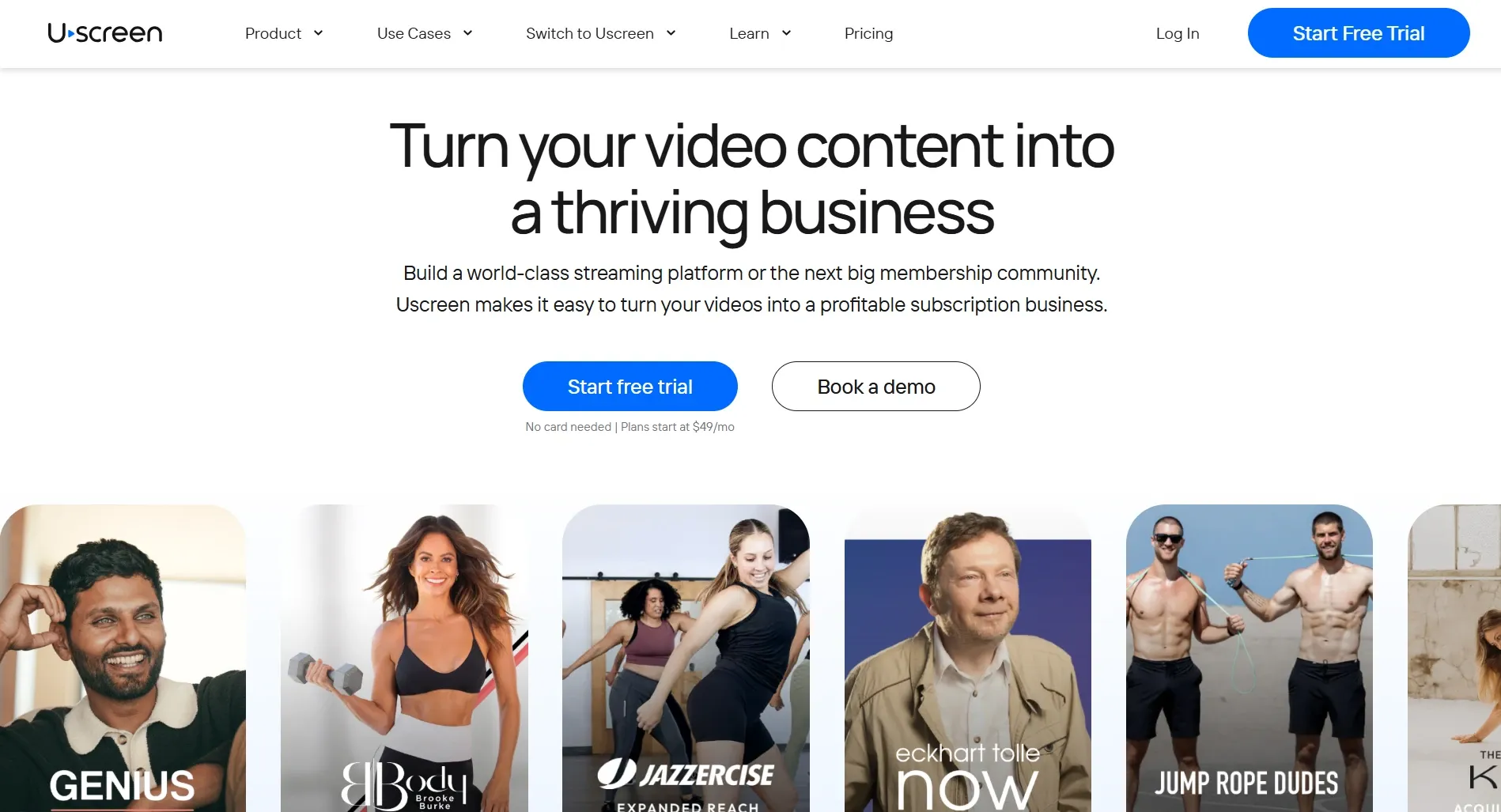
Uscreen (opens in new tab) is built for video business owners who want to own their audience, build predictable recurring revenue, and stop depending on platforms that weren’t designed for memberships. Everything is in one place: video hosting, live streaming, community, branded mobile apps, and built-in marketing automation.
Pricing (opens in new tab) starts at $49/month on Starter (capped at 100 subscribers), $149/month annually or $199/month on Growth (plus $1.99 per subscriber), and $449/month annually or $499/month on App Essentials (plus $0.99 per subscriber), which is where branded mobile apps (iOS and Android) come in. TV apps (Roku, Apple TV, and Fire TV) are available as an add-on or as part of a custom plan.
Why I picked it
For every other platform on this list, you’d need at least one additional vendor to cover all of these features. Uscreen is the only one that has it all in one place.
For a video business owner trying to build recurring revenue around an existing audience, that matters more than a lower entry price. The migration support is also genuinely hands-on: content and subscriber setup without you having to rebuild from scratch. Uscreen sets up your subscribers’ accounts, and the only thing they’ll need to do is change their password. Payment info is collected at their next renewal date. Most migrations run 30 to 60 days and are tailored to your goals and timeline.
Limitations
Uscreen costs more than Dacast once per-subscriber fees are factored in. Mobile apps require the App Essentials tier. TV apps (Roku, Apple TV, Fire TV) are available as an add-on or on a custom plan, so if apps are part of your plan, factor those costs into your timeline.
Verdict
Uscreen is the strongest pick if recurring revenue, community, and branded apps are all part of the plan. If you’re purely broadcasting at scale, look further down this list.
Vimeo OTT: best for subscription-first launches with lower upfront complexity
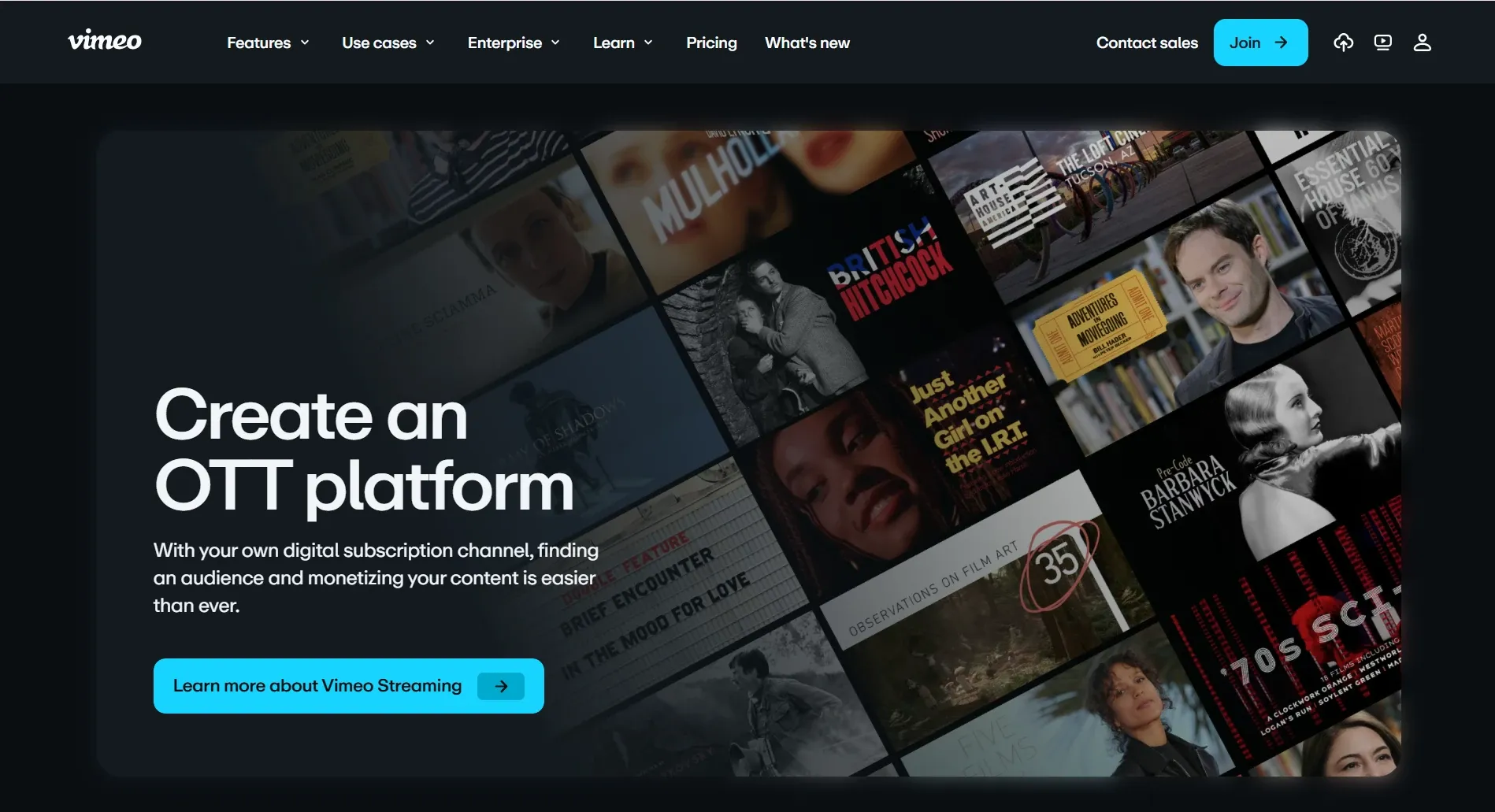
Vimeo OTT (opens in new tab) is a subscription video platform that lets you sell access to your content through subscriptions, rentals, or ad-supported free tiers. Starter has no fixed monthly fee. Instead, you pay $1 per subscriber per month, which keeps entry costs low as your audience grows.
Why I picked it
The $1-per-subscriber model is smart for early-stage validation. You’re not paying a platform fee before you’ve proven anyone will pay for your content. Vimeo’s name also carries weight in enterprise and media procurement conversations, which isn’t nothing. I’d pick this over Dacast if subscription monetization is the immediate goal and community can wait.
Limitations
The per-subscriber fee compounds fast, and you don’t get anything new when it does. You’re paying more each month for the same platform, with retention still entirely on you. Branded apps don’t show up until Enterprise, so if that’s part of your growth plan, factor in a sales conversation well before you need them.
Verdict
A stronger starting point than Dacast if subscription monetization is the whole plan and you don’t need community or CRM tools. If you envision wanting branded apps and retention tools as you grow, you’ll likely need them sooner than you expect.
Muvi: best for an all-in-one OTT launch across devices
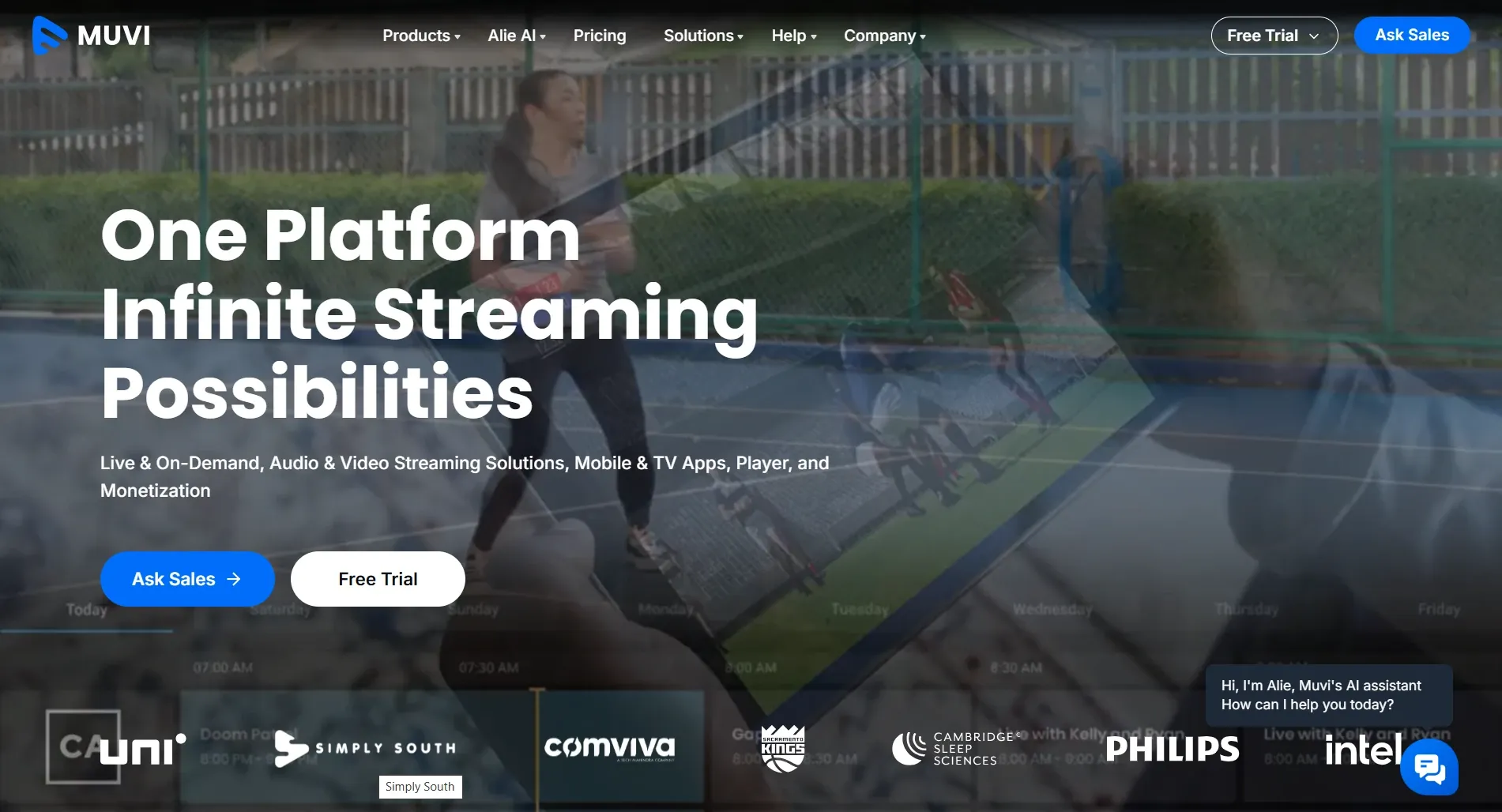
Muvi (opens in new tab) is an end-to-end OTT platform covering branded web, mobile, and TV apps, 10+ payment gateways, and CDN delivery under one roof. Plans start at $399/month (Standard), rising to $1,499/month (Professional) and $3,900/month (Enterprise). Per-app fees of $299 to $499 per month sit on top of those plan prices.
Why I picked it
The device coverage is broad, and the platform fee is predictable in a way per-subscriber models aren’t. If you want every piece of the stack (web, mobile, TV, payments, CDN) handled by a single vendor, without assembling it from parts, Muvi makes that case. For teams that have outgrown simpler platforms and need infrastructure depth, it holds up.
Limitations
The per-app fee is easy to miss in the headline price and adds up fast when you want coverage across several devices. Five apps on the Professional plan total $2,495/month, plus the $1,499 base fee. The CMS also has a learning curve, and reviewers consistently flag it as harder to navigate than platforms built for leaner teams.
Verdict
Muvi is worth considering if you want granular control over every part of your OTT platform and don’t mind assembling the pieces yourself. The final cost depends heavily on how many apps you need, so run the full numbers before comparing to a flat-fee platform like Uscreen. Muvi’s pricing can change significantly once you factor in the cost of additional apps.
Wowza: best for engineering-led teams that want control over live delivery
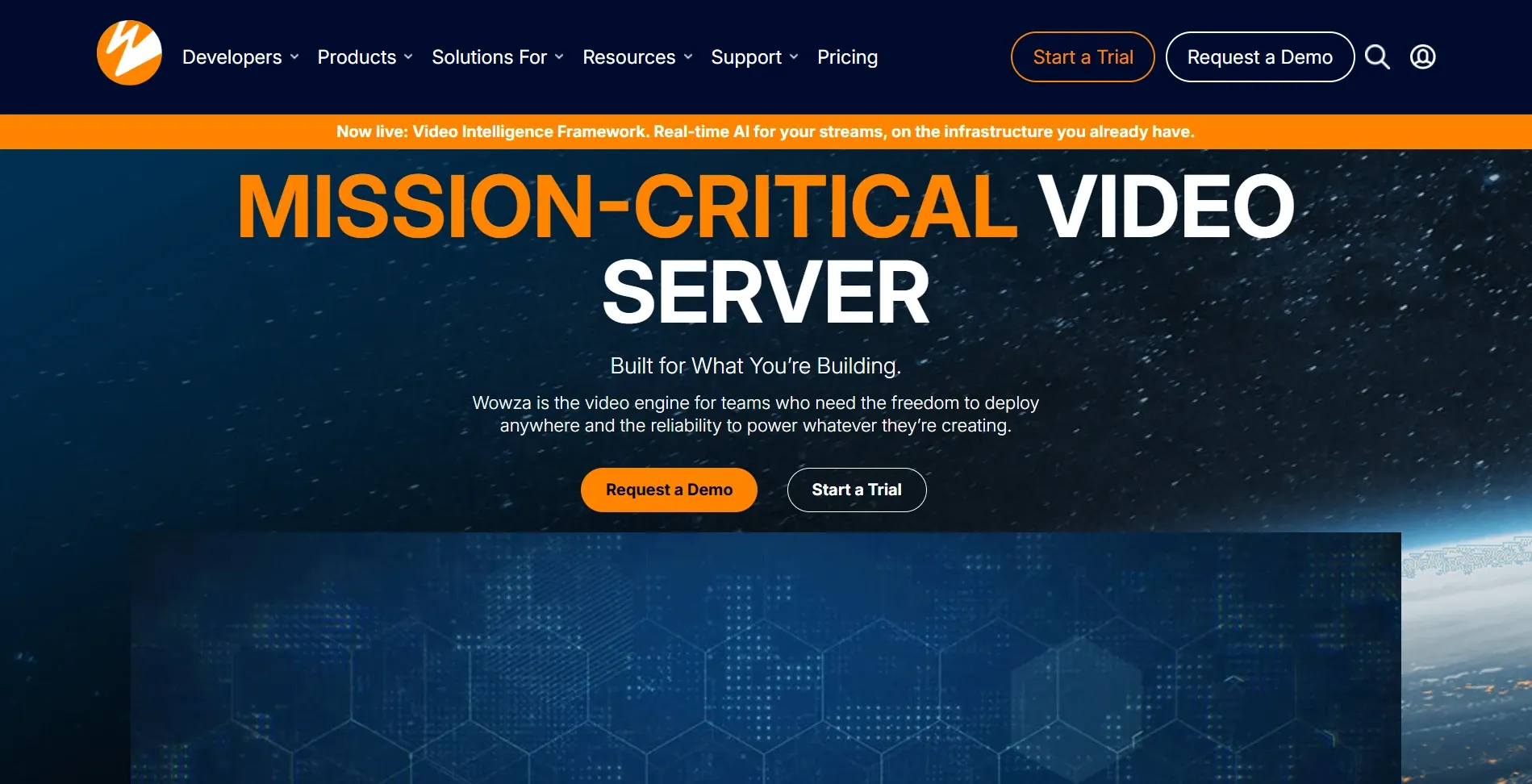
Wowza (opens in new tab) is streaming infrastructure, not a packaged platform. You deploy and configure it yourself. Wowza Streaming Engine (self-hosted) starts around $195/month, and Wowza’s cloud products are usage-based, priced on streaming hours and viewer volume rather than a flat monthly fee.
Why I picked it
If the live workflow is complex and you have an engineering team to match, Wowza makes sense. Packaged platforms don’t expose protocol-level control the way it does. If low-latency delivery or a fully custom front end is non-negotiable, you won’t find that in a SaaS storefront. It’s the pick for teams who want to own the pipeline, not rent access to someone else’s: broadcasters managing concurrent live feeds, sports tech teams handling high-volume real-time delivery, or telecoms building custom streaming infrastructure.
Limitations
There’s no monetization, paywall, or app layer built in. You’re building and maintaining all of that yourself, which means Wowza is really the foundation of a larger custom project rather than a standalone platform. Usage-based cloud pricing also makes it hard to forecast costs, especially around high-traffic live events.`
Verdict
A good pick for technical teams that want that level of control over live delivery and have the engineering time to support it. It’s a poor fit if your goal is to launch a membership business rather than maintain streaming infrastructure.
Brightcove: best for large enterprise media operations
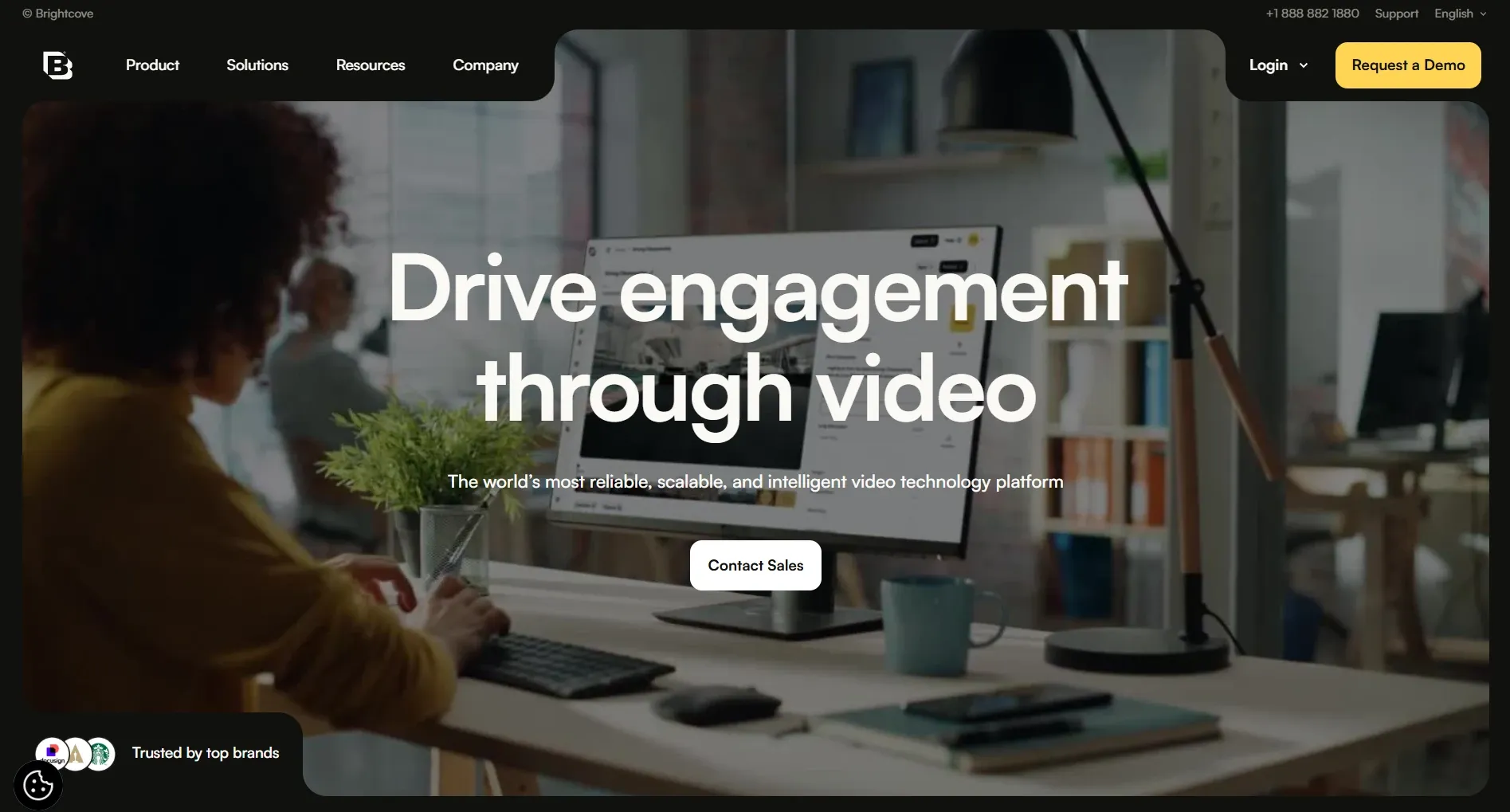
Brightcove (opens in new tab) is an enterprise video platform used by major broadcasters and media companies that handle large volumes of content. It doesn’t publish list pricing. Every plan is a custom contract negotiated on usage (bandwidth, storage, plays), with smaller deployments typically running $20,000 to $50,000 a year and larger media operations reaching well into six figures, per Vendr’s contract dataset (opens in new tab) .
Why I picked it
Brightcove’s track record at enterprise scale is real. Major broadcasters use it because it holds up under high volume, integrates with the tools that large media teams already use, and comes with dedicated account management rather than a support ticket queue. If your operation has outgrown mid-market platforms and needs something that won’t flinch at high-volume streaming, it belongs on the shortlist.
Limitations
No published pricing means you can’t budget without a sales conversation, which slows down evaluation cycles. There’s no built-in community or marketing automation either, so you’ll need to solve retention elsewhere. And for a smaller team, it’s overbuilt. You’ll pay for infrastructure capacity you won’t use for years.
Verdict
A better fit for mature, large-scale operations than smaller teams or individual video businesses. If you’re not already running significant video volume, you’ll likely pay for capacity you don’t need yet.
Kaltura: best for large organizations needing deep customization
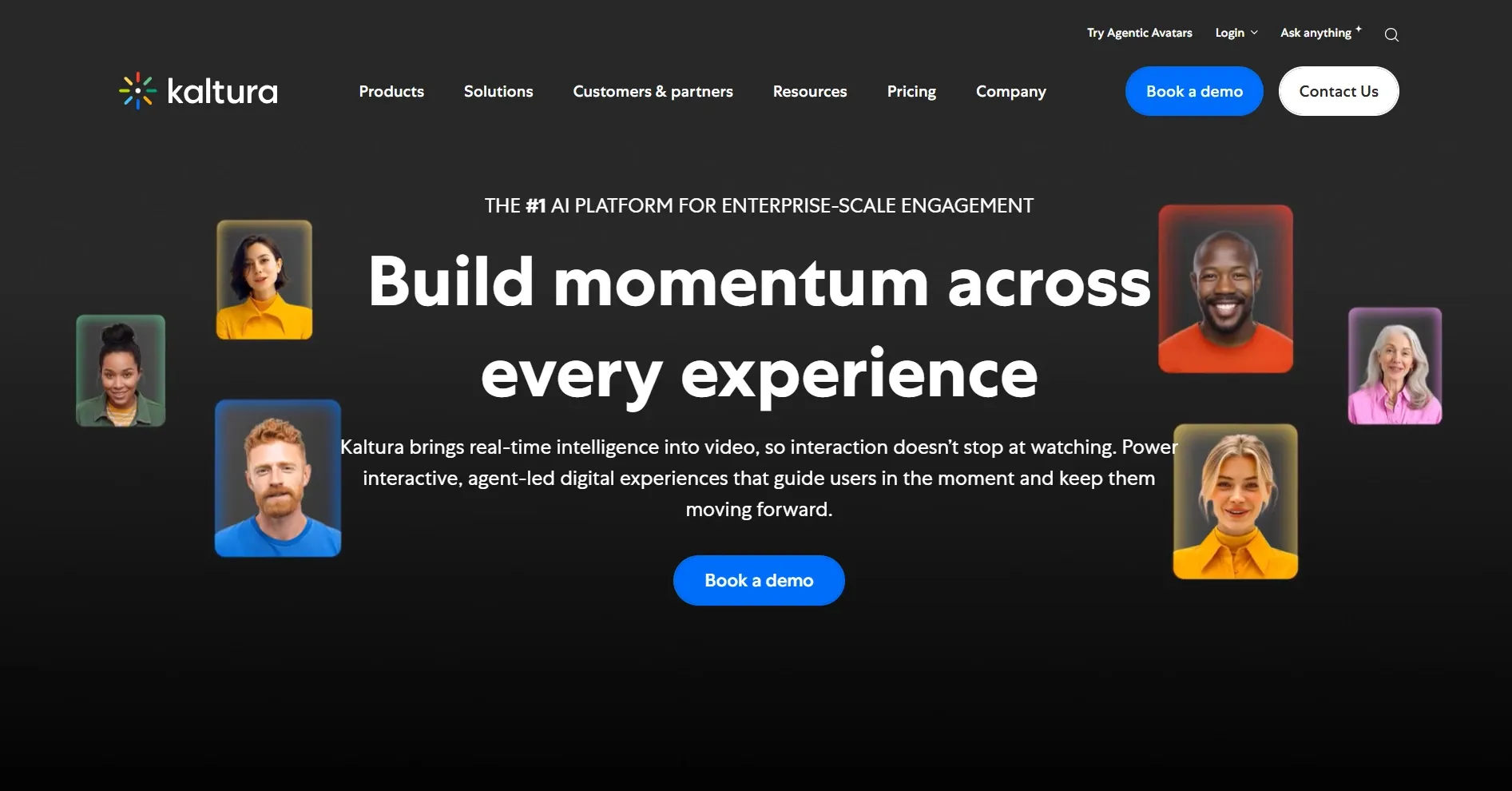
Kaltura (opens in new tab) is a highly customizable video platform used by media companies, universities, and large institutions that want a tailored video experience built around their existing tech stack. It supports 4K streaming and deep integration through plugins. Pricing is entirely quote-based with no published tiers.
Why I picked it
Kaltura’s flexibility is the main differentiator. If you have a technical team and want a video platform that bends to your architecture rather than the other way around, it’s one of the few that supports that. The institutional track record in education and media is also hard to argue with for buyers where that credibility matters internally.
Limitations
The flexibility cuts both ways. Without a dedicated technical team, Kaltura’s learning curve is steep, and reviewers consistently flag it. There’s no built-in community or marketing automation, so anything beyond video delivery requires bolting on external tools. And like Brightcove, you can’t budget without talking to sales first.
Verdict
Worth considering if you have an internal team that wants to build a tailored video experience from the ground up and the scale to justify custom pricing. If you want something that works out of the box without a technical implementation project, look elsewhere.
JW Player: best for publishers blending ad monetization with subscriptions
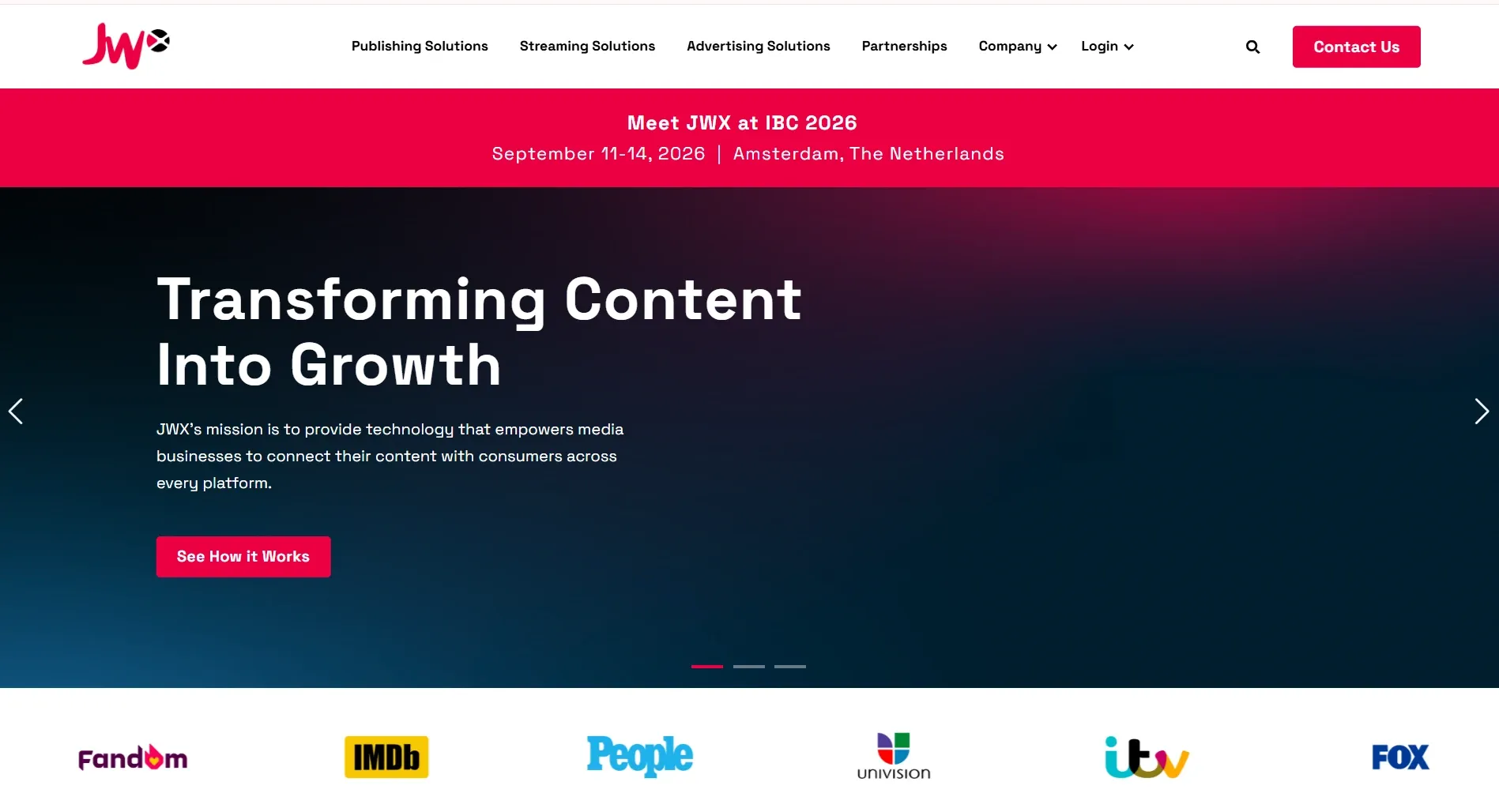
JW Player (opens in new tab) is a video platform built for publishers running ad-supported video at scale, with support for SVOD, TVOD, and AVOD, as well as mobile and TV apps. Pricing is fully sales-gated with no published tiers.
Why I picked it
The ad-tech layer is strong. If your model depends on blending ad revenue with a subscription paywall, JW Player is one of the few platforms that makes that a first-class feature rather than an afterthought. Editorial workflow tools are also mature, which matters for teams publishing frequently across multiple formats.
Limitations
No community features, marketing automation, or way to budget without a sales call. If retention is a priority alongside monetization, you’re building that layer somewhere else. For a buyer who just wants to understand what they’d pay, the fully opaque pricing is a friction point before the conversation even starts.
Verdict
This is a publisher’s tool, not a membership-business tool. It makes sense if ad monetization alongside subscriptions is core to your revenue model. Otherwise, the sales-gated pricing and the lack of retention features make it a harder sell than platforms built around membership.
Castr: best for teams that want simple multistreaming plus paywall basics
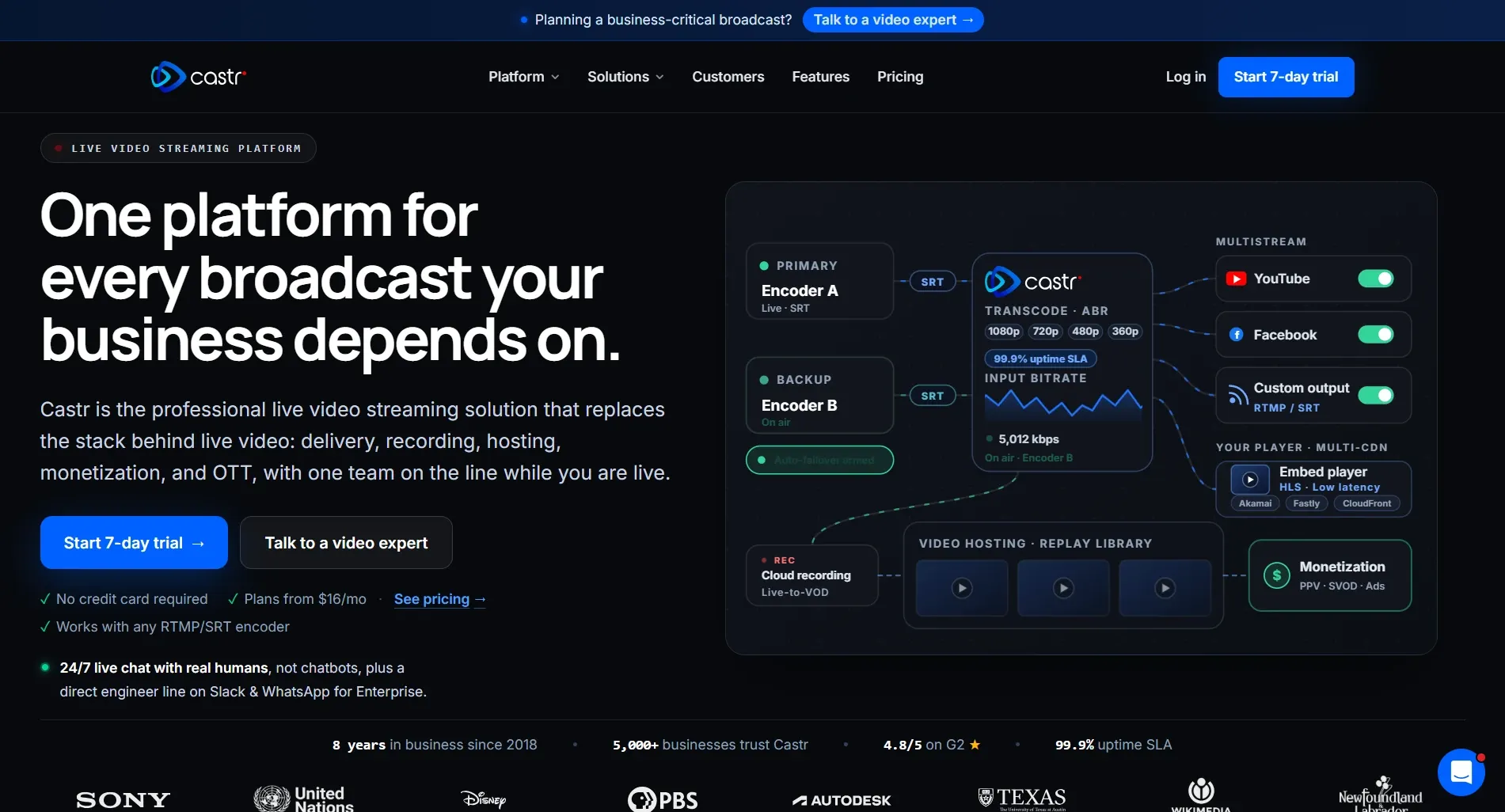
Castr (opens in new tab) is a multistreaming and video-hosting platform that lets you broadcast to multiple destinations simultaneously while taking payments through subscriptions, rentals, pay-per-view, and ad-supported free tiers, delivered via Akamai’s CDN.
Why I picked it
The entry price is low, and the multistreaming capability is a differentiator if the actual use case is simulcasting to YouTube, Twitch, Facebook, and your own paywall simultaneously. Pricing is also fully published, which may sound like a low bar, but it puts Castr ahead of half of this list on transparency alone. Plans run from $19.99/month to $749.99/month across five tiers, with OTT app support available at higher price points.
Limitations
TV apps don’t appear until you’re well into the higher-priced tiers, and mobile OTT apps follow the same pattern. There’s no community, marketing automation, or retention layer. It works well as a delivery and payment tool. Beyond that, you’re on your own.
Verdict
A solid pick if your needs are simple: stream, take payments, move on. If you want a built-in audience, community, or retention tools, you’ll outgrow it the same way you would Vimeo OTT’s Starter tier.
How to choose the right Dacast alternative (by use case)
The right Dacast alternative depends on what you’re actually trying to build. Dacast serves a broad mix of buyers: broadcasters, churches, government agencies, and membership businesses, each using it for different reasons.
Switching platforms only makes sense if the one you move to is built for your specific use case. Matching the platform to the job is the only way to avoid ending up in the same situation a year from now.
Here’s how to match your use case to the right platform:
- Recurring membership business: If you’re selling subscriptions, want a community around your content, and need branded mobile and TV apps, Uscreen (opens in new tab) is the platform built for this. It handles video hosting, live streaming, community, marketing automation, and payments in one place, so you don’t have to stitch tools together. Dacast wasn’t designed for this use case. Start a free trial (opens in new tab) or book a demo (opens in new tab) to see it before committing.
- Subscription-first launch with minimal setup cost: Vimeo OTT charges $1 per active subscriber with no fixed monthly fee on its Starter plan, which keeps upfront costs low. It works for simple SVOD and TVOD launches, but it doesn’t include built-in community or marketing automation, and branded TV apps require the custom Enterprise tier.
- All-in-one OTT presence across web, mobile, and TV: Muvi covers the broadest device footprint and gives you granular control over each part of your stack. The tradeoff is cost complexity: per-app fees of $299 to $499 per month stack on top of the base plan, so do the full math before assuming it’s cheaper or pricier than a flat-fee alternative.
- Engineering-led control over live delivery: Wowza is infrastructure, not a packaged storefront. It gives your team low-latency protocol support and full control over the live pipeline, but there’s no built-in monetization, paywall, or app layer. You build that yourself.
- Large-scale enterprise media or broadcast: Brightcove and Kaltura both serve this tier. Brightcove has a strong track record with major broadcasters and media companies. Kaltura offers deeper customization through plugins and integrations, particularly for education and institutional deployments. Both are custom-quoted and overbuilt for smaller operations.
- Ad monetization alongside subscriptions: JW Player is built for publishers who need AVOD and SVOD running together at scale. It’s a publisher’s tool, not a membership platform, and its pricing is sales-gated rather than self-serve.
When Uscreen is the right Dacast alternative
Dacast is a capable platform for broadcast-grade live streaming and simple paywalled VOD. But a specific kind of reader keeps landing on this page: someone who’s already built an audience and now wants to own it, monetize it with recurring subscriptions, and stop depending on a platform that wasn’t built for that use case.
That’s the gap Uscreen fills. Here’s when it’s the right move:
- You’re ready to run a subscription membership: You have an existing audience that pays for access, and you want predictable monthly recurring revenue instead of one-off event sales or per-bandwidth billing surprises.
- You want community alongside your video: Channels, challenges, direct messages, and member profiles, all inside the same platform as your content. Dacast has none of this.
- You need branded mobile and TV apps: Published under your own developer account. Your members tap your app, see your brand, and never know Uscreen exists.
- You’re done with unpredictable billing: If Dacast’s auto-renewal or cancellation pattern is what brought you here, Uscreen’s Migration team (opens in new tab) handles your content and subscriber setup. Your members just need to change their passwords; payment info will be collected at their next renewal date. Most migrations last 30 to 60 days and are tailored to your goals and timeline, with a dedicated team and scheduled calls throughout the process.
If that’s where you are, (opens in new tab) start a free trial (opens in new tab) without a credit card, or (opens in new tab) book a demo (opens in new tab) to see the platform before committing.