
If you’re reading this, you’re probably one of two people. Either you’re comparing platforms before you’ve signed up anywhere, or you already use Fourthwall and have hit a specific wall. That wall is usually one of three things: the fees, the follower gate for instant access, or a membership feature that stayed basic while your audience grew.
Fourthwall does merch and print-on-demand well. You skip the upfront cost and the hassle of storing inventory yourself, and most of the alternatives below compete on that same ground.
Uscreen is the exception. It’s not a merch platform at all, and it only belongs here if your real complaint is the video and membership side of Fourthwall. Below are eight platforms, what each one actually does well, and who it fits.
Why people look for Fourthwall alternatives
Most searches for a Fourthwall alternative come down to outgrowing what the platform was built for. Fourthwall works well for merch and casual perks, but the fees add up fast, the membership tools stay basic, and real audience segmentation means bolting on outside apps. None of that is a flaw exactly; it’s just what happens once a business needs more than a merch-first platform can give it.
A few specific frictions tend to be what actually pushes someone to search for something else:
- Audience segmentation isn’t native: Cart recovery and a basic affiliate program come built in, but segmenting subscribers by behavior, like re-engaging lapsed buyers or targeting big spenders differently, requires connecting a third-party tool like Kit or Klaviyo instead of doing it from the dashboard.
- Access to Fourthwall’s Memberships (opens in new tab) feature is gated unless you already have an audience: If you already have 100+ Twitch followers, 500+ YouTube subscribers, or 1,000+ Twitter followers on a 3+ month old account, you get instant access. Everyone else has to request an invite.
- The membership feature stays basic as you grow: Posts (text, image, audio, video, polls, livestream) replace a searchable video catalog, and there’s no native comments view in the admin dashboard. Livestreaming has to be turned on per account and run through external software like OBS.
- Audience segmentation isn’t native: Cart recovery and a basic affiliate program come built in, but segmenting subscribers by behavior requires connecting a third-party tool like Kit or Klaviyo.
- Payouts run on a monthly batch, not a rolling schedule: Fourthwall sends one payout per month (opens in new tab) , by the third business day, covering the entire prior month. Only then does the bank transfer itself begin, another 1 to 3 business days for US banks, or 3 to 10 for international ones.
Quick comparison: Fourthwall alternatives at a glance
| Platform | Best for | Starting price | Membership or subscription support | Merch or print-on-demand | Branded mobile or TV app |
|---|---|---|---|---|---|
| Uscreen | A video-first membership business you plan to scale | $49/month | Native, tiered subscriptions | None (you can link your e-commerce site directly in your web and app navigation to integrate physical goods) | Native, branded mobile & TV apps including iOS, Android, Roku, Apple TV, Fire TV, Android TV, and Samsung TV |
| Patreon | Simple, low-setup fan subscriptions | Free to join, 10% platform fee | Native, tiered subscriptions | Not available to new users, legacy feature only | None for your brand, a shared consumer app exists |
| Spring (Teespring) | Free print-on-demand with YouTube integration | Free | None | Native, margin-based, no monthly fee | None |
| Printful | The widest merch catalog and print quality | Free to join, $24.99/month Printful Growth | None | Native, over 500 products, quick stores | None for your brand, a seller admin app exists |
| Sellfy | Combining merch with digital downloads in one store | $29/month (billed annually) | Native, flat pricing, no transaction fee | Native, smaller catalog than Printful | None |
| Payhip | Free all-rounder for digital products, courses, and physical goods | Free, 5% transaction fee | Native | Native, all product types on every plan | None |
| Ko-fi | Tips and casual, low-pressure support | Free (5% service fee), or $12/month | Native, light tiers | Native, basic shop | None |
| Shopify | Scaling into a full commerce operation | $39/month | Requires a third-party app | Native, requires a third-party app for print-on-demand | None for your brand; a seller admin app exists |
1. Uscreen (opens in new tab) : Best for a video-first membership business you plan to scale
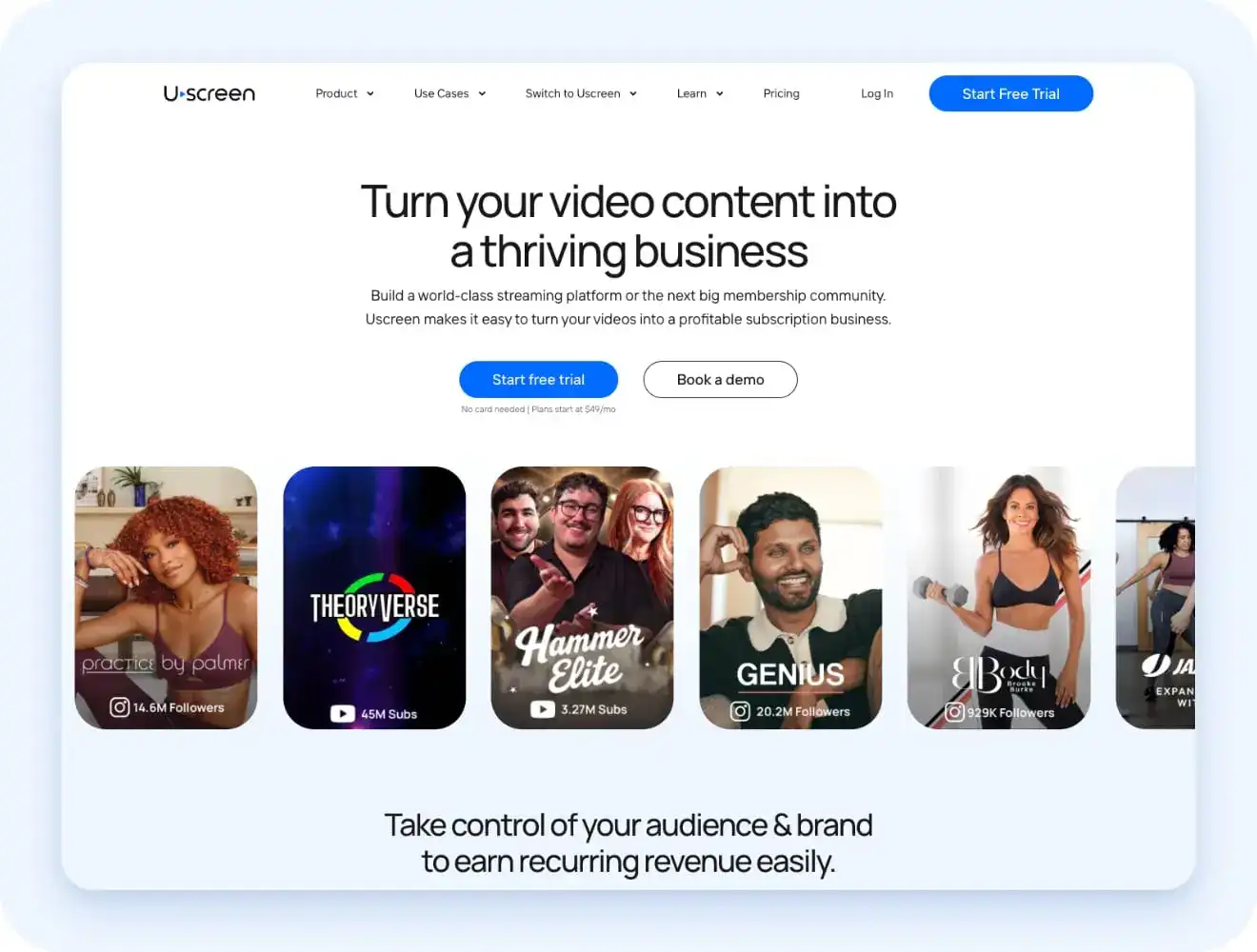
Uscreen is a video membership platform that lets you sell subscriptions, one-time purchases, and rentals through your own branded website, mobile apps, and TV apps.
If Fourthwall’s membership tab has become the actual business, not a side perk next to merch, Uscreen changes what “membership” can do. A Netflix-style video catalog replaces a chronological post feed. Native live streaming comes with chat, preregistration, and reminders instead of a gated post type run through outside software.
Branded mobile and TV apps (opens in new tab) replace a dashboard-only storefront. You can also link your e-commerce site directly in your web and app navigation, so physical goods sit alongside your digital membership.
Standout features:
- Marketing automations and built-in CRM
- Apps published under your own developer account
- Community and engagement tools built into the platform
- Hands-on support from migration through long-term growth
- Monetization tools including subscriptions, one-time purchases, and rentals
Pricing: Starter costs $49/month (opens in new tab) for up to 100 subscribers. Growth costs $149/month (annual) plus a $1.99/subscriber fee. App Essentials costs $449/month (annual) plus a $0.99/subscriber fee and unlocks branded mobile apps. Custom pricing adds a $0.99/subscriber fee and unlocks the full platform, including five TV apps, community tools, and a dedicated success manager.
2. Patreon (opens in new tab) : Best for simple, low-setup fan subscriptions
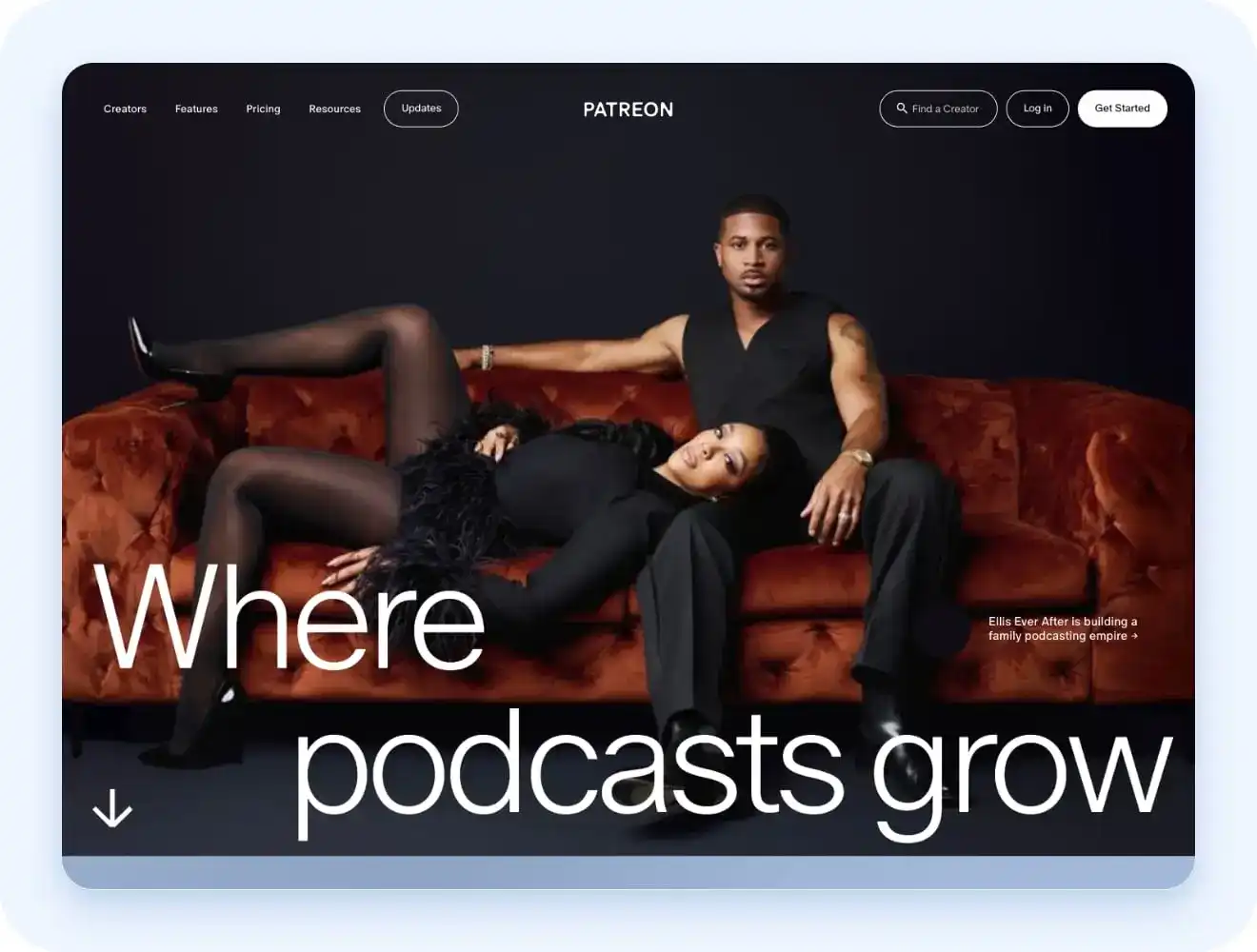
Patreon runs on tiered subscriptions with perks attached, no merch catalog, no storefront, just a feed of posts your fans pay to access. Payment processing and an additional 30% Apple in-app purchase fee apply on top of the platform fee for iOS transactions.
It’s the right fit for someone whose whole ask is recurring support tied to a content feed, not a business built around selling physical or digital products.
Standout features:
- Native video, audio, and downloadable file support
- Free trials, tiered pricing, and discount tools built in
- Community group chats included with membership
Pricing: Free to join, 10% platform fee (opens in new tab) on all new user pages, plus standard payment processing.
3. Spring (opens in new tab) : Best free print-on-demand with YouTube integration
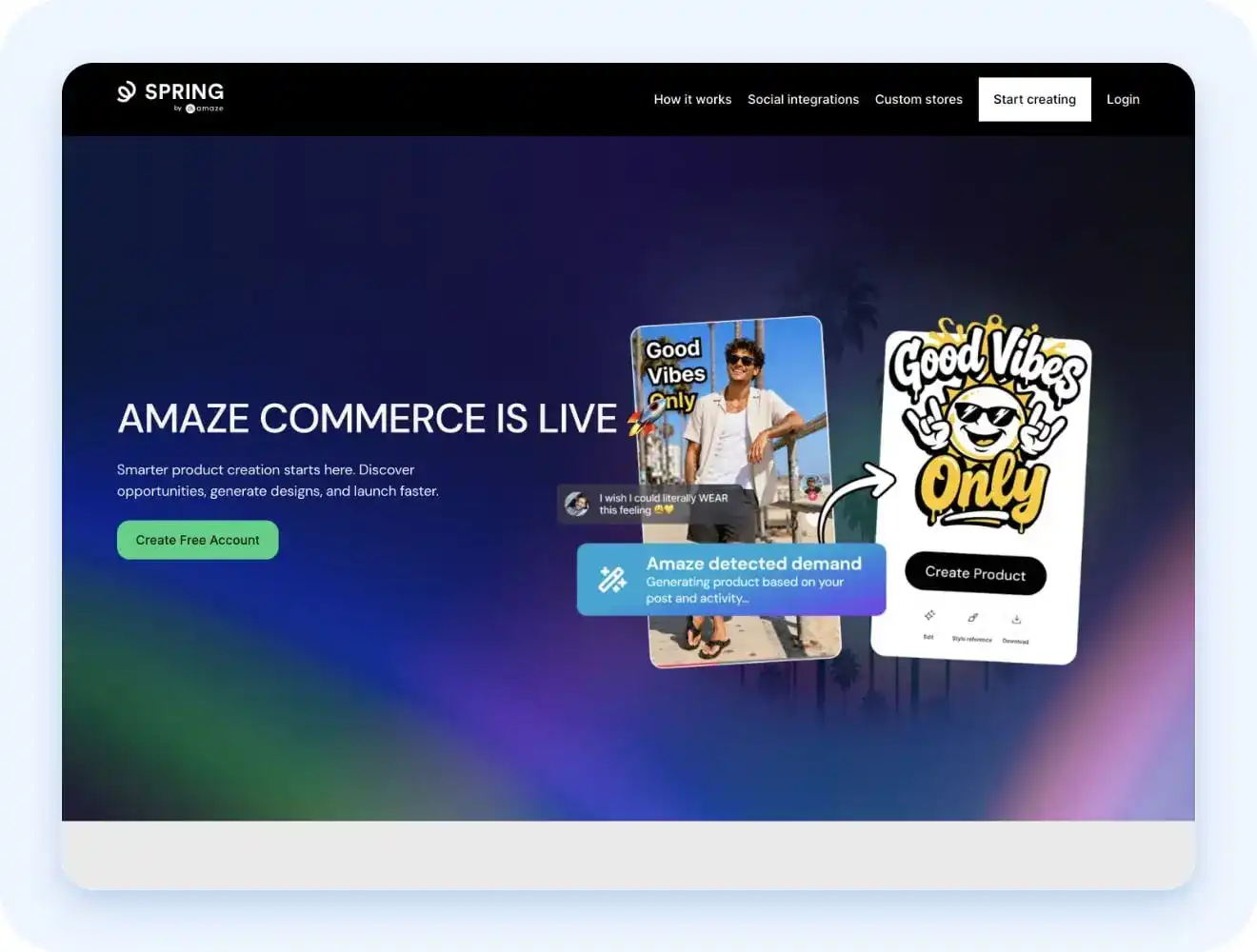
Spring is a free print-on-demand platform with deep YouTube integration. It charges no monthly fee. Your profit comes from the margin between Spring’s base cost and your selling price, built directly into the product. Its YouTube Merch Shelf integration (opens in new tab) places products directly under your videos, inside live streams, and on your channel’s store tab.
The catalog is wide, and Spring’s Digital Launcher (opens in new tab) also supports digital products like e-books and audio files. The Merch Shelf itself requires YouTube Partner Program membership to unlock.
Standout features:
- Custom domain support and a branded checkout experience
- Up to 12 products displayed on the Merch Shelf, customizable per video
- Live merch alerts pop up in chat during livestreams when a product sells
- Native integrations (opens in new tab) with YouTube, Instagram, TikTok, Twitch, and Streamlabs
Pricing: Free, margin-based, no monthly fee.
4. Printful (opens in new tab) : Best for the widest merch catalog and print quality
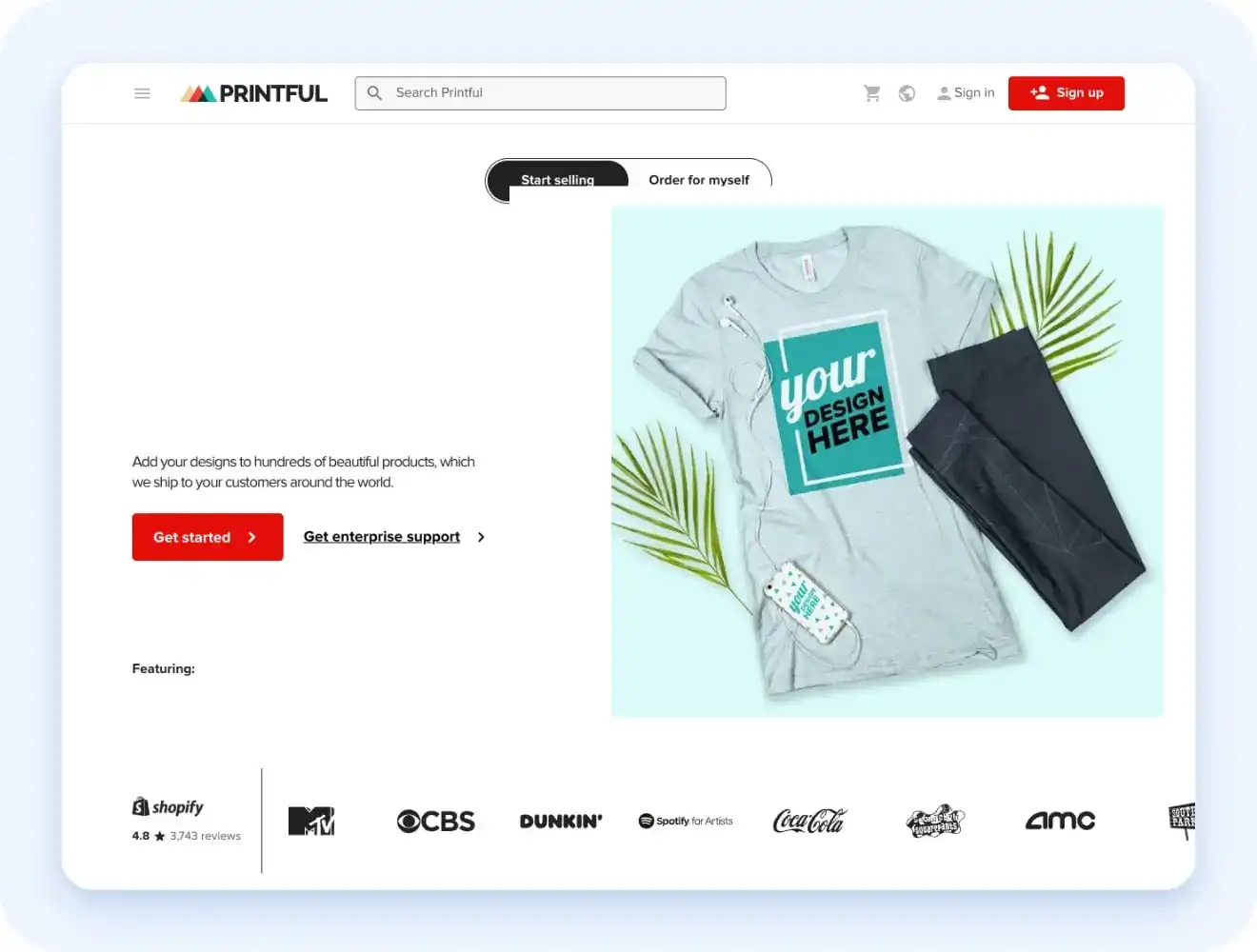
Printful is a dedicated print-on-demand company, not a full storefront. Beyond its basic Quick Stores tool, it pairs with platforms like Shopify, Etsy, or WooCommerce to actually sell.
If the complaint about Fourthwall isn’t the membership tab at all, but wanting more products, better print quality, or more control over sourcing, Printful is the direct swap.
There are no memberships or community tools here, and Quick Stores is limited to US sellers and US shipping only. Most businesses will still pair Printful with a dedicated storefront platform to actually reach customers.
Standout features:
- Products span apparel, accessories, home goods, embroidery, and packaging customization
- Zero order minimums, and joining costs nothing upfront
- Integrates with more than 18 platforms (opens in new tab)
- Quick Stores (opens in new tab) for a free, no-code storefront if a full e-commerce platform isn’t needed yet
- A seller-side mobile app (opens in new tab) for managing orders, not a branded app for your audience
Pricing: Free (opens in new tab) plan includes over 500 custom products with automatic fulfillment. Printful Growth costs $24.99/month (opens in new tab) , free once a business reaches $12K in annual sales, and adds discounted pricing and branding. Enterprise uses custom pricing for large-scale brands, layering in a fully managed store and dedicated support.
5. Sellfy (opens in new tab) : Best for combining merch with digital downloads in one store
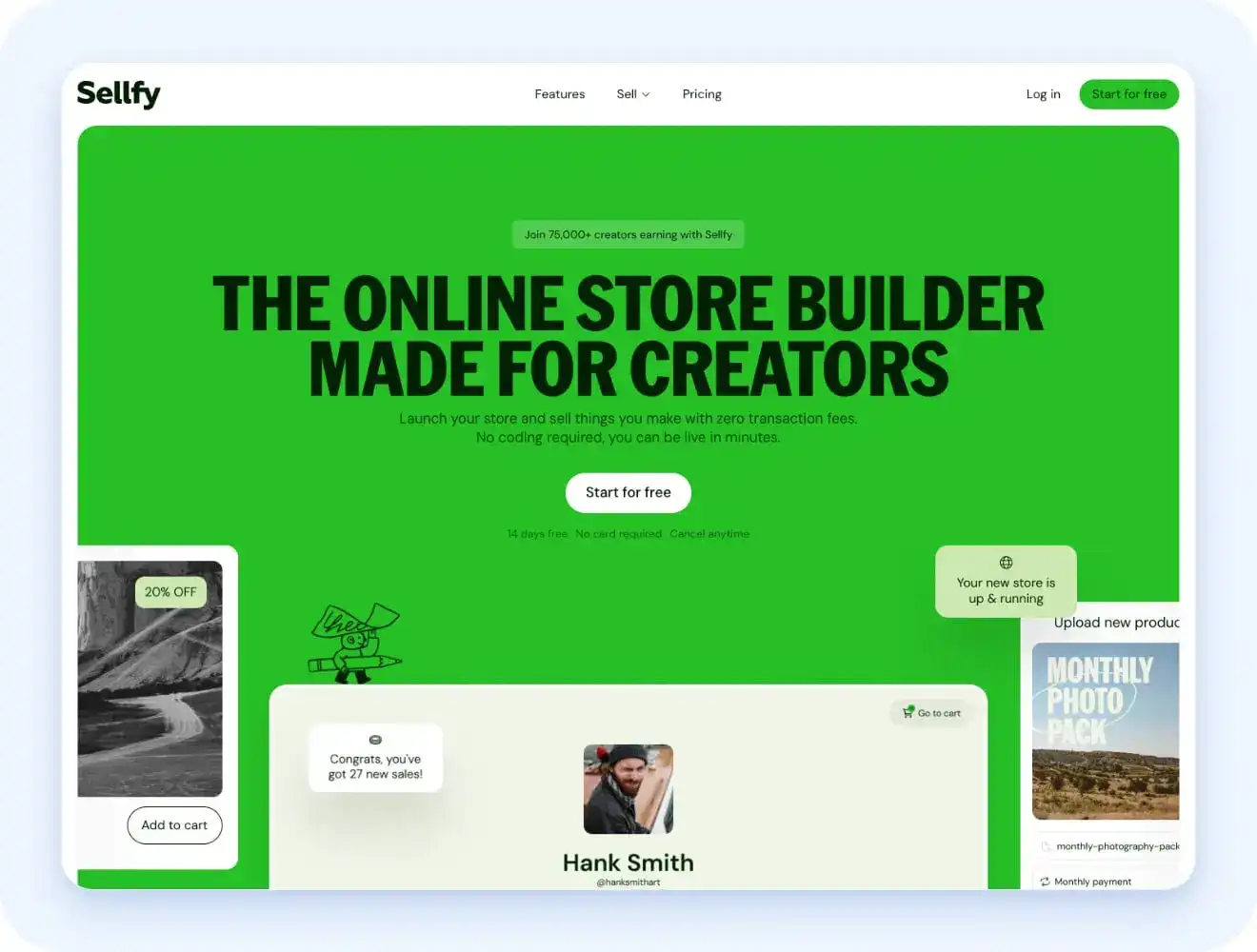
Sellfy puts digital downloads, subscriptions, physical products, and print-on-demand merch in one store, with zero transaction fees on any paid plan. The print-on-demand catalog is smaller than Printful’s, at 120+ products (opens in new tab) .
There’s no live video or native community tools here› Sellfy’s video feature is built for on-demand streaming of products, not live broadcasts.
Standout features:
- Built-in video streaming (opens in new tab) for digital video products, reducing piracy risk
- Weekly, monthly, or yearly subscription billing built in
- PDF stamping with buyer emails to discourage unauthorized sharing
- Embeddable storefront and buy buttons for an existing website or blog
Pricing: Starter costs (opens in new tab) $29/month (billed annually) for up to $10K in annual sales. Business costs $59/month for up to $50K. Premium costs $119/month for up to $200K. All three carry 0% transaction fees.
6. Payhip (opens in new tab) : Best free all-rounder for digital products, courses, and physical goods
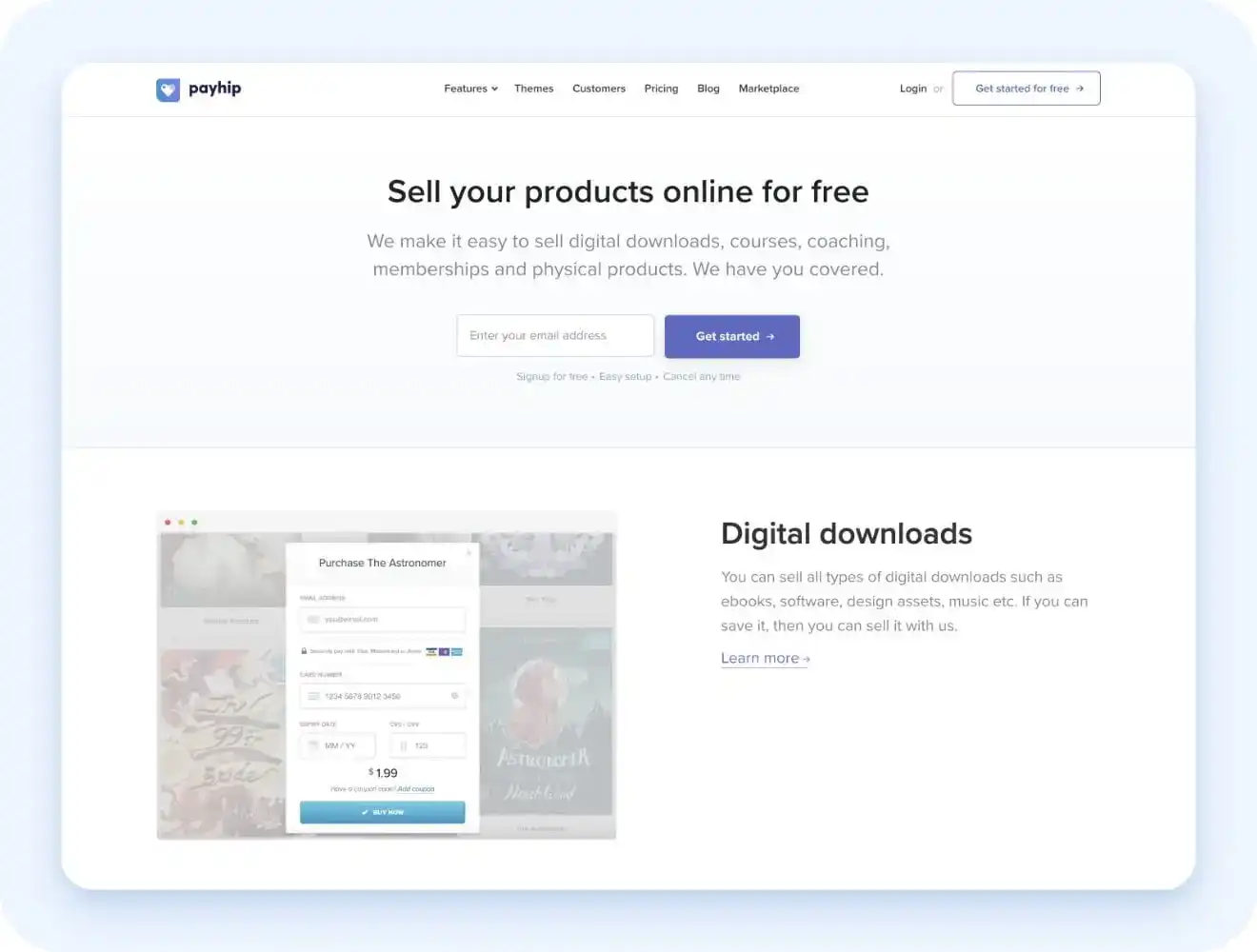
Payhip is an all-in-one storefront for digital products, courses, coaching, and physical goods. It doesn’t feature-gate. Every plan gets the same core features: digital products, courses, memberships, coaching, and physical goods; the only difference between tiers is the transaction fee.
Courses support quizzes, drip scheduling, and completion certificates. Software sellers get automatically generated license keys (opens in new tab) with every sale. What’s missing is native community tools; there’s no discussion board or forum built in.
Standout features:
- Full feature set available on every plan, including Free
- Physical product inventory and order fulfillment built in
- Pay-what-you-want (opens in new tab) pricing for physical and digital products
- Automatic EU and UK VAT collection and remittance, plus manual tax collection tools for other countries
Pricing: Free Forever comes with a 5% transaction fee. Plus costs $29/month (opens in new tab) with a 2% fee. Pro costs $99/month with a 0% fee. All three include unlimited products and unlimited revenue.
7. Ko-fi (opens in new tab) : Best for tips and casual, low-pressure support
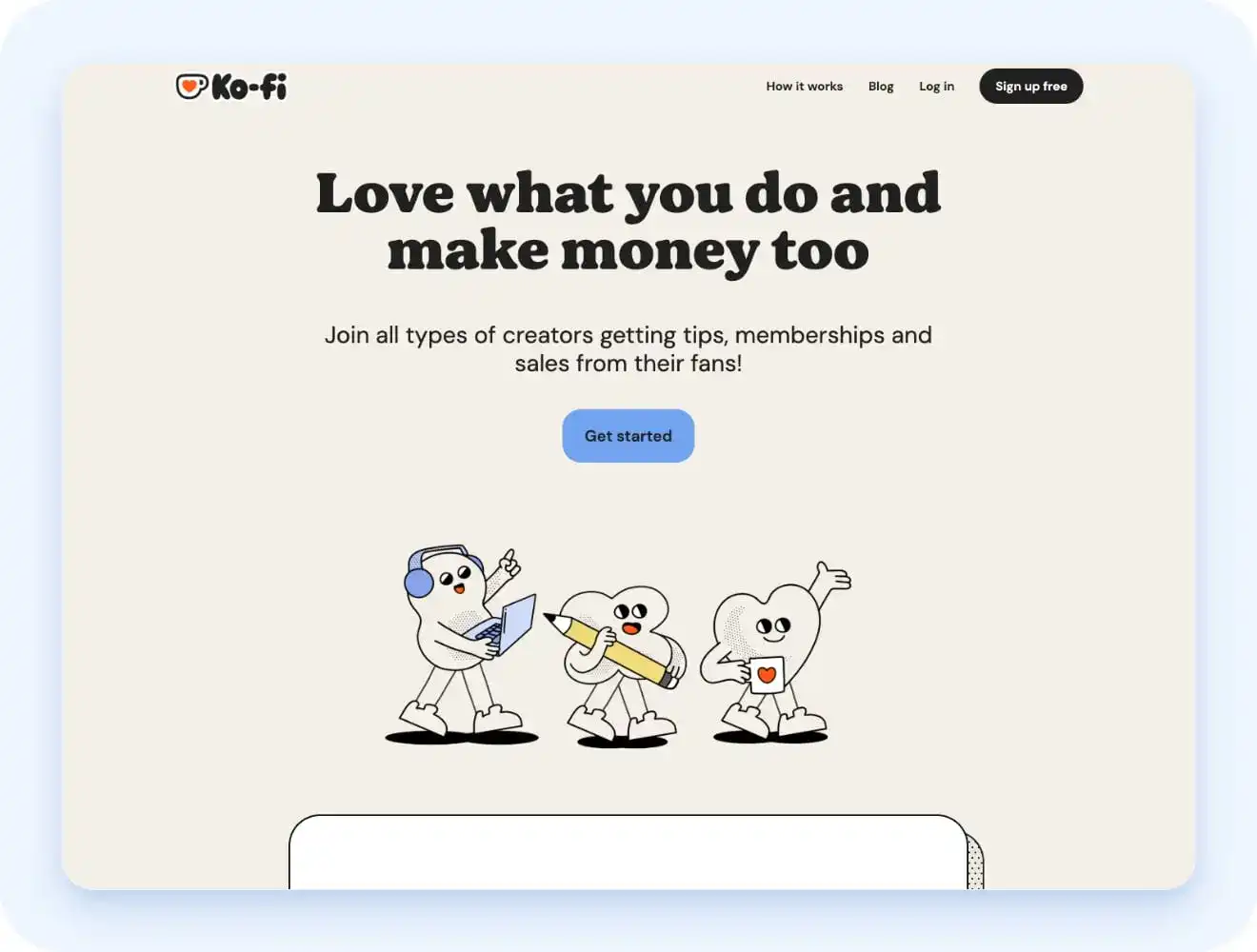
Ko-fi is a tipping and light-membership platform. It lets you accept one-time support, sell a small shop of digital or physical items, and offer simple membership tiers, all from one page.
Ko-fi strips monetization down to the basics: tips, a small shop, and simple membership tiers, good for testing whether people will support you before building anything bigger. There’s no native app yet; Ko-fi’s own team says it’s still in development, only a home-screen shortcut in the meantime.
Standout features:
- Supporter data export and direct messaging built in
- Instant payouts through Stripe or PayPal, no waiting period
- Membership tiers (opens in new tab) with custom names, pricing, and benefits per tier
Pricing: Free (opens in new tab) includes 5% on shop, memberships, and commissions. Gold costs (opens in new tab) $12/month with 0% fees across everything.
8. Shopify (opens in new tab) : Best for scaling into a full commerce operation
Shopify is a complete commerce platform for selling online and in person, spanning solo storefronts to global brands. It’s the platform most businesses land on once merch outgrows a simple storefront and needs real transaction volume.
Its app marketplace runs over 16,000 apps (opens in new tab) deep, covering what Shopify doesn’t build in natively. Digital products are sold through a dedicated app rather than a built-in feature, per Shopify’s own app store listing.
Standout features:
- Built-in analytics dashboard (opens in new tab) available on every subscription plan
- Native admin app (opens in new tab) for managing orders, shipping labels, and analytics from a phone
- Automatic sitemap generation (opens in new tab) and editable meta tags across products, collections, and pages
Pricing: Basic costs $39/month (opens in new tab) for solo entrepreneurs. Grow costs $105/month for small teams. Advanced costs $399/month for scaling businesses. Plus costs $2,300/month on a 3-year term for complex, high-volume operations.
Fourthwall’s membership feature vs. a dedicated video membership platform
On Fourthwall, “membership” means a chronological feed of posts. On a dedicated video-first platform like Uscreen, it means a searchable catalog, native live streaming, and branded apps built as the core product rather than one feature among several. The table below breaks down exactly where that gap shows up.
| Capability | Fourthwall memberships | Dedicated video membership platform |
|---|---|---|
| Video organization | Tags and collections, no genre filtering or catalog view | Searchable, Netflix-style catalog with categories and collections |
| Live streaming | Gated per account, runs through external software (OBS via RTMPS/SRT) | Native, built-in go-live with chat, preregistration, and reminders |
| Comments and chat | Public storefront page only, no admin dashboard view | Native comments and chat moderation directly in the admin dashboard |
| Branded app | Mobile web app only, no App Store or Google Play listing | Native apps across iOS, Android, and TV platforms |
| Community tools beyond posts | Polls, comments, and DMs, not tied into one shared space | Channels, challenges, and a connected community space |
How to decide which Fourthwall alternative fits your business
Merch and membership are different economic models with different failure modes. A merch business lives and dies on repeat acquisition. No new customer, no new sale. A membership business lives and dies on retention. A subscriber who churns after one month is a customer acquired at a loss. Neither risk is smaller. They’re just different bets.
That’s why the real question isn’t “which platform has the most features,” it’s “which failure mode is this business actually built to manage?” Once that’s clear, the choice narrows fast.
Here’s how that plays out depending on what the business is actually built to do:
- If merch is most of the revenue: Printful fits for catalog depth and print quality, since it’s built to make apparel and accessories look good at scale. Spring is the better call for a free, YouTube-native setup, since it plugs straight into the Merch Shelf with no monthly cost involved.
- If digital products and courses are most of the revenue: Payhip or Sellfy fit best, since both combine downloads, courses, and physical goods in one store without forcing a membership-first structure on a business that doesn’t actually need recurring access to make sense.
- If the audience mainly wants ongoing access to a feed and light perks: Patreon or Ko-fi fit, since both are low-setup options built around recurring support rather than a full content platform, which matters if the real product is closeness to the person behind it, not a video library.
- If video content and community are the actual product, not a bonus feature next to something else: Uscreen fits, since that’s the specific bet the platform is built to manage, with a searchable catalog, live streaming, and branded apps built as the core product rather than one feature among several.
- If the plan is to build a full commerce operation spanning many product types: Shopify fits, with the understanding that memberships and video will need separate apps bolted on rather than coming built in, since Shopify’s core strength is transaction volume and product variety, not content or community.
What changes when Uscreen becomes the actual product
Everything above comes down to one gap: Fourthwall was built to sell merch, and treats video and community as a feature bolted on next to it. A dedicated platform builds around video and community first. That difference shows up in five specific places. Start a free trial (opens in new tab) to see it firsthand, or talk to Uscreen’s migrations team about moving your existing members over without losing them.
- Video organization (opens in new tab) : See the searchable, Netflix-style catalog with filtering, categories, and collections, built as the core product rather than a post feed.
- Live streaming (opens in new tab) : Check out native, built-in go-live with chat and preregistration, not something gated per account through outside software.
- Comments and chat (opens in new tab) : See moderation tools built directly into the admin dashboard, not a public storefront page with no admin-side view.
- Branded app (opens in new tab) : Look at native apps across iOS, Android, and TV, not a mobile web app with no App Store or Google Play listing.
- Community tools beyond posts (opens in new tab) : See channels and challenges tied into one connected space, not scattered polls and DMs.